


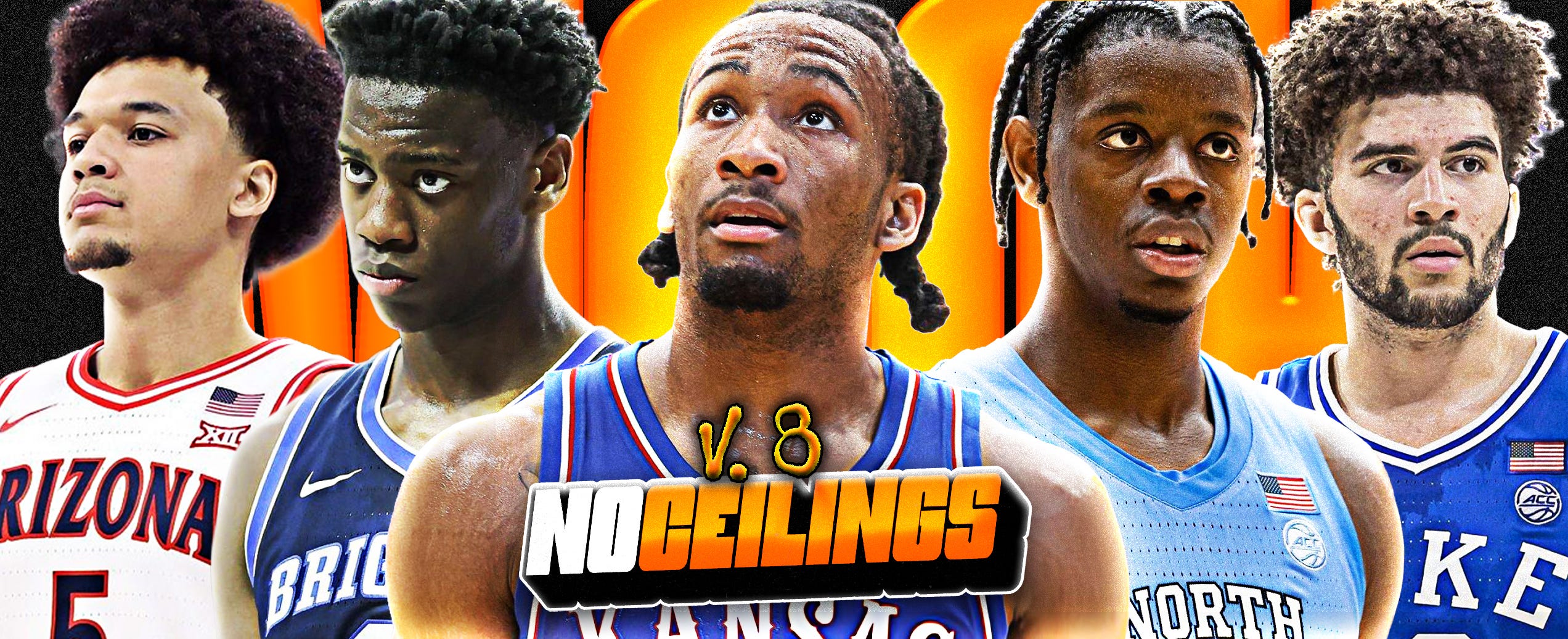
WARNING: THIS IS NOT AN INTEL MOCK DRAFT
That goes LIVE on TUESDAY MORNING, as tradition.
Now that we’ve gotten that out of the way…
The moment is almost upon us. Still, as mentioned earlier, some traditions should be kept.
We gathered one last time (for this cycle, anyway) as a No Ceilings crew in our War Room to debate all 60 picks and decide what we would do in the shoes of the front offices making selections in the 2026 NBA Draft. We made our final cases for our favorite teams and favorite prospects as we did our best to navigate how the chips would fall if we were making the selections. The full details of that debate, as always, will be available for our No Ceilings + subscribers later today.
We will have our Draft Day stream tomorrow, running from early in the day through all of the stunning moments of the first round of the 2026 NBA Draft, along with the intel that we promised earlier. For now, though, here is our second-to-last Mock Draft detailing what WE would do for the upcoming main event.
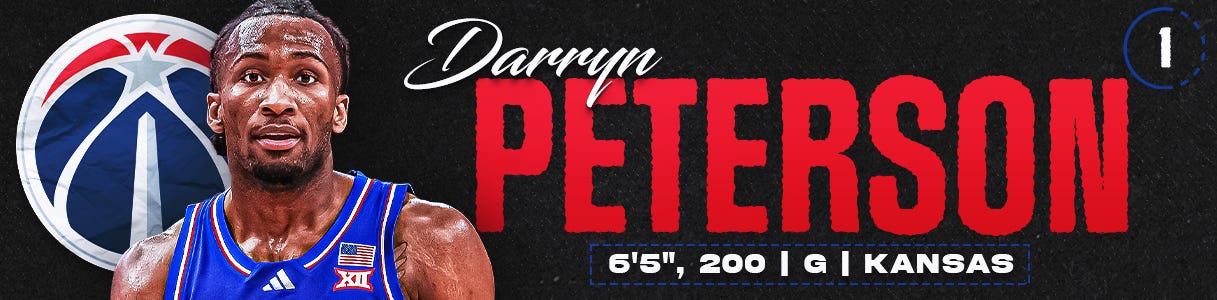
#1. WASHINGTON WIZARDS — Darryn Peterson | G | Kansas
Profile: 6’5”, 200
Year: Freshman
20.2 PTS | 4.2 REB | 1.6 AST | 1.4 STL | 0.6 BLK
43.8 FG% | 38.2 3P% | 82.6 FT%
24 Games | 29.1 MIN
Jam: At the end of the day, the Wizards select the best pure talent and most complete guard in the class. Not only is Peterson’s ceiling high as a two-way shot creator and playmaker, but the floor is significantly high as well in a 3-and-D-plus role. It’s scary that we didn’t even see a fully healthy and confident version of him for much of the season. Despite that, he still averaged 20.2 PPG, 4.2 RPG, 1,6 APG, and 2.0 stocks while draining 38.2% of his threes (6.9 3PA) across 24 games. Peterson perfectly fits with the Washington core, is NBA-ready, and gives them a potential young star to help steer the franchise forward while learning from veteran All-Stars in Trae Young and Anthony Davis.
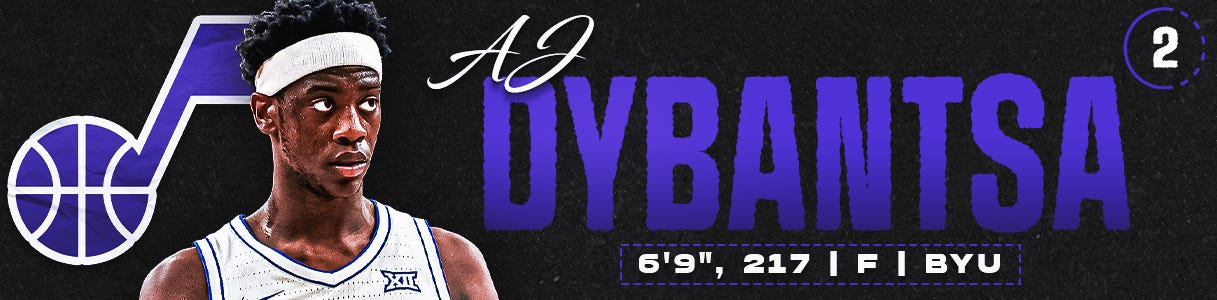
#2. UTAH JAZZ — AJ Dybantsa | F | BYU
Profile: 6’9”, 217
Year: Freshman
25.5 PTS | 6.8 REB | 3.7 AST | 1.1 STL | 0.3 BLK
51.0 FG% | 33.1 3P% | 77.4 FT%
35 Games | 34.8 MIN
Rucker: The final piece of the puzzle for the Utah Jazz is finding a superstar type of talent to add to the mix. With the second overall pick in a loaded draft, Utah has a tremendous opportunity to find it. Utah fans will be extremely familiar with the BYU product, but Dybantsa has the raw tools that don’t come around often. A near 6’10” forward with a serious amount of offensive weaponry, Dybantsa is the type of superstar upside talent that franchises dream of getting on board. It often takes young forwards years to figure out how to generate easy points by generating contact and building real estate at the free-throw line. However, at just 19 years old, Dybantsa is an artist at it. Landing Dybantsa here gives the Jazz a serious franchise building block that gives them a serious balance of size, length, and offensive firepower throughout the roster. Adding him to the mix with Keyonte George and Ace Bailey gives the Jazz a young trio of bucket-getting firepower on the perimeter that should match beautifully with the suddenly stacked front court of options. Utah is in a good place regardless of what happens at #1, but landing Dybantsa here would be an opportunity to establish a bit of a beast in the Western Conference.
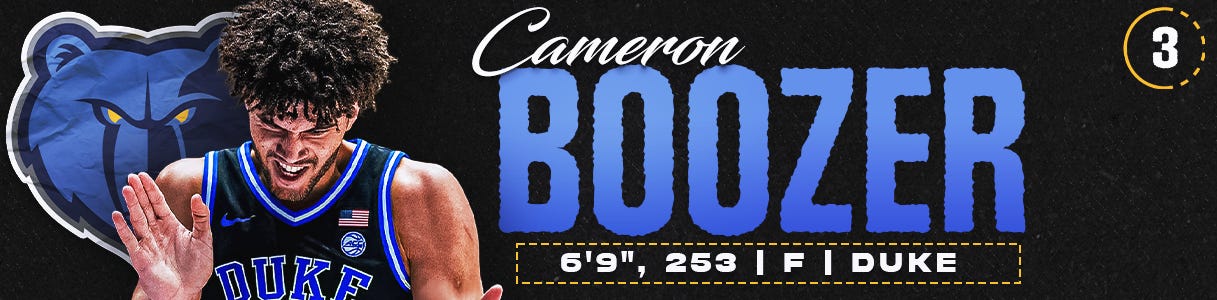
#3. MEMPHIS GRIZZLES — Cameron Boozer | F | Duke
Profile: 6’9”, 253
Year: Freshman
22.5 PTS | 10.2 REB | 4.1 AST | 1.4 STL | 0.6 BLK
55.6 FG% | 39.1 3P% | 78.9 FT%
38 Games | 33.4 MIN
Nathan: This would be a very easy selection for the Memphis Grizzlies should the board fall this way, but honestly, any way it fell would make Grizzlies fans happy on draft night. This 2026 class is a four-horse race, but Cameron Boozer in particular would bolster this team’s offense and give it an identity that isn’t quite present on the roster. Yes, Zach Edey is a per-minute dominant monster, but he has yet to play 50% of his games in two NBA seasons. Is Cedric Coward going to take steps forward as an on-ball wing scorer that can do a bit of everything? What about the other shooters on this roster? Enter Boozer, who makes everyone around him better with his passing/playmaking from the top of the floor, or on the move. As a one-on-one player, Boozer has the ability to create mismatches that benefit not just himself, but the team as a whole. Everything he’s able to do in PnR as the screener or handler, as a post-up threat, or even spotting up off the ball, puts the defense in a bind because of how efficient and creative he is. Not to mention his rebounding efforts WITH guys like Edey and Coward would give this team an immediate physical strength on the court that matters when trying to win the possession battle. There are plenty of ways to manufacture scoring for Boozer, and he, in turn, would maximize everyone else’s ability by creating open, high-efficiency looks for them as well.
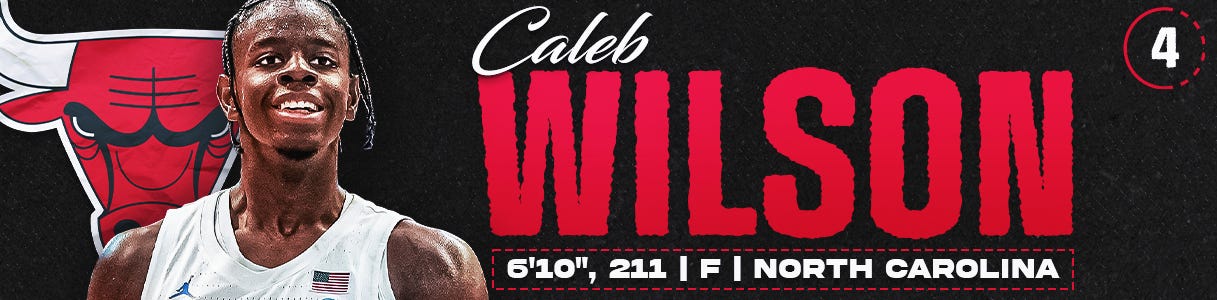
#4. CHICAGO BULLS — Caleb Wilson | F | North Carolina
Profile: 6’10”, 211
Year: Freshman
19.8 PTS | 9.4 REB | 2.7 AST | 1.5 STL | 1.4 BLK
57.8 FG% | 25.9 3P% | 71.3 FT%
24 Games | 31.3 MIN
Corey: Chicago makes the easiest pick of the draft, nabbing Wilson at four as the other tier-one dudes are off the board. Wilson is 6’10”, long, bouncy, fluid, and he plays with a motor that rarely shuts off. The athlete stuff is obvious. What doesn’t get enough run is that he’s got real feel too. A 1.4 AST/TOV on near-30% usage at 6’10” on a heavily self-created diet shows that Wilson is much more than just a toolsy athlete. Don’t get me wrong, he’s that too. The dude threw down 67 dunks in 24 games, besting the next closest freshman by 12 dunks while playing 12 fewer games. Wilson also has a real deal midrange game, already comfortable hitting tough turnaround faders over contests. The three-point shooting at 26% is a major question mark, and his development there will dictate his tippy top tier potential. Defensively, he’s already a handful. He can get low and move his feet to guard the perimeter, while using his length and bounce to protect the rim. The upside here as a two-way impact swing forward is massive.
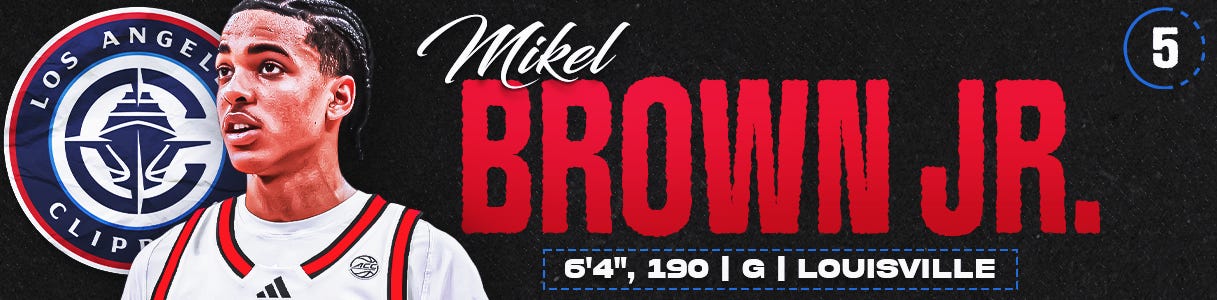
#5. LOS ANGELES CLIPPERS — Mikel Brown Jr | G | Louisville
Profile: 6’4”, 190
Year: Freshman
18.2 PTS | 3.3 REB | 4.7 AST | 1.2 STL | 0.1 BLK
41.0 FG% | 34.4 3P% | 84.4 FT%
21 Games | 29 MIN
Metcalf: The draft feels like it really starts at this pick, as we have a pretty good sense of who the first four picks are going to be. While the Clippers don’t necessarily need a point guard, it would be shocking if they didn’t take one here. The talent disparity is pretty vast, and even though Darius Garland was good for them down the stretch this season, he’s not prohibiting me from drafting a potential franchise point guard. Mikel Brown Jr. has some of the highest upside of any guard in this class and the day one skills to make this an awesome swing for the Clippers. Brown has parking lot range on his jumper and the versatility that’s required from modern shooters. He’s lethal off the bounce, spotting up, and isn’t afraid to let it fly off of movement. On top of that, Brown’s growth spurt and vertical pop make him extremely effective around the rim either finishing or drawing fouls. When it comes to playmaking, Brown is one of the most creative and daring in this class. What needs to get cleaned up, though, is Brown’s decision-making. His erratic shooting numbers are a better reflection of his shot selection than his capabilities, as are his careless turnovers. Brown still has plenty of work to do, but his positional malleability makes playing him early more feasible while also providing some of the highest long-term upside of anyone in this class.
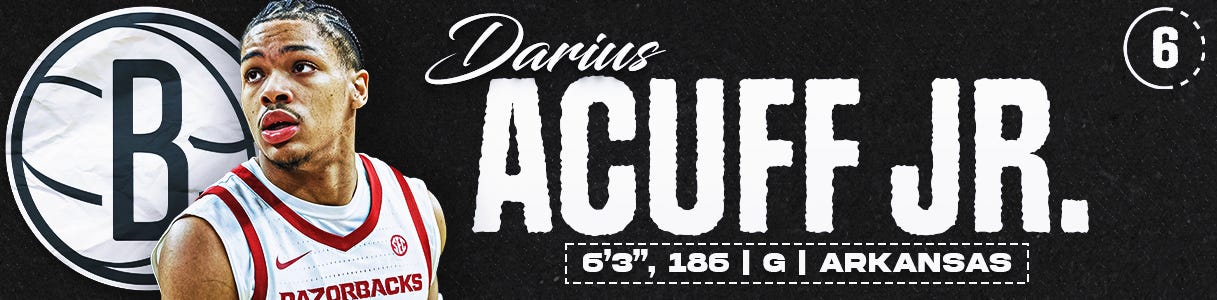
#6. BROOKLYN NETS — Darius Acuff Jr. | G | Arkansas
Profile: 6’3”, 186
Year: Freshman
23.5 PTS | 3.1 REB | 6.4 AST | 0.8 STL | 0.3 BLK
48.4 FG% | 44.0 3P% | 80.9 FT%
36 Games | 35.2 MIN
Stephen: The Brooklyn Nets are in desperate need of…well–they’re in desperate need. This team lacks an identity, but they make up for it with cap space and opportunity. Coach Jordi Fernandez is widely respected for his coaching philosophy and approach–he just needs eggs to make an omelet. Their bevy of picks does not hold the same value in the traditional sense, in that they can’t strategically tank with the new, short-term relegation system. Not only that, but the Nets haven’t nailed their picks as of late. Brooklyn needs a win.
They go with Darius Acuff Jr. in this exercise as the future and the face of this franchise. Acuff has been an excellent scorer, but some are of the mindset that he “dribbles the air out of the ball”. Darius ranked in the 92nd percentile in being used off screens away from the ball, in the 87th percentile on spot-ups, and in the 66th percentile in handoffs. Of course, he was often used as the pick-and-roll initiator, but he showed that he can thrive playing off of others. He is an excellent passer, and he can operate well with or without a screen on the ball–which is what Brooklyn will likely lean on the most. As the team continues to improve, there is no reason to doubt Acuff’s ability to toggle on and off the ball. Much has been made of his defense on both sides, and we’re at the point where we’re just going to have to see how he improves on that end. In the meantime, getting a player who can lead this team and make everyone’s lives easier is the best way forward.
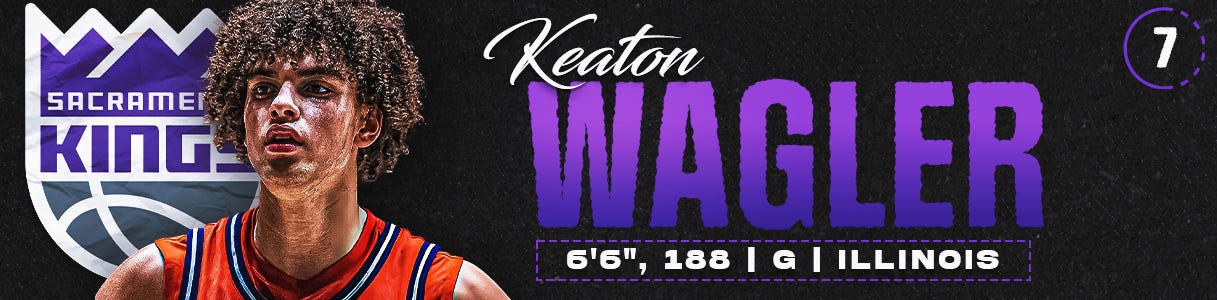
#7. SACRAMENTO KINGS — Keaton Wagler | G | Illinois
Profile: 6’6”, 188
Year: Freshman
17.9 PTS | 5.1 REB | 4.2 AST | 0.9 STL | 0.4 BLK
44.5 FG% | 39.7 3P% | 79.6 FT%
37 Games | 33.9 MIN
Nick: The Sacramento Kings were dead-last in three-point makes and attempts last season, and were 29th in three-point percentage. As someone who has a case for being the best shooter in the 2026 NBA Draft, Keaton Wagler answers that question emphatically, while also coming off a season where he led the Illini to the best offense in the country. His ability to get to his spots with ease, play on or off the ball, and keep the offense running will be much appreciated in Sacramento. Wagler is incredibly adept at running the pick-and-roll, ranking in the 93rd percentile per Synergy; he’s also an elite spot-up threat, knocking down 43.2% of his spot-up triples. Wagler’s defense and rim finishing both leave a bit to be desired, but his shooting efficacy and strengths at running an offense will both mesh well with the Kings–in the present and in the future.
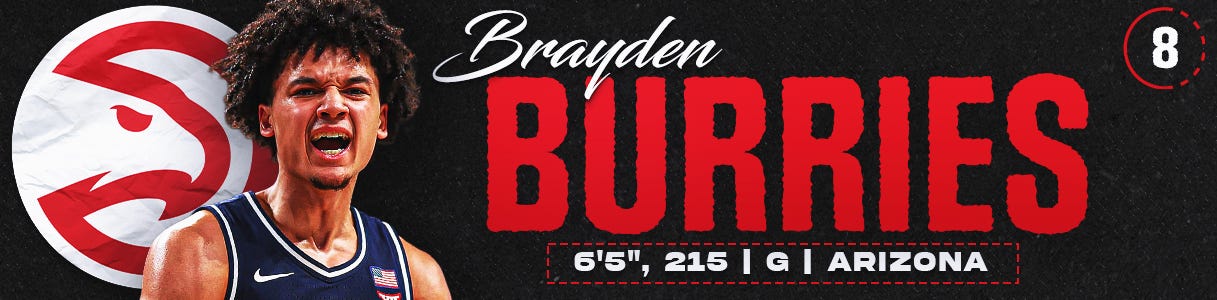
#8. ATLANTA HAWKS (via NOLA) — Brayden Burries | G | Arizona
Profile: 6’5”, 215
Year: Freshman
16.1 PTS | 4.9 REB | 2.4 AST | 1.5 STL | 0.2 BLK
49.1 FG% | 39.1 3P% | 80.5 FT%
39 Games | 29.8 MIN
Stephen: Say what you want about the need for a big man in A-Town, but Brayden Burries isn’t a player fans should have to “accept” or “settle for” in this daft. Burries on the Hawks gives them another ball-handler, scoring option, and two-way competitor. Yes, this team does have Dyson Daniels and Nickel Alexander-Walker, but you can’t have too many guards who are versatile in the ways players like Burries are. Burries has the dimensions that make him ready to compete from Day One. He’ll be a monster in transition–a strength of this ascending team. He can also space the floor reliably, as he hit 39% of his catch-and-shoot threes. He also held up on the defensive end, as his opponents shot just over 39% against him.
Something that is often said about Burries is that he is a “safer” player–that his floor is higher because of the boxes he checks. There is a real argument to be made that he can handle more on-ball reps. He makes good decisions with the ball in his hands, and he spent most of his time running the pick-and-roll. Trying to fit onto a 36-3 team, the question of whether he could have handled more on-ball reps should be at the forefront of the minds of NBA teams. That’s where the real “ceiling” with Brayden lies–the possibility that he could actually facilitate within a high-functioning offense.
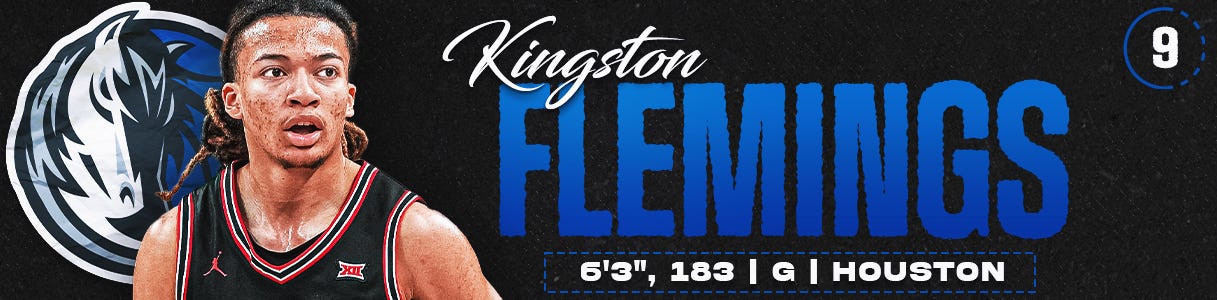
#9. DALLAS MAVERICKS — Kingston Flemings | G | Houston
Profile: 6’3”, 183
Year: Freshman
16.1 PTS | 4.1 REB | 5.2 AST | 1.5 STL | 0.3 BLK
47.6 FG% | 38.7 3P% | 84.5 FT%
37 Games | 31.7 MIN
Nick: Kingston Flemings ends up being the guard who falls a bit out of the elite guard group at the top of the draft, and Dallas is the team that capitalizes. Flemings’s exceptional on-ball defense, elite pick-and-roll play, and veteran-level ability to pick his spots offensively would make him an ideal point guard of the future to play alongside Cooper Flagg. There are concerns about Flemings as an at-rim finisher and some concerns about his volume from three-point range, but his mid-range mastery and effectiveness as a spot-up shooter (ranking in the 84th percentile and canning 44.0% of his spot-up triples, per Synergy) would allow him to bolster Flagg’s on-ball capabilities while also being adept at running the offense on his own.
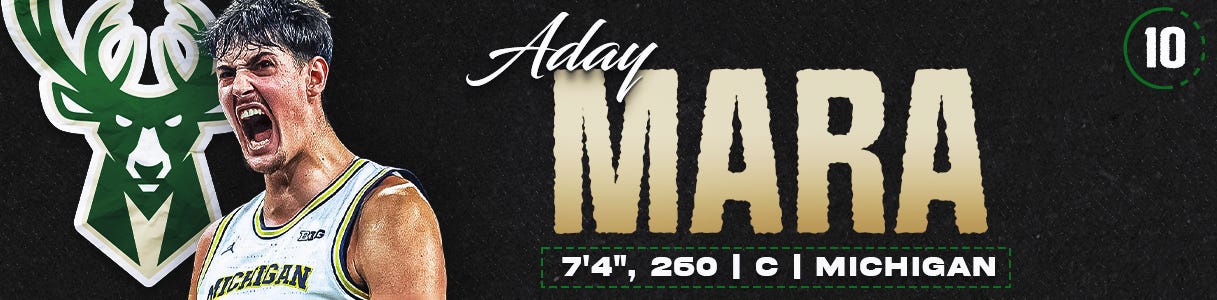
#10. MILWAUKEE BUCKS — Aday Mara | C | Michigan
Profile: 7’4”, 260
Year: Junior
12.2 PTS | 6.8 REB | 2.5 AST | 0.3 STL | 2.6 BLK
67.0 FG% | 30.0 3P% | 56.4 FT%
39 Games | 23.3 MIN
Corey: Milwaukee makes a pick here that works regardless of how the Giannis situation shakes out. Mara was in Top 10 pick conversations not too long ago, though the path was bumpy, taking time to find his footing in college hoops. But after a stellar junior season in which Michigan went on a championship run, he finds himself back in the middle of those Top 10 convos after leading the Big Ten with 2.6 blocks per game while adding 12.1 points on 65.9% True Shooting, and flashing high-level playmaking reads that make him a unique prospect. He’s not explosive, nor particularly physical, playing through height and length more than power, but in a class without another proven primary rim protector, he’s carved out the spot as the top big. If Giannis is still in Milwaukee next season, he fits, and if he’s not, a real deal 7-footer who can protect the rim, make reads, and score around the hoop is not a bad foundation to help lead the next iteration of your franchise.
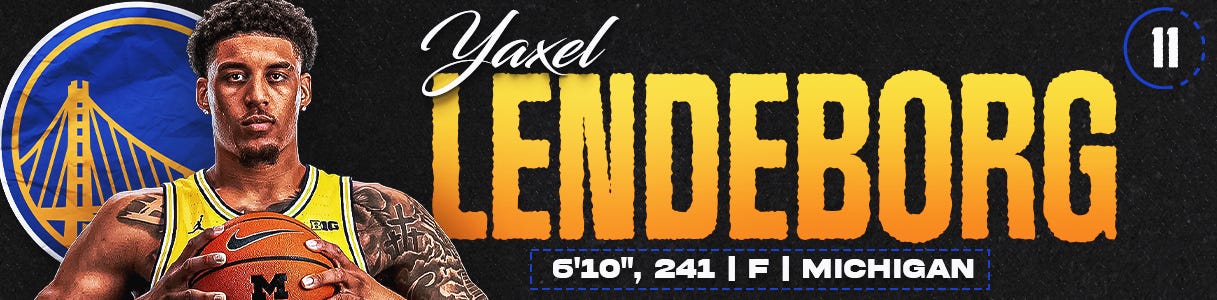
#11. GOLDEN STATE WARRIORS — Yaxel Lendeborg | F | Michigan
Profile: 6’10”, 241
Year: Senior
15.1 PTS | 6.9 REB | 3.3 AST | 1.2 STL | 1.2 BLK
52.3 FG% | 38.3 3P% | 81.9 FT%
39 Games | 30 MIN
Rucker: An argument could be made that this is the most fascinating pick in the lottery. Golden State has a huge decision to make. Do you swing for upside or try to get an early contributor who could potentially raise the immediate floor of the team? Plenty of options could be under consideration here for Golden State, including players such as Cameron Carr or Aday Mara, if available. Michigan forward Yaxel Lendeborg has been a name that seems to have some “cooling” buzz, but the fit with Golden State cannot be overlooked. Lendeborg has the mentality this Warriors team needs right out of the gate. He’s a versatile player who has been a bit of a “late-bloomer” when it comes to his basketball career. Being an older prospect might generate some questions for some, but Lendeborg is the type of player who will continue to find ways to master his craft at the next level. He’d be a great get here for a Warriors team that needs someone to be able to give some life to the depth on this roster.
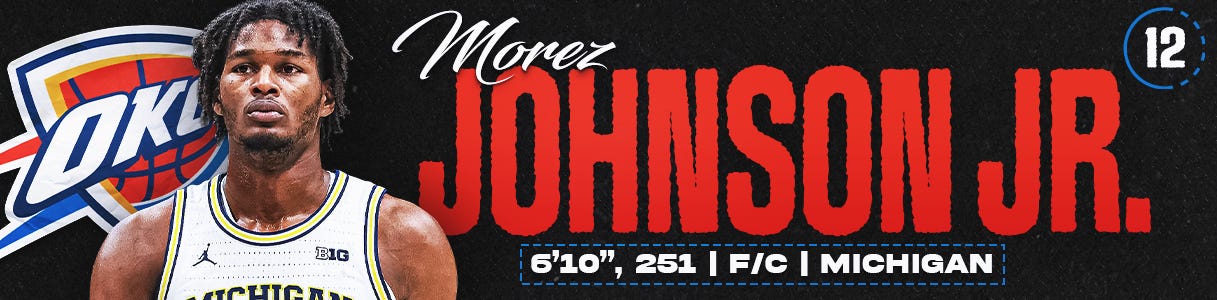
#12. OKLAHOMA CITY THUNDER (via LAC) — Morez Johnson Jr. | F/C | Michigan
Profile: 6’10”, 251
Year: Sophomore
13.1 PTS | 7.3 REB | 1.2 AST | 0.7 STL | 1.1 BLK
62.1 FG% | 34.3 3P% | 77.9 FT%
39 Games | 25 MIN
Metcalf: The Oklahoma City Thunder kind of got punked by the Spurs in the playoffs as they lacked physicality and rebounding, especially in the front court. Morez Johnson fixes that immediately. On the surface, Johnson is a pretty straightforward evaluation. He’s a tremendous athlete, versatile defender, and fantastic rebounder on both ends of the floor. Johnson has the tools and technique to switch nearly everything on defense while being extremely low-maintenance on offense. He’s the classic big who does all the dirty work that your stars don’t want to do that lead to winning basketball. When you dig a little deeper, though, it’s obvious that Johnson is barely scratching the surface of what he can do offensively. This was the first year that he’s ever really shot it, and the results were very encouraging, especially given where he was just two years ago. The game is also slowing down dramatically for Johnson, which we see in his passing reads and at rim finishing. Johnson still has a good amount of growth left on offense, but his physicality, flexibility to play with other bigs, defensive versatility, character, and rebounding make him a seamless fit with the Thunder.
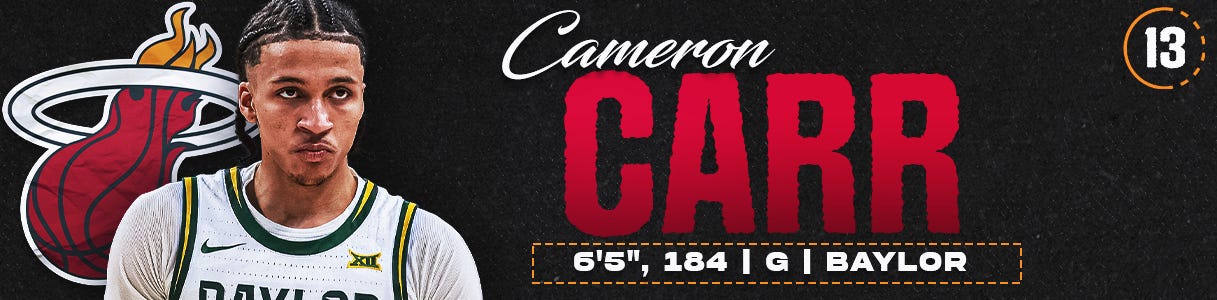
#13. MIAMI HEAT — Cameron Carr | G | Baylor
Profile: 6’5”, 184
Year: Sophomore
18.9 PTS | 5.8 REB | 2.6 AST | 0.9 STL | 1.3 BLK
49.4 FG% | 37.4 3P% | 80.1 FT%
34 Games | 33.6 MIN
Jam: With Miami rumored to be the frontrunner for Giannis Antetokounmpo, this roster is expected to look really different. Regardless of what the final roster ends up being, Carr is a tremendous fit next to any primary creator and playoff-contending team because of his dynamic mix of athleticism, positional size (6’5.75”, 7’0.75” wingspan), three-point shooting (37.4%), and defensive playmaking (2.2 stocks) in a 3-and-D role. Carr was one of the hottest names coming out of the combine, and if the handle takes a step forward as he continues to add strength, there could be more upside to unlock.
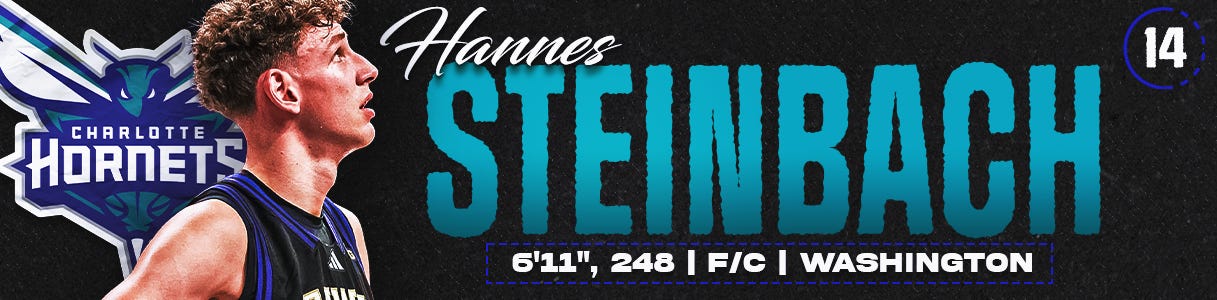
#14. CHARLOTTE HORNETS — Hannes Steinbach | F/C | Washington
Profile: 6’11”, 248
Year: Freshman
18.5 PTS | 11.8 REB | 1.6 AST | 1.1 STL | 1.2 BLK
57.7 FG% | 34.0 3P% | 75.9 FT%
30 Games | 34.6 MIN
Nathan: The Charlotte Hornets need frontcourt depth in the worst way. Yes, there are options on the roster at center, but the forward spot is a bit thin outside of Miles Bridges. Enter Hannes Steinbach, who could play both frontcourt spots in time depending on the lineup construction, while adding to the team’s biggest weakness: rebounding. Steinbach is an exceptional crasher of the glass, given his size, length, and arguably best-in-class hands when it comes to actually catching the ball. Steinbach is a great interior finisher and someone who could actually run the floor with and catch lobs from the team’s perimeter trio of LaMelo Ball, Brandon Miller, and Kon Knueppel. Should his three-point shooting continue to develop, along with his face-up skills attacking downhill, there’s a real chance Steinbach becomes one of the best steals of this class outside of the Top 10.

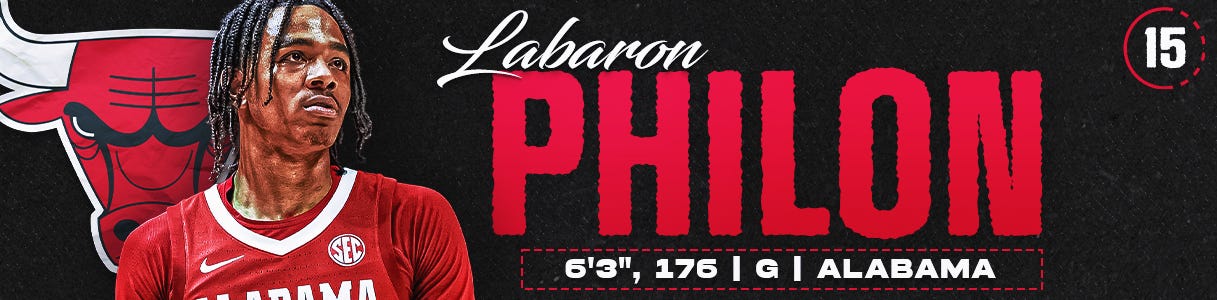
#15. CHICAGO BULLS (via POR) — Labaron Philon | G | Alabama
Profile: 6’3”, 176
Year: Sophomore
22.0 PTS | 3.5 REB | 5.0 AST | 1.2 STL | 0.2 BLK
50.1 FG% | 39.9 3P% | 79.8 FT%
33 Games | 30.9 MIN
Corey: Wilson at four, Philon at fifteen: Chicago’s having themselves a night. Philon broke out as one of the best guard talents in the SEC this year, and the tape backs it up. He has a Hermione Granger-sized bag that allows him to get into the paint whenever he wants, with or without a ball screen, special short-area quickness, and three-point shooting that made a massive leap from year one to year two. There was arguably no better self-creator in college basketball. The major drawback is Philon’s slender frame. It was a bit disappointing that Philon weighed in only one pound heavier at this year’s combine vs. last year. In a strength-based league, he’ll have to prove he can handle that physicality. However, he plays bigger than he looks and competes as hard as any guard in this class. Chicago walks away with Wilson on the wing and Philon in the backcourt. Excellent draft night for Bryson Graham’s new look Bulls.
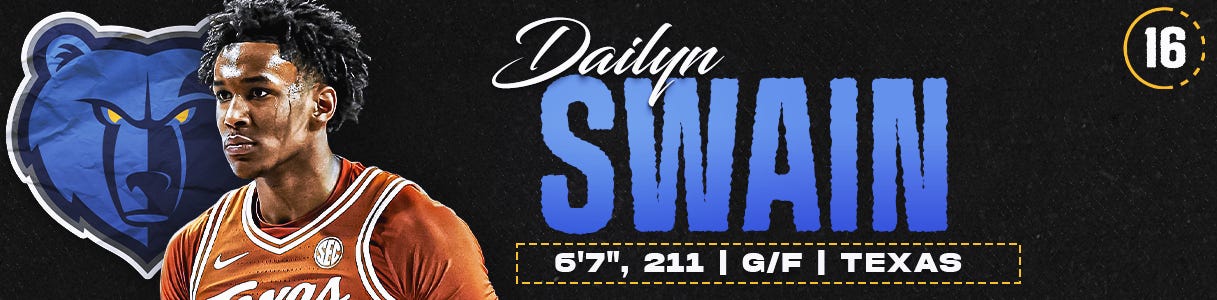
#16. MEMPHIS GRIZZLIES (via PHX) — Dailyn Swain | G | Texas
Profile: 6’7”, 211
Year: Junior
17.3 PTS | 7.5 REB | 3.6 AST | 1.6 STL | 0.3 BLK
54.2 FG% | 34.4 3P% | 81.5 FT%
36 Games | 32.8 MIN
Rucker: Memphis has itself sitting pretty with two selections in this draft. The Grizzlies have been connected to a plethora of point guards in this class. With the future of Ja Morant still in question, there’s obviously a chance that the Grizzlies could go in that direction here as well. However, adding another tough prospect on the perimeter would go a long way for this team as well. Texas junior Dailyn Swain is coming off a sensational season for the Longhorns. Despite the questions about his outside shot, Swain showcased some real on-ball juice this year. Teams were enamored with Swain as a prospect when he was at Xavier, especially due to his ability as a defensive playmaker. If those two versions of Swain can meet in the middle, he’s going to have plenty of potential to be an important piece of the puzzle for an organization. Adding Swain alongside Coward on the perimeter gives the Grizzlies two athletic wings with toughness and downhill ability. A young core of Zach Edey, Cameron Boozer, Cedric Coward, and Dailyn Swain sounds like a heck of a way to start moving forward.
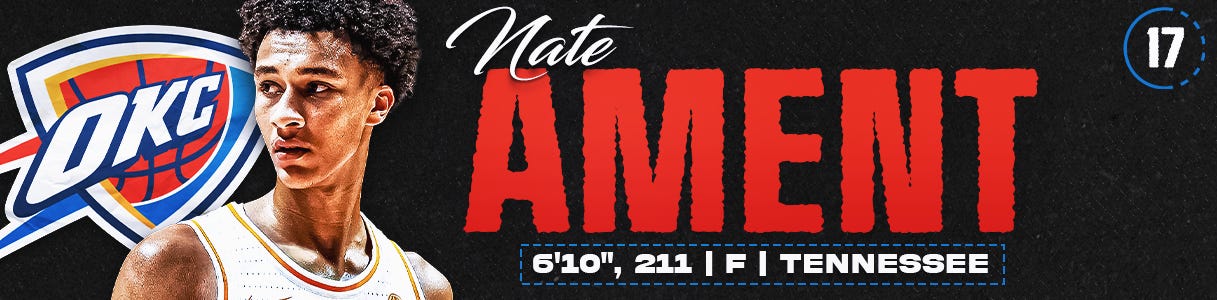
#17. OKLAHOMA CITY THUNDER (via PHI) — Nate Ament | F | Tennessee
Profile: 6’10”, 207
Year: Freshman
16.7 PTS | 6.3 REB | 2.3 AST | 1.0 STL | 0.6 BLK
39.9 FG% | 33.3 3P% | 79.0 FT%
35 Games | 29.7 MIN
Jam: This could end up being one of the best value picks of the draft. The OKC-Ament pairing has long been a favorite considering OKC’s development history and ability to be patient with Ament, especially after Morez Johnson Jr., with their first selection. At nearly 6’11, Ament brings a pass-dribble-shoot skillset paired with functional ball skill and multiple-level shotmaking ability. Playing off the gravity of primary creators like Shai, JDub, and the emerging Ajay Mitchell will allow Ament the opportunity to thrive as a spot-up threat/closeout attacker and playfinisher while potentially being primed for more. The defensive infrastructure in place could bring more out of Ament’s defensive tools, something we saw much more of on the grassroots than collegiate level. All the tools are in place for Ament to develop into an impact player on an annual contender here.
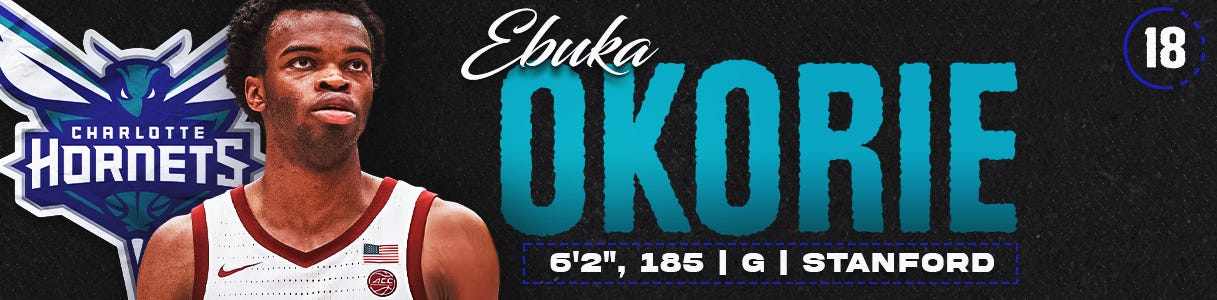
#18. CHARLOTTE HORNETS (via ORL) - Ebuka Okorie | G | Stanford
Profile: 6’2”, 186
Year: Freshman
23.2 PTS | 3.6 REB | 3.6 AST | 1.6 STL | 0.3 BLK
46.5 FG% | 35.4 3P% | 83.2 FT%
31 Games | 35.1 MIN
Stephen: The Charlotte Hornets have done well recently by taking “safer” players. While Kon Knuepple has shown that he can handle his fair share of offensive responsibilities, he also excelled in playing off the other perimeter players on the team. Ryan Kalkbrenner provided some stability at the anchor, and Sion James gave the team a savvy, off-ball option who could win with physicality and his ability to think the game. Having already drafted another “eat-your-vegetables” player in Hannes Steinbach, Charlotte picks up one of the more high upside players in Ebuka Okorie.
As a freshman guard in a class defined by freshman guards, Okorie punched his way up into being a legitimate Top 20 talent. His handle, creativity, and length allowed him to get to various levels of the defense and finish well in the majority of them. With Ebuka being the primary scouting target for defenses, life in the interior–and even in his playmaking to a certain degree–didn’t yield the most fruitful production. Teams will have to either accept or deny the context with Ebuka, which is why his range is so volatile. With the Hornets, he can come off the bench and play alongside (or spell) LaMelo Ball. Even with questions on his jumper, Okorie shot 35% from deep–along with shooting 84% from the free throw line, and shooting over 42% on his long twos. Ebuka should get buckets in a more “ethical” manner–playing alongside proven offensive players in Carolina.
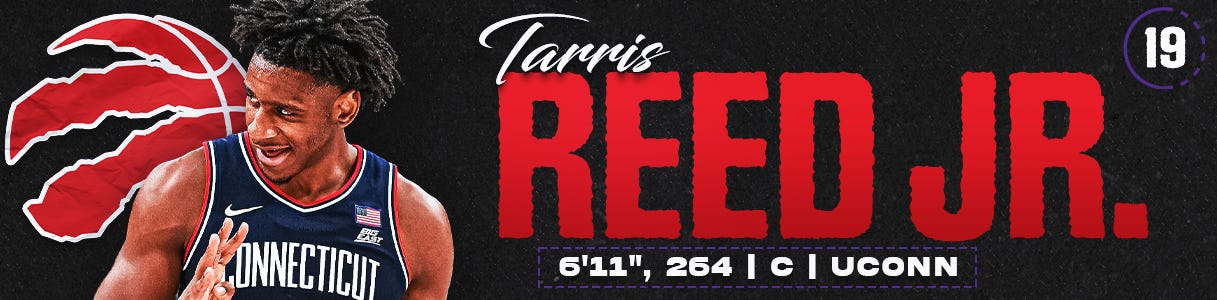
#19. TORONTO RAPTORS - Tarris Reed Jr. | C | UConn
Profile: 6’11”, 265
Year: Senior
14.8 PTS | 8.8 REB | 2.4 AST | 0.9 STL | 2.0 BLK
61.7 FG% | 0 3P% | 60.8 FT%
34 Games | 27.1 MIN
Nathan: The Toronto Raptors need an actual center, desperately. Collin Murray-Boyles was an answer at that position last year alongside Scottie Barnes in the frontcourt, but Jakob Poeltl just isn’t the player he used to be. Sandro Mamukelashvili is much better suited as a PF rather than playing center for extended minutes. Tarris Reed would give this team an immediate upgrade at the position as an interior-focused player who is great at boxing out, playing post-up defense, and matching physicality on the low block. He sets excellent screens at the top of the floor that actually create separation for shooters, and he is looking to extend his range in time from behind the arc. He has the tools and skill set to play a real high-low game with Barnes and Murray-Boyles that balances the offense, while also supporting both of them at the rim defensively. Raptors fans have been wondering what perimeter talent could be added to this team, given the guard depth of the class, but going after a big man like Reed should be a priority for this Toronto front office.
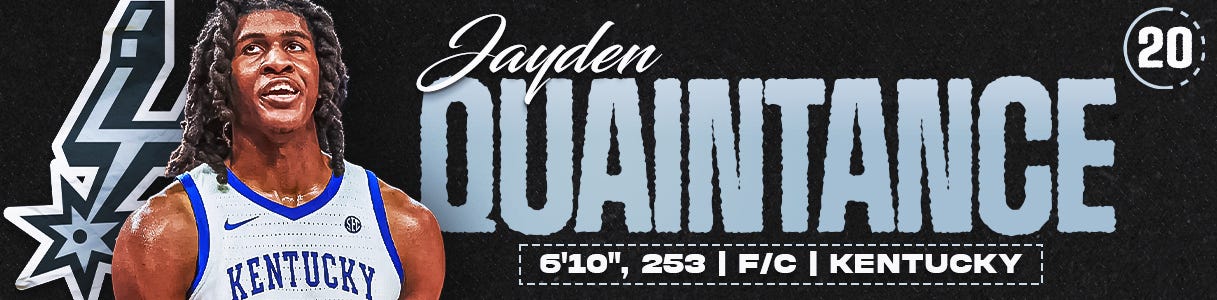
#20. SAN ANTONIO SPURS (via ATL) - Jayden Quaintance | F/C | Kentucky
Profile: 6’10”, 253
Year: Sophomore
5.0 PTS | 5.0 REB | 0.5 AST | 0.5 STL | 0.8 BLK
57.1 FG% | 0 3P% | 30.8 FT%
4 Games | 16.8 MIN
Nick: The San Antonio Spurs ended up being the beneficiaries of Jayden Quaintance falling into the 20s on this Mock Draft, and they pick up a potential All-Defensive Team-caliber center here in Jayden Quaintance. The concerns about his medicals are one thing; the concerns about Quaintance’s limited offensive range, though, are certainly mitigated by the number of offensive engines on the Spurs. Quaintance would be a natural lob threat down low while Wembanyama roams on the perimeter, and the shooters for San Antonio would space the floor well in lineups with Quaintance as the lone big. The range for Quaintance might be as large as anyone’s in the draft due to his health, but the Spurs are primed to capitalize on his strengths and cover up for his weaknesses on the court.
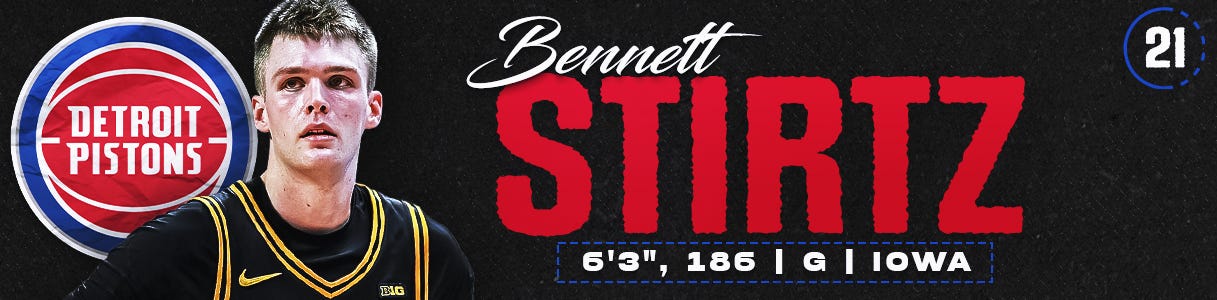
#21. DETROIT PISTONS (via MIN) - Bennett Stirtz | G | Iowa
Profile: 6’3”, 186
Year: Senior
19.8 PTS | 2.6 REB | 4.4 AST | 1.4 STL | 0.2 BLK
47.7 FG% | 35.8 3P% | 84.8 FT%
37 Games | 37.8 MIN
Metcalf: The Pistons desperately lacked ball handling and shooting this year, and we saw what that did to them in the playoffs. Stirtz may not have the outlandish upside as some of these rawer freshmen, but he is built to step into a rotation right away. Stirtz is one of the best shooters in this class who can punish defenders off the bounce or act as a spot-up shooter. That shooting flexibility alone makes him a perfect fit to either back up Cade Cunningham or play alongside him. Additionally, Stirtz’s IQ and conditioning are through the roof. He played an astronomical amount of minutes in college while being the focal point of opposing defensive scouting reports and still was an extremely efficient and high-volume playmaker. Even though he ran the show in college, Stirtz has the feel and versatility to play off the ball as well. He’s more than capable of running the offense, but he doesn’t have to have the ball to make an impact. We know the Pistons need shooting, but bringing in another guard with Stirtz’s shooting, feel, and experience will also make Cunningham’s life exponentially easier.
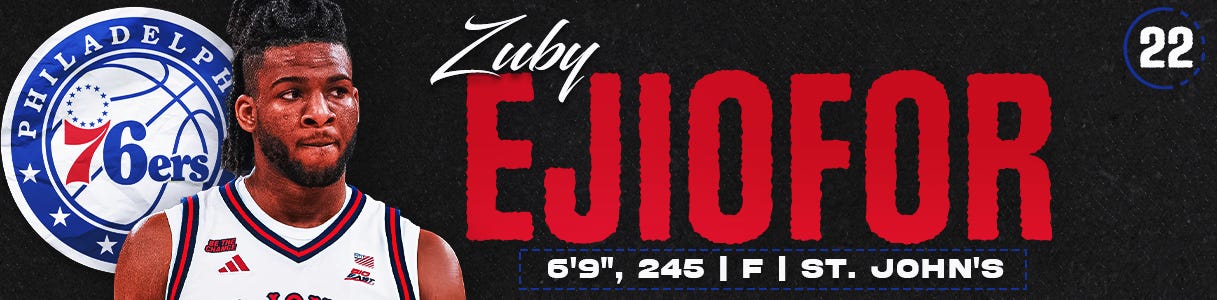
#22. PHILADELPHIA 76ERS (via HOU) - Zuby Ejiofor | F | St. John’s
Profile: 6’9”, 245
Year: Senior
16.3 PTS | 7.3 REB | 3.5 AST | 1.2 STL | 2.1 BLK
53.6 FG% | 30.5 3P% | 71.8 FT%
37 Games | 30.0 MIN
Nathan: The Philadelphia 76ers need toughness and nastiness in the worst way. This team has struggled to rebound the ball and actually guard opposing wings and forwards in high-leverage situations. Kelly Oubre has been so much better on that end of the floor since coming to Philadelphia, and Dominick Barlow was a low-cost revelation for the franchise last season, but neither has the size and strength of Zuby Ejiofor, who would provide an immediate upgrade to both areas while possessing the attitude and ferociousness this team has lacked from that position for several seasons. He can switch across multiple positions defensively, legitimately help to pressure the ball and pick up away from the basket, and is an absolute pain to try and back down on the block. Ejiofor has the length and standing reach to play the center spot as a backup option, while having the ball handling and passing skill to slot in alongside another big man like Joel Embiid. The shot is his swing skill, as it is for so many young players. But Ejiofor is the exact type of player who tends to go lower than he should, and winds up much higher in re-draft exercises because he’s built both physically and mentally to impact games in the playoffs, especially on defense.
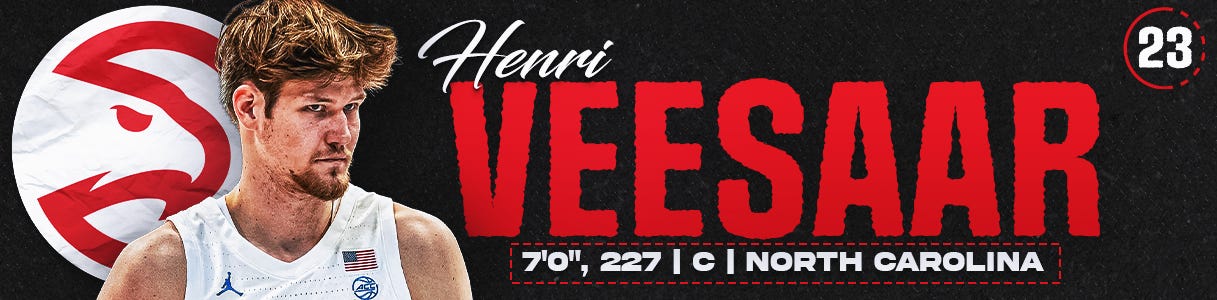
#23. ATLANTA HAWKS (via CLE) - Henri Veesaar | F | North Carolina
Profile: 7’0”, 227
Year: Junior
17.0 PTS | 8.7 REB | 2.1 AST | 0.6 STL | 1.2 BLK
60.8 FG% | 42.6 3P% | 61.5 FT%
31 Games | 31.3 MIN
Stephen: After picking up one of the more versatile and impactful guards in the draft, the Hawks address some of the big man concerns that exist on the team by drafting Henri Veesaar. With Onyeka Okongwu being the only legit size on the team, adding the seven-footer makes sense on the glass. He posted a Defensive Rebounding percentage of 21.9–a substantial marker. He’s proven to be a versatile offensive player–working well on both ends of high/low actions with Caleb Wilson. He should work well with Jalen Johnson in 4-5 pick-and-roll actions, or DHOS–as he is more than able to reject the handoff, and make a quick decision.
The defense is truly the biggest concern–but mainly just as an anchor. With Onyeka on the team, Henri can play more into a complementary team defender role, as someone who’s able to slide his feet and challenge shots. As the second big on a team, Veesaar figures to do the majority of the traditional “big man things” at a good clip, but he can also space the floor. Okungwu has also added a reliable jumper, so adding Veesaar gives Atlanta the ability to play 5-Out–something that the best Eastern Conference teams are able to do consistently.
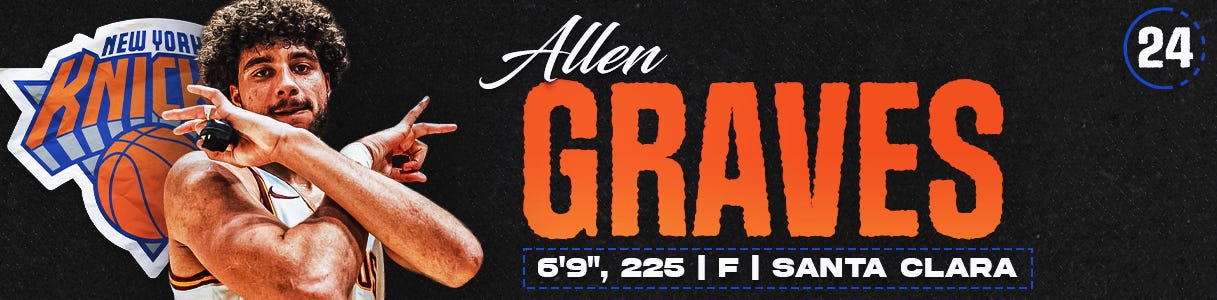
#24. NEW YORK KNICKS — Allen Graves | F | Santa Clara
Profile: 6’9”, 225
Year: RS-Freshman
11.8 PTS | 6.5 REB | 1.8 AST | 1.9 STL | 0.9 BLK
51.2 FG% | 41.3 3P% | 75.0 FT%
35 Games | 22.7 MIN
Corey: At #24, the NBA CHAMPION New York Knicks add the most analytically friendly prospect in this draft outside of Cameron Boozer. The redshirt freshman out of Santa Clara is a multi-skilled two-way forward who can make quick passing reads, knock down spot-up threes, make timely cuts, be a monster on the offensive glass, and have a consistent impact on the other end of the floor with his disruption. The profile jumps off the page if you know what you’re looking for with Graves. The questions are fair, though. Combine measurements and athleticism raised some legit concern, and the bench role vs. WCC competition is a legitimate thing to push back on. However, the two-way versatility is real; in a class where a lot of names elected to return, the Graves case gets easier to make by default. New York gets a plug-and-play dude who fits right into what they do. At #24, Graves is exactly the kind of bet that makes you look really smart in a few years.
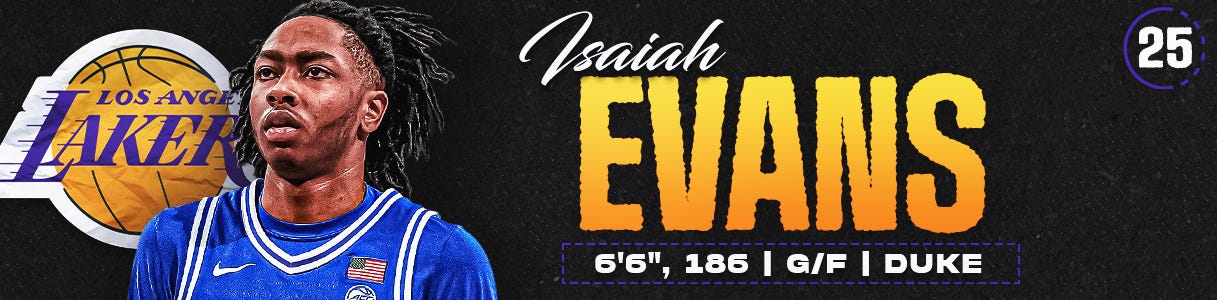
#25. LOS ANGELES LAKERS — Isaiah Evans | G | Duke
Profile: 6’6”, 186
Year: Sophomore
15.0 PTS | 3.2 REB | 1.3 AST | 0.7 STL | 0.7 BLK
43.3 FG% | 36.1 3P% | 86.0 FT%
38 Games | 28.3 MIN
Jam: With the top big man options essentially gone at this point, the Lakers address another one of their needs by selecting arguably the best shooter in the class, Isaiah Evans. Evans is a lethal shooter (career 38% three-point shooter) who brings shotmaking versatility, deep range, positional size (6 ‘6.75”), and unlimited confidence any time that he’s on the floor. He’s someone who would thrive next to Luka, Austin, and LeBron, giving them spacing and draining open threes from their spray outs, along with contested ones when called upon. Evans took another step forward as a more aggressive closeout attacker, rim finisher, and defender. This a perfect landing spot for both sides.
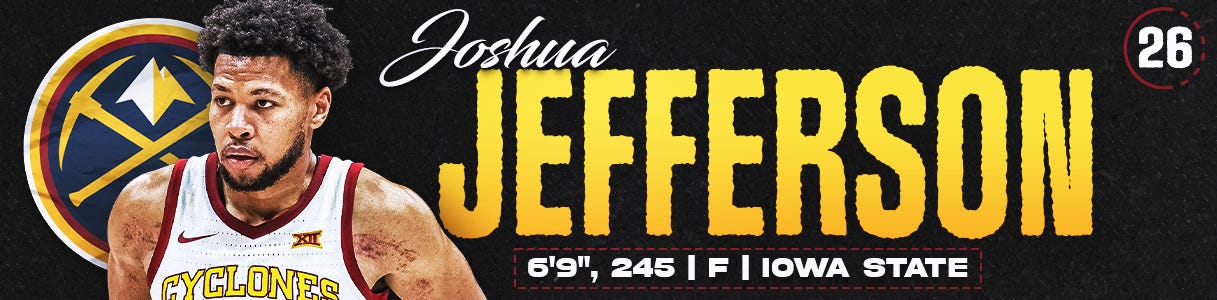
#26. DENVER NUGGETS — Joshua Jefferson | F | Iowa State
Profile: 6’9”, 245
Year: Senior
16.4 PTS | 7.4 REB | 4.8 AST | 1.6 STL | 0.8 BLK
47.1 FG% | 34.5 3P% | 70.0 FT%
35 Games | 30.9 MIN
Nick: What do you get for the best passer in the world? How about someone who has an argument for being the best passer in this draft class, while also providing defensive versatility at 6’8” and 245 pounds? Joshua Jefferson is one of those passers who has to be seen to be believed, and he could be a skeleton key-type of addition for Denver regardless of Peyton Watson’s potential future with the team. Jefferson also took a step forward as a shooter this year; while the track record there is not all that large, morphing into a shooter would unlock his game even further. Even if the shooting turns out to be a one-year blip, though, Jefferson’s defensive prowess and absurd passing touch would make him a great pick-up for a team that could always use another passer with size to turn heads with the craziest of dimes down low.
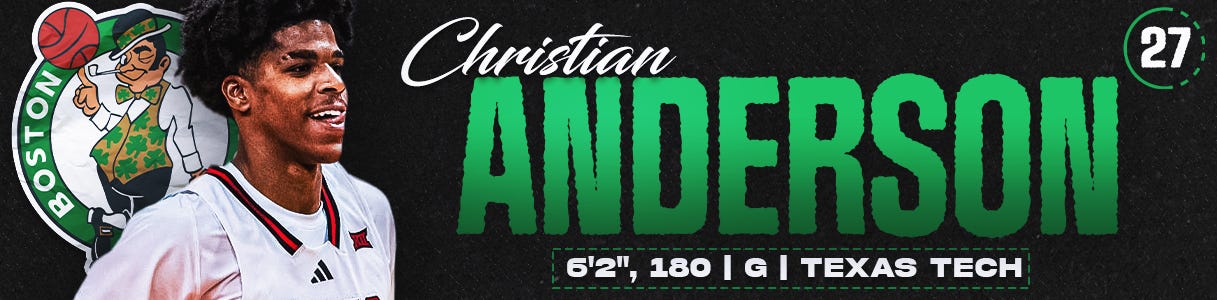
#27. BOSTON CELTICS — Christian Anderson | G | Texas Tech
Profile: 6’2”, 180
Year: Sophomore
18.5 PTS | 3.6 REB | 7.4 AST | 1.5 STL | 0.2 BLK
47.2 FG% | 41.5 3P% | 80.5 FT%
33 Games | 38.4 MIN
Rucker: The Celtics are hoping that they can survive a potential “bigs” run here with the 27th pick. Reports have suggested that Boston is trying to move up from this pick, and when you analyze the board, you can see why. Most teams are always “willing” to move up, but this organization doesn’t have a strong recent track record of trading up. In this case, Boston falls on the outside of the big run. There’s a chance this type of scenario could happen on draft night, which would most likely see the Celtics try to move out. However, there’s also a surprising piece still on the board. Boston has also never been afraid to take the best player available, especially for a roster that has their eyes always set on the future. Texas Tech sophomore Christian Anderson is coming off a sensational season for the Red Raiders and would be too good a value to pass up. With such a deep guard class, there’s a chance that multiple floor generals could slip through the “cracks” on draft night. Anderson has tremendous ability as a pick-and-roll ball-handler, especially as one of the best shooters in this class. Anderson’s fit offensively with this system would be a fun one, as he’s a tremendous floor spacing asset with upside.
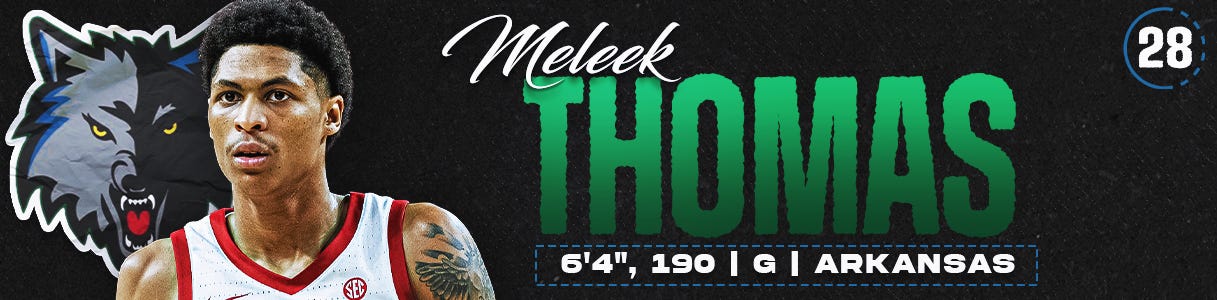
#28. MINNESOTA TIMBERWOLVES (via DET) — Meleek Thomas | G | Arkansas
Profile: 6’4”, 190
Year: Freshman
15.6 PTS | 3.8 REB | 2.5 AST | 1.5 STL | 0.2 BLK
43.3 FG% | 41.6 3P% | 84.3 FT%
37 Games | 30.5 MIN
Metcalf: Timberwolves fans likely won’t be thrilled about how this board fell, as all of the top point guards are off the board. However, Meleek Thomas is a fascinating upside swing who could fit like a glove. At the start of the season, Thomas got a lot of on-ball reps, and frankly, it was a disaster. He was overdribbling, inefficient with his scoring, and looked lost. Once Arkansas moved him into more of an off-ball role, though, his impact and effectiveness skyrocketed. He turned into a lethal off-ball shooter, made quicker, simpler decisions, and had more attention to detail on defense. The development route for Thomas is going to be fascinating because he is still pretty raw. Many bill him as a sparkplug scorer, which he certainly could be. However, there is a lot more 3-and-D upside with him that could see him grow into an archetype a little more like Kentavious Caldwell-Pope if he really commits to the defensive end of the floor.
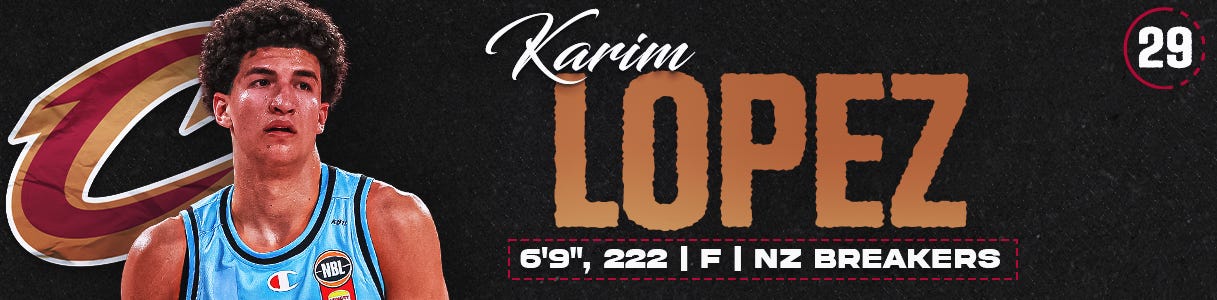
#29. CLEVELAND CAVALIERS (via SAS) — Karim Lopez | F | NZ Breakers
Profile: 6’9”, 222
Year: 2007 Born
11.9 PTS | 6.1 REB | 1.9 AST | 1.2 STL | 1.0 BLK
49.4 FG% | 32.2 3P% | 73.9 FT%
30 Games | 25.6 MIN
Nick: Karim Lopez falls to the Cleveland Cavaliers here, and the Cavs pounced on the top international prospect of the non-NCAA division. Lopez built on a strong first season with the New Zealand Breakers this year, showing increased confidence and proficiency as both a shooter and a playmaker. With a sturdy 6’8”, 220-pound frame, a nearly-7’ wingspan, and some serious competitive fire (especially when attacking the basket), Lopez makes a ton of sense for Cleveland as a jack-of-all-trades type who can fit right in with Cleveland’s defensive scheme and provide complementary offensive play, whether coming off the bench or potentially slotting in as a fifth starter-type going forward.
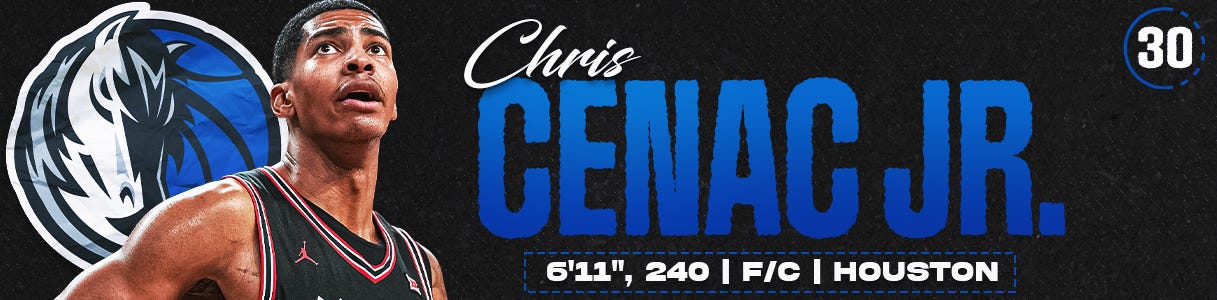
#30. DALLAS MAVERICKS (via OKC) — Chris Cenac Jr. | F | Houston
Profile: 6’11”, 240
Year: Freshman
9.5 PTS | 7.9 REB | 0.7 AST | 0.8 STL | 0.5 BLK
48.5 FG% | 33.3 3P% | 62.1 FT%
37 Games | 24.8 MIN
Stephen: Dallas already had their star player–and arguably their second-best player–before the draft even kicked off. After adding the speedy, two-way lead guard, Kingston Flemings, the Mavs take a swing on the project big, Chris Cenac Jr. The season for Cenac in Houston was actually quite solid—just in a different way than some anticipated. At his size, Cenac is one of the better rebounding prospects in the class–and truly the best one that was available here. While the defensive playmaking numbers weren’t sexy, Chris did show bright moments on that end–including very successful reps against AJ Dybantsa.
While he didn’t shoot the cover off the ball, Cenac did hit over 33% of his three-pointers on moderate volume. He did hit over 43% of his long twos–and was one of the best shooting big men coming into this cycle. Still, he slipped due to his inconsistencies–even at the free-throw line, where he barely shot over 62%. If shooting is going to be a skill he can hang his hat on, he has to leave no doubts moving forward. It was encouraging, though, that he shot over 74% at the rim. As he builds muscle and gains strength, his rim-finishing could be a real weapon.
Not a bad way to swing at the end of the first round!
SECOND ROUND
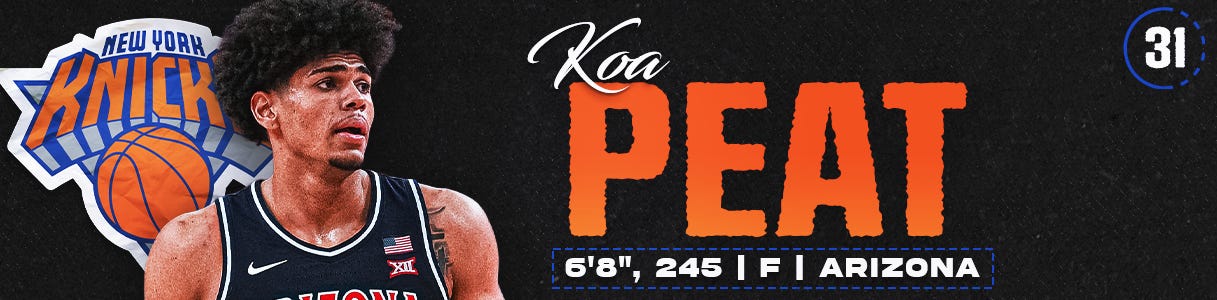
#31. NEW YORK KNICKS (via WAS) — Koa Peat | F | Arizona
Profile: 6’8”, 245
Year: Freshman
14.1 PTS | 5.6 REB | 2.6 AST | 0.6 STL | 0.7 BLK
52.8 FG% | 35 3P% | 62.3 FT%
36 Games | 27.8 MIN
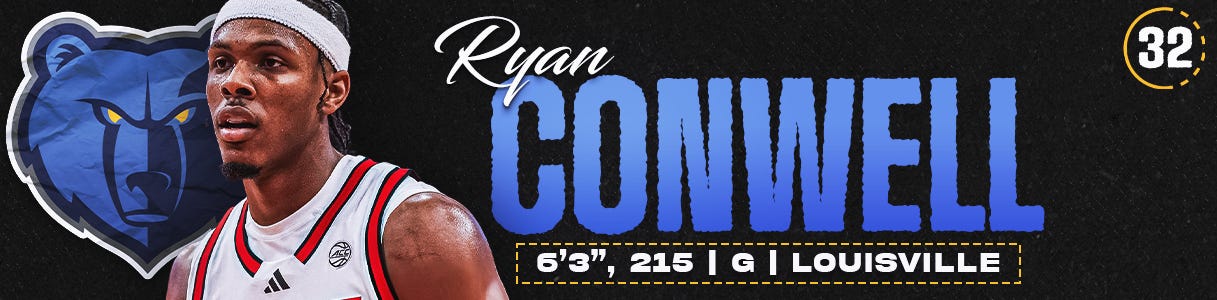
#32. MEMPHIS GRIZZLIES (via IND) — Ryan Conwell | G | Louisville
Profile: 6’3”, 215
Year: Senior
18.8 PTS | 4.8 REB | 2.7 AST | 1.1 STL | 0.2 BLK
40.8 FG% | 34.5 3P% | 83.2 FT%
34 Games | 30.9 MIN
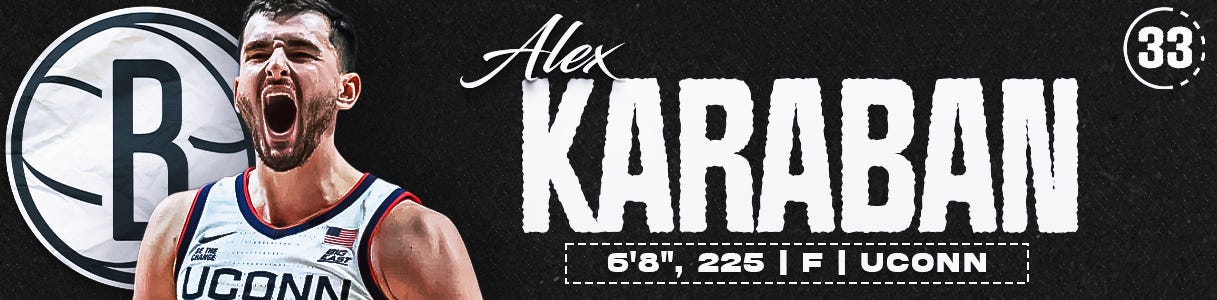
#33. BROOKLYN NETS — Alex Karaban | F | UConn
Profile: 6’8”, 225
Year: Senior
13.1 PTS | 5.1 REB | 2.4 AST | 0.8 STL | 0.8 BLK
46.8 FG% | 37.8 3P% | 86.4 FT%
39 Games | 34.1 MIN
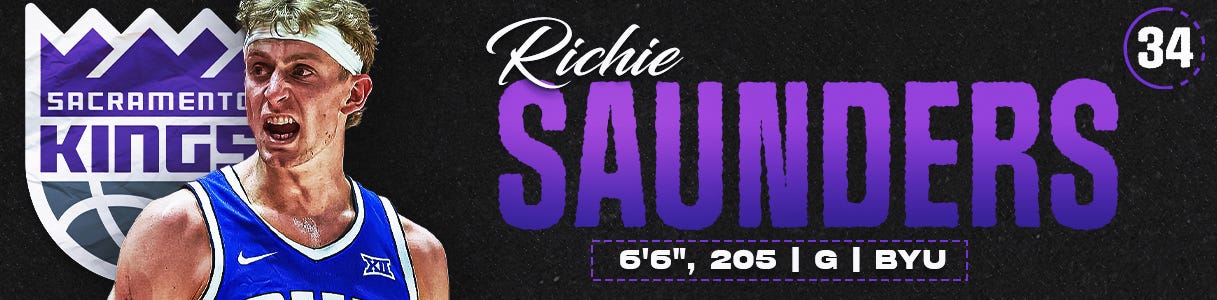
#34. SACRAMENTO KINGS — Richie Saunders | G | BYU
Profile: 6’6”, 205
Year: Senior (24)
18.0 PTS | 5.8 REB | 2.1 AST | 1.7 STL | 0.3 BLK
48.9 FG% | 37.6 3P% | 81.7 FT%
25 Games | 31.4 MIN
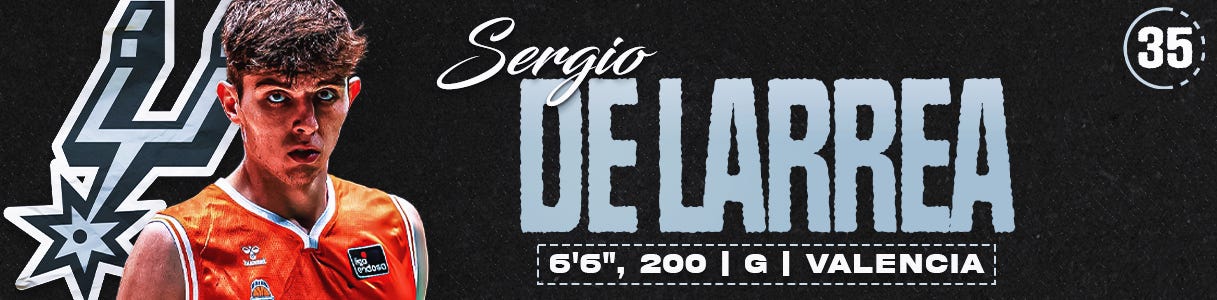
#35. SAN ANTONIO SPURS (via UTA) — Sergio de Larrea | G | Valencia
Profile: 6’6”, 200
Year: 2005 Born (20)
7.2 PTS | 2.1 REB | 2.9 AST | 0.5 STL | 0.2 BLK
45.0 FG% | 41.2 3P% | 81.9 FT%
63 Games | 14.5 MIN
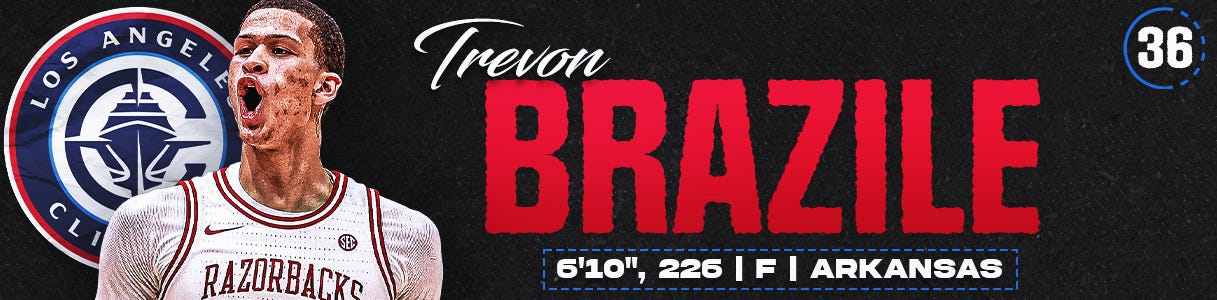
#36. LOS ANGELES CLIPPERS (via MEM) — Trevon Brazile | F | Arkansas
Profile: 6’10”, 225
Year: Senior
13.1 PTS | 7.3 REB | 1.6 AST | 1.5 STL | 1.6 BLK
52.6 FG% | 34.1 3P% | 71.7 FT%
36 Games | 31.5 MIN
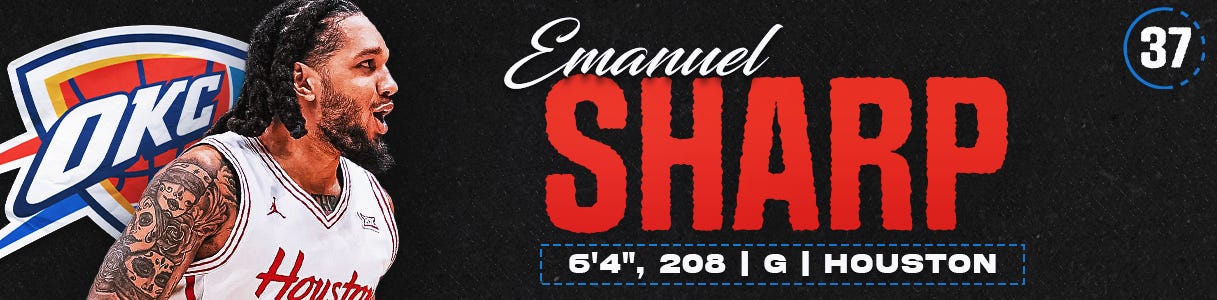
#37. OKLAHOMA CITY THUNDER (via DAL) — Emanuel Sharp | G | Houston
Profile: 6’4”, 208
Year: Senior
15.5 PTS | 3.0 REB | 1.7 AST | 1.2 STL | 0.1 BLK
41.3 FG% | 37.2 3P% | 89.1 FT%
37 Games | 29.3 MIN
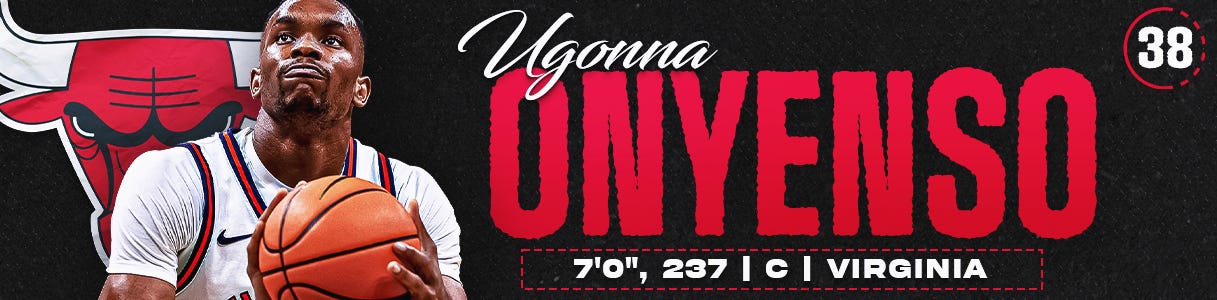
#38. CHICAGO BULLS (via NOLA) — Ugonna Onyenso | C | Virginia
Profile: 7’0”, 245
Year: Senior
6.5 PTS | 4.9 REB | 0.6 AST | 0.6 STL | 2.9 BLK
56.8 FG% | 27.8 3P% | 72.7 FT%
36 Games | 18.6 MIN
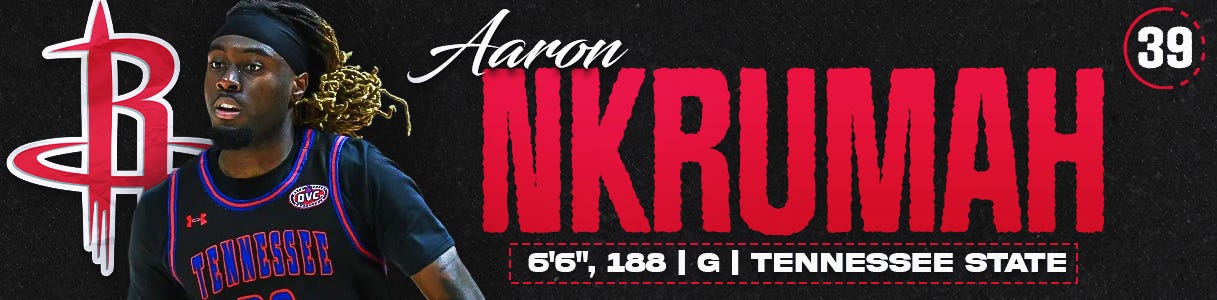
#39. HOUSTON ROCKETS (via CHI) — Aaron Nkrumah | G | Tennessee State
Profile: 6’6”, 188
Year: Senior
17.7 PTS | 5.5 REB | 3.0 AST | 2.8 STL | 0.5 BLK
43.8 FG% | 35.1 3P% | 78.6 FT%
33 Games | 31.3 MIN
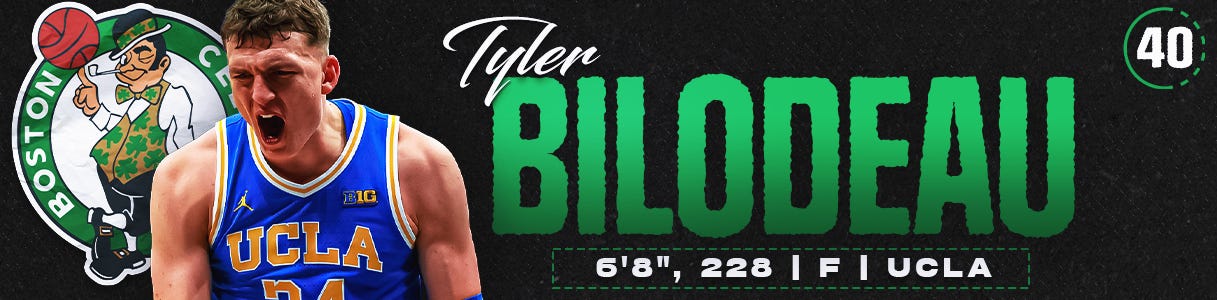
#40. BOSTON CELTICS (via MIL) — Tyler Bilodeau | F | UCLA
Profile: 6’8”, 225
Year: Senior
17.6 PTS | 5.6 REB | 1.1 AST | 0.5 STL | 0.4 BLK
51.8 FG% | 46.4 3P% | 87.3 FT%
31 Games | 30.3 MIN
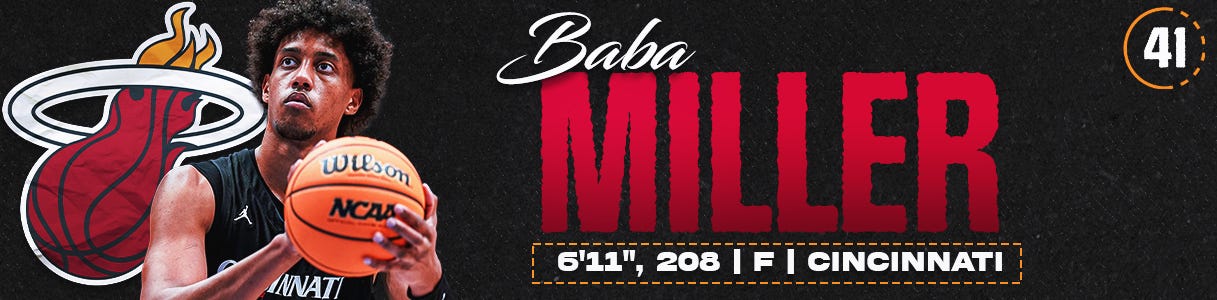
#41. MIAMI HEAT (via GSW) — Baba Miller | F | Cincinnati
Profile: 6’11”, 208
Year: Senior
13.0 PTS | 10.3 REB | 3.7 AST | 0.7 STL | 1.2 BLK
52.9 FG% | 19.2 3P% | 65.8 FT%
31 Games | 31.8 MIN
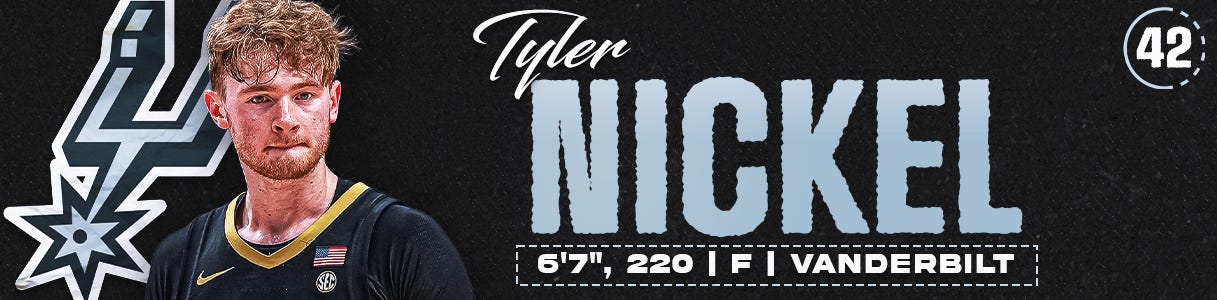
#42. SAN ANTONIO SPURS (via POR) — Tyler Nickel | F | Vanderbilt
Profile: 6’7”, 220
Year: Senior
13.5 PTS | 3.3 REB | 1.2 AST | 0.8 STL | 0.5 BLK
44.5 FG% | 40.0 3P% | 84.7 FT%
36 Games | 30.6 MIN
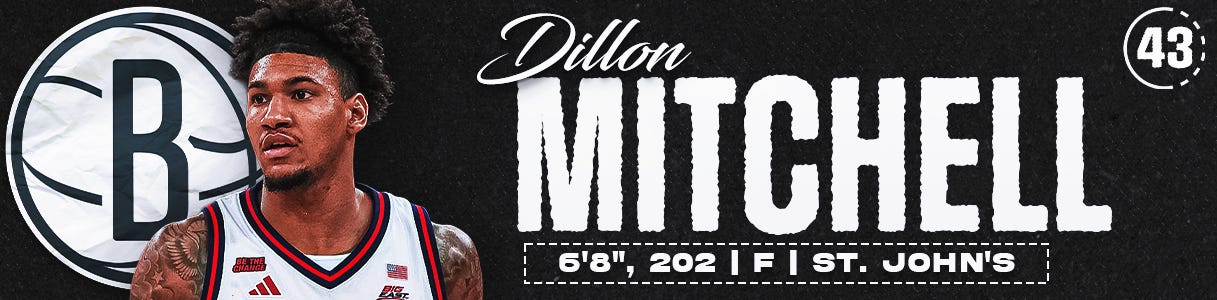
#43. BROOKLYN NETS (via LAC) — Dillon Mitchell | F | St. John’s
Profile: 6’8”, 202
Year: Senior
8.3 PTS | 7.0 REB | 3.0 AST | 1.3 STL | 0.7 BLK
55.9 FG% | 6.7 3P% | 49.4 FT%
37 Games | 28.2 MIN
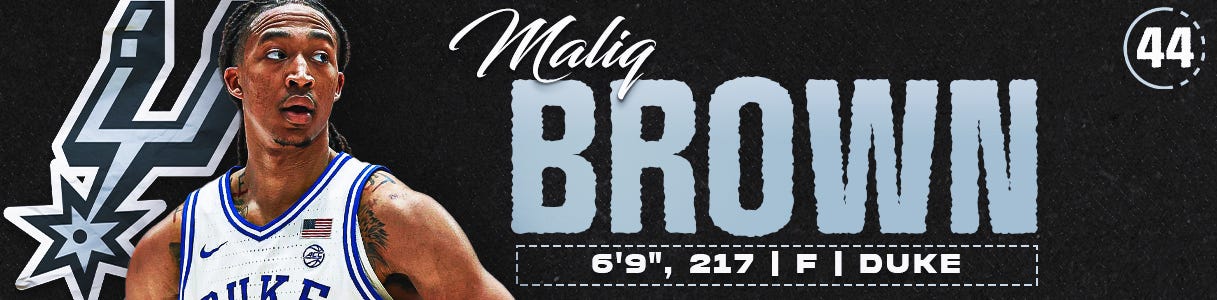
#44. SAN ANTONIO SPURS (via MIA) — Maliq Brown | F | Duke
Profile: 6’9”, 225
Year: Senior
4.9 PTS | 5.2 REB | 1.6 AST | 1.8 STL | 0.6 BLK
62.9 FG% | 16.7 3P% | 50 FT%
38 Games | 20.3 MIN
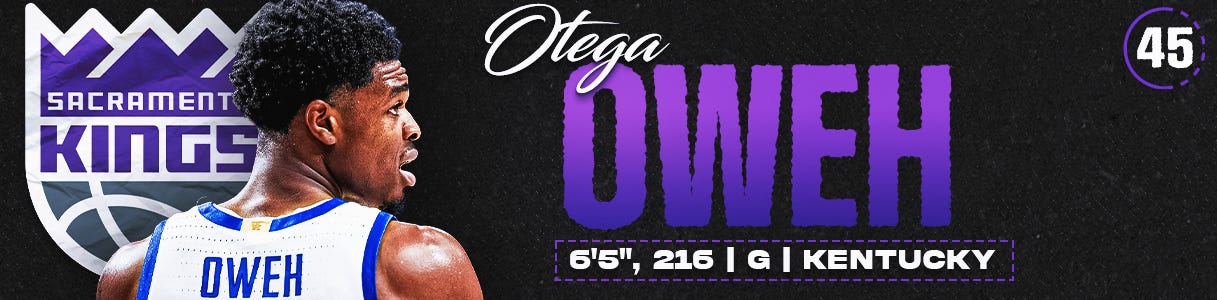
#45. SACRAMENTO KINGS (via CHA) - Otega Oweh | G | Kentucky
Profile: 6’5”, 215
Year: Senior
18.6 PTS | 4.8 REB | 2.7 AST | 1.8 STL | 0.3 BLK
46.5 FG% | 33.3 3P% | 73.1 FT%
36 Games | 32.8 MIN
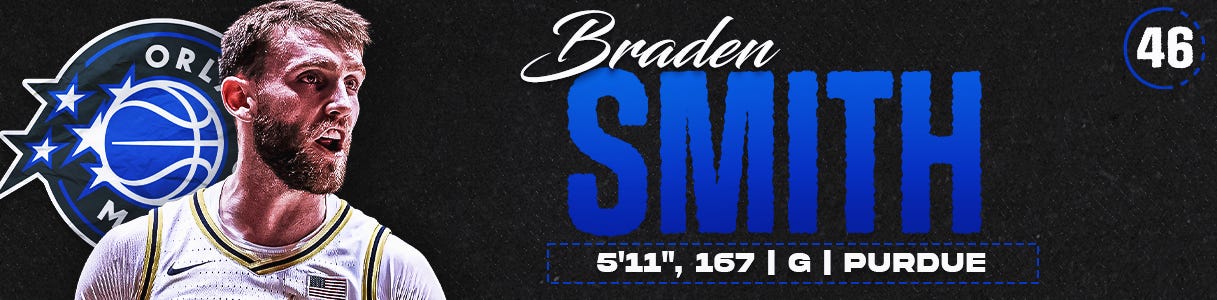
#46. ORLANDO MAGIC — Braden Smith | G | Purdue
Profile: 5’11”, 167
Year: Senior
14.3 PTS | 3.5 REB | 8.8 AST | 1.7 STL | 0.2 BLK
44.0 FG% | 36.2 3P% | 82.5 FT%
39 Games | 34.5 MIN
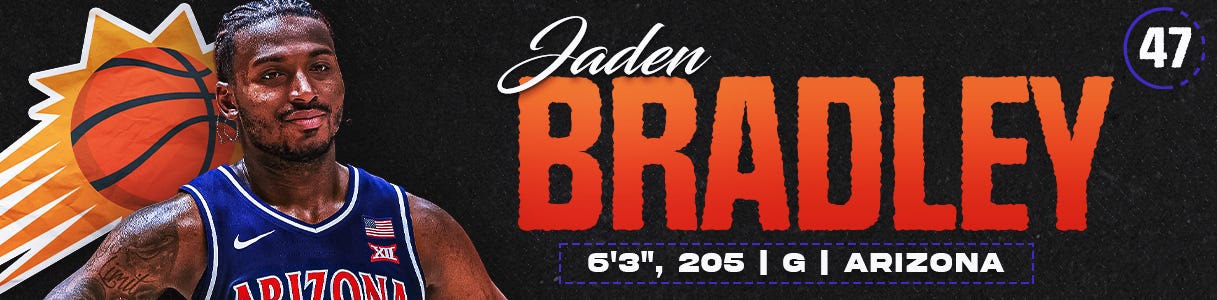
#47. PHOENIX SUNS (via PHI) — Jaden Bradley | G | Arizona
Profile: 6’3”, 205
Year: Senior
13.3 PTS | 3.4 REB | 4.4 AST | 1.4 STL | 0.1 BLK
46.3 FG% | 39.4 3P% | 80.9 FT%
39 Games | 30.6 MIN
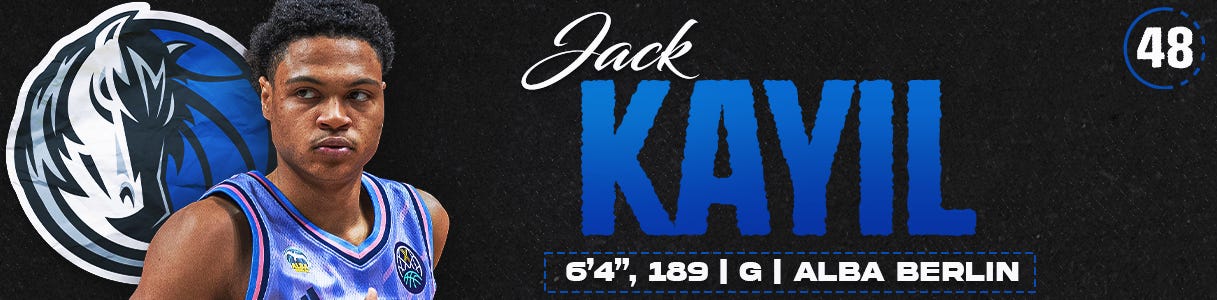
#48. DALLAS MAVERICKS (via PHX) — Jack Kayil | G | Alba Berlin
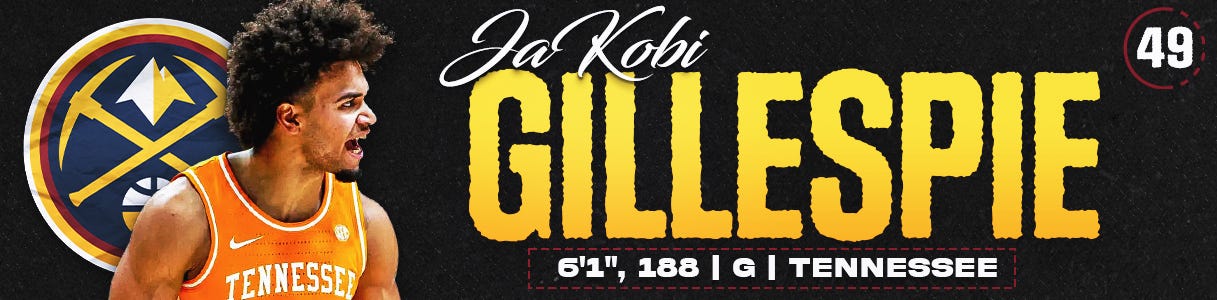
#49. DENVER NUGGETS (via ATL) — Ja’Kobi Gillespie | G | Tennessee
Profile: 6’1”, 188
Year: Senior
18.4 PTS | 2.8 REB | 5.4 AST | 2.1 STL | 0.2 BLK
41.0 FG% | 33.8 3P% | 81.4 FT%
37 Games | 34.7 MIN
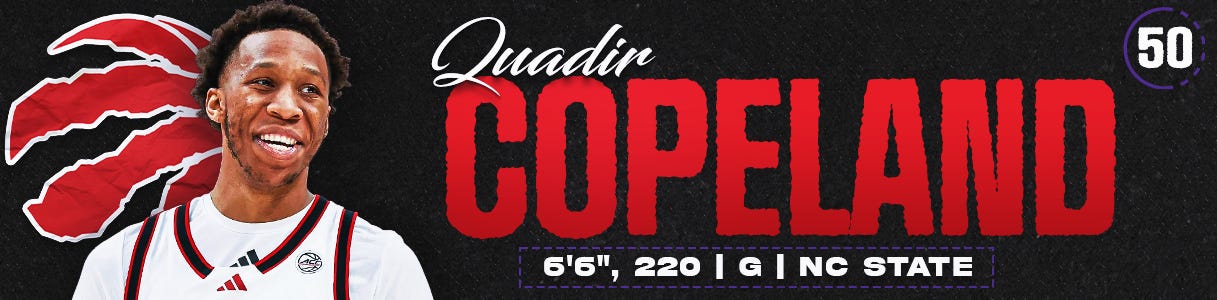
#50. TORONTO RAPTORS — Quadir Copeland | G | NC State
Profile: 6’6”, 220
Year: Senior
13.9 PTS | 3.6 REB | 6.5 AST | 1.8 STL | 0.1 BLK
49.4 FG% | 39.7 3P% | 77.5 FT%
34 Games | 28.8 MIN
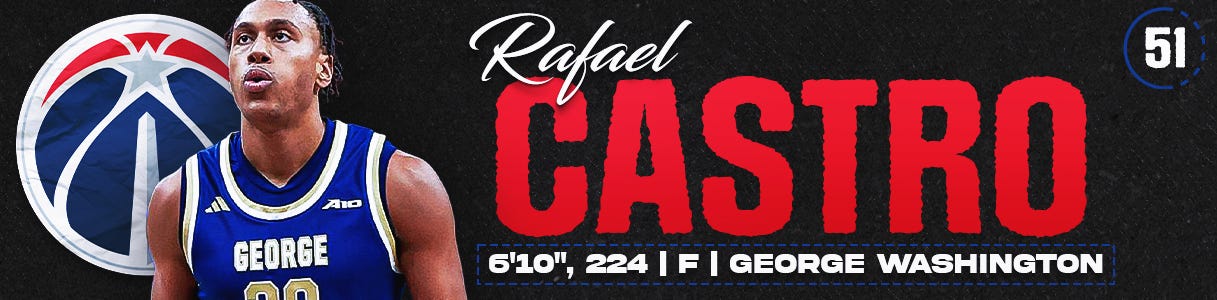
#51. WASHINGTON WIZARDS (via MIN) — Rafael Castro | F | George Washington
Profile: 6’10”, 224
Year: Senior
15.3 PTS | 9.1 REB | 1.7 AST | 1.8 STL | 1.7 BLK
62.7 FG% | 0 3P% | 66.1 FT%
29 Games | 27.2 MIN
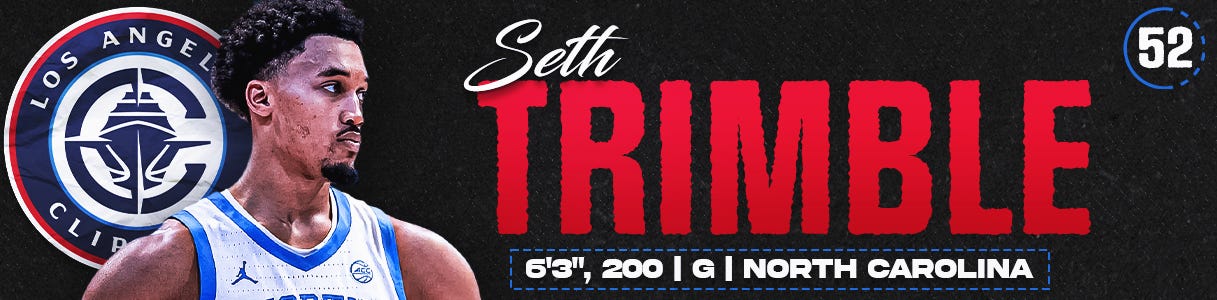
#52. LOS ANGELES CLIPPERS (via CLE) - Seth Trimble | G | North Carolina
Profile: 6’3”, 200
Year: Senior
14.0 PTS | 3.8 REB | 3.0 AST | 1.3 STL | 0.2 BLK
47.1 FG% | 28.6 3P% | 66.7 FT%
24 Games | 32.4 MIN
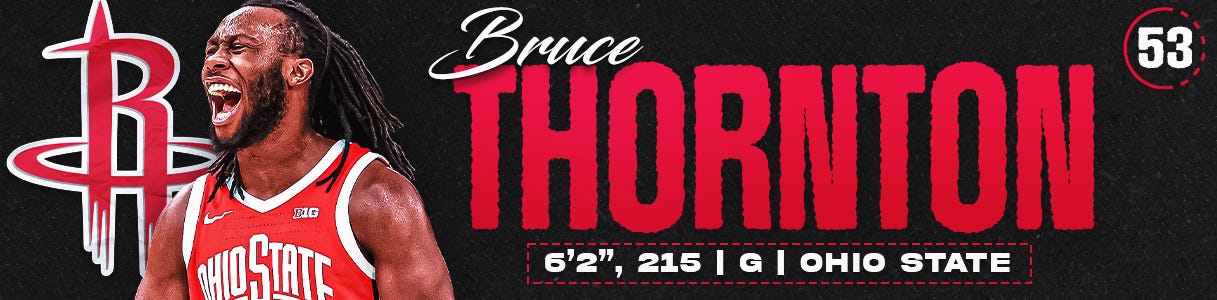
#53. HOUSTON ROCKETS - Bruce Thornton | G | Ohio State
Profile: 6’2”, 215
Year: Senior
19.9 PTS | 5.1 REB | 3.9 AST | 1.2 STL | 0.3 BLK
55.4 FG% | 40 3P% | 82.9 FT%
34 Games | 36.6 MIN
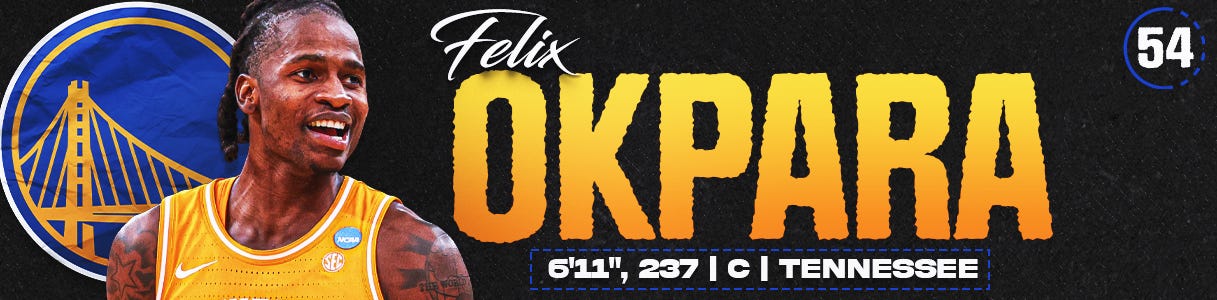
#54. GOLDEN STATE WARRIORS (via LAL) — Felix Okpara | C | Tennessee
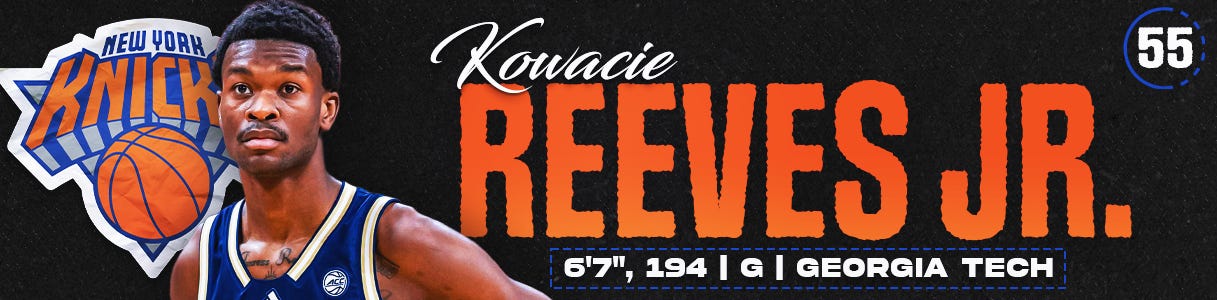
#55. NEW YORK KNICKS - Kowacie Reeves Jr. | G | Georgia Tech
Profile: 6’7”, 194
Year: Senior
15.1 PTS | 3.8 REB | 1.2 AST | 0.9 STL | 0.7 BLK
45.6 FG% | 38.7 3P% | 77.9 FT%
29 Games | 30.2 MIN
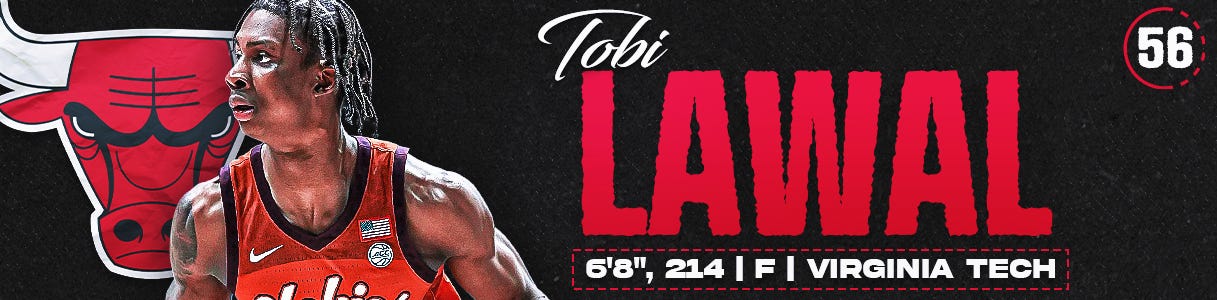
#56. CHICAGO BULLS (via DEN) — Tobi Lawal | F | Virginia Tech
Profile: 6’8”, 214
Year: Senior
12.3 PTS | 8.5 REB | 0.6 AST | 0.3 STL | 1.1 BLK
54.2 FG% | 25.0 3P% | 76.3 FT%
23 Games | 29.1 MIN
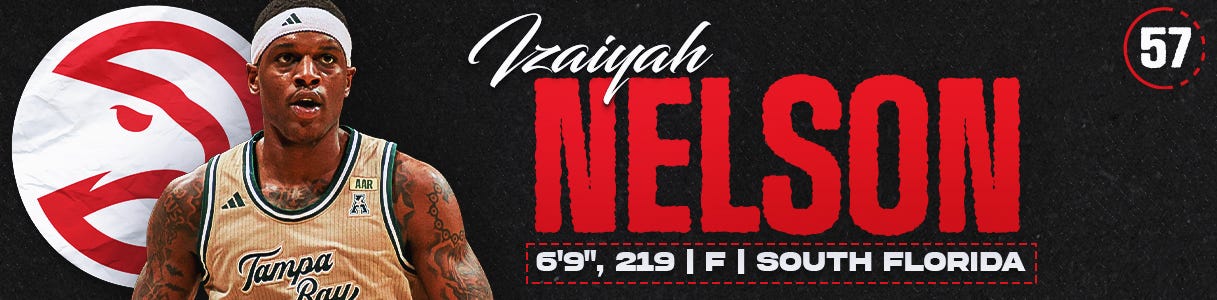
#57. ATLANTA HAWKS (via BOS) — Izaiyah Nelson | F | South Florida
Profile: 6’9”, 219
Year: Senior
15.9 PTS | 9.6 REB | 1.2 AST | 1.6 STL | 1.4 BLK
56.1 FG% | 14.3 3P% | 72.5 FT%
34 Games | 27.2 MIN
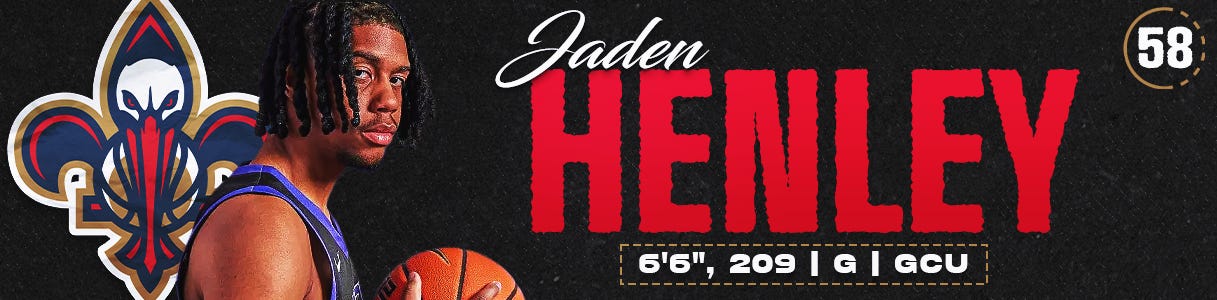
#58. NEW ORLEANS PELICANS (via DET) - Jaden Henley | G | GCU
Profile: 6’6”, 209
Year: Senior
17.7 PTS | 5.7 REB | 2.9 AST | 1.6 STL | 0.3 BLK
46.6 FG% | 26.8 3P% | 75.6 FT%
32 Games | 31.4 MIN
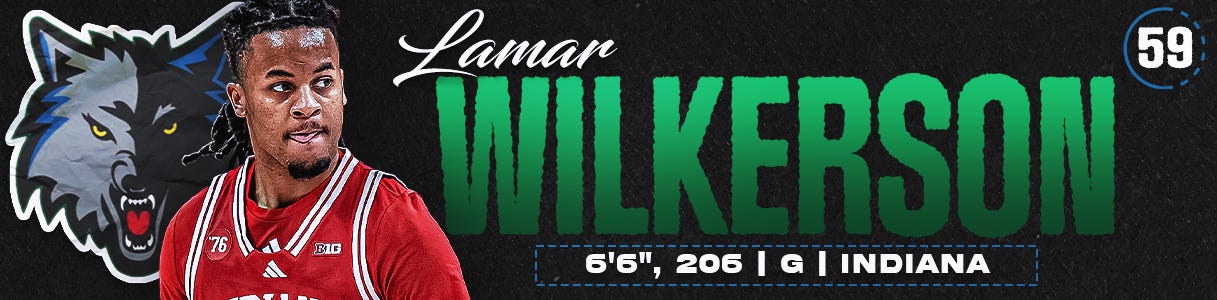
#59. MINNESOTA TIMBERWOLVES (via SAS) — Lamar Wilkerson | G | Indiana
Profile: 6’6”, 206
Year: Senior
20.9 PTS | 3.5 REB | 2.4 AST | 1.0 STL | 0.2 BLK
46.3 FG% | 37.8 3P% | 88.8 FT%
32 Games | 34.1 MIN
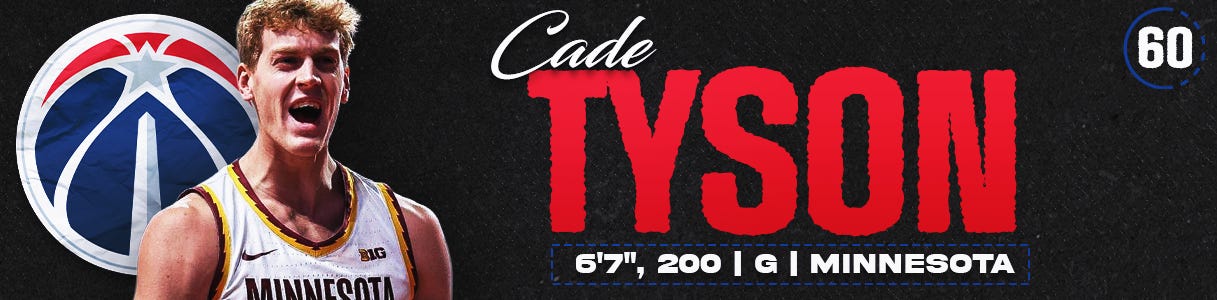
#60. WASHINGTON WIZARDS (via OKC) — Cade Tyson | G | Minnesota
Profile: 6’7”, 200
Year: Senior
19.6 PTS | 5.4 REB | 2.1 AST | 0.8 STL | 0.2 BLK
50.0 FG% | 41.3 3P% | 82.2 FT%
32 Games | 36.7 MIN