


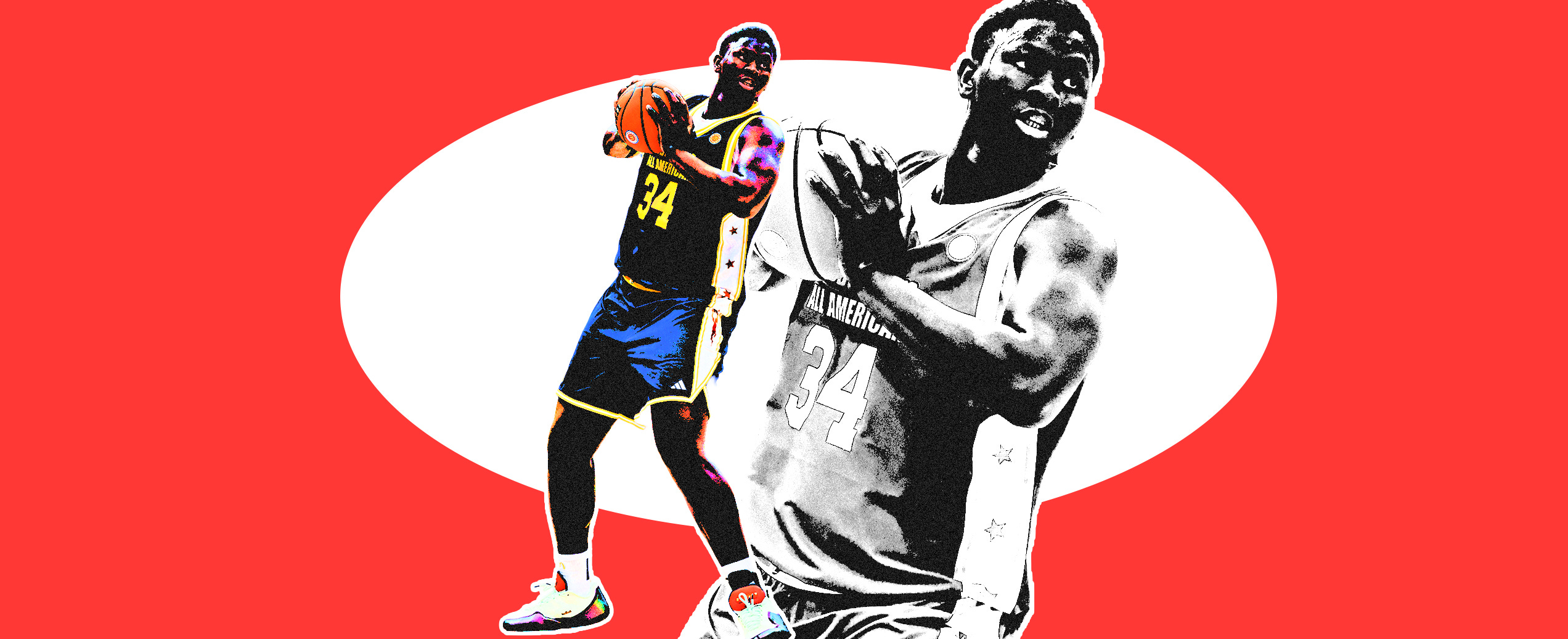
When it comes to NBA Draft prospect factories, a few coaches and/or universities stand out among the rest. Duke has put out players such as Cooper Flagg, Paolo Banchero, Kon Knueppel, Cameron Boozer, Jalen Johnson, Jared McCain, and Dereck Lively II in recent drafts. John Calipari has coached up players like Tyrese Maxey, Cason Wallace, Darius Acuff Jr., Reed Sheppard, Immanuel Quickley, and Meleek Thomas. Dan Hurley at UConn has developed players like Stephon Castle, Donovan Clingan, Liam McNeeley, Cam Spencer, Alex Karaban, Andre Jackson, and Jordan Hawkins. Baylor has had V.J. Edgecombe, Keyonte George, Ja’Kobe Walter, Yves Missi, and Cameron Carr, while BYU has had AJ Dybantsa and Egor Demin.
It’s no grand proclamation to profess that Houston’s coach, Kelvin Sampson, is a good college basketball coach. And I’m also aware that NBA teams have a good understanding of the sort of player they’re getting when they take a Coach Sampson guy. BUT, perhaps one of the more under-discussed aspects of Coach Sampson’s strengths is the development his players go through. And the players who are coached by him give Coach Sampson a ton of credit. Kingston Flemings had this to say about his coach:
In this day and era, with NIL and everything, it’s hard to keep a locker room. Everyone is making money left and right, it’s all people think about sometimes. But not at Houston. As long as we have these coaches here, it’s never going to be like that.
It’s not always going to be easy [playing at Houston]. If you don’t know that by now, you don’t know Houston. If you’re going to choose this place, you better love [basketball], and you better be ready to take adversity whenever it happens.
This sort of praise coming from Kingston Flemings—who was a highly ranked recruit, but whose role was questioned by evaluators ahead of the 2026 NBA Draft class—speaks to how players who commit to play for the Cougars must put in the work in order to reach their potential.
That brings us to today’s prospect: Arafan Diane.
The Background
Diane hails from Guinea, in West Africa. Like most young African kids, he took a liking to soccer first. His journey from Africa playing soccer to the United States playing basketball has been reported on already. Due to being over six feet tall by age 12, Arafan began to draw interest from basketball figures in Africa. He moved to Montreal, Canada, to begin playing more consistent and competitive basketball. Due to visa circumstances, Diane had to learn to play basketball and get into game shape from a private coach until he turned 14 years old—the required age for Arafan to travel by himself.
While he was growing accustomed to and improving his game, Arafan moved to Iowa ahead of his junior year. He averaged 16.8 PPG, 9.4 RPG, and 1.3 BPG while playing for Iowa United in the Adidas 3SSB Circuit. From there, as a senior, Diane began to garner the top accolades that come with being a top prospect within his class. He was considered the top center among many scouting outlets, and he was named a McDonald’s All-American. With all of the recognition Arafan amassed, the big schools lined up for the big man—attempting to land him for their programs. Arkansas, UConn, Florida, Kansas, Kentucky, Arizona, Miami, Purdue, and BYU were among some of the top organizations that were in contention, but Arafan ended up committing to play for Coach Sampson and the Houston Cougars.
When asked why Houston, Diane hasn’t minced words about why Coach Sampson was a major reason as to why he committed to play for him:
Coach Sampson is different. He pushes you hard with tough love. Off the court, he has strong family values and cares about his players. He is the best defensive coach in the country. He values winning like I do.
He and his staff recruited me hard. I spoke with Coach Sampson every Saturday and he texted me after games. They have been to my school many times and that meant a lot lot me. The fans and the facility are great, too.
Under Coach Sampson, the Houston Cougars have carved out an identity of being one of the more hard-nosed teams in all of college basketball. Landing someone who weighed in at over 300 pounds and plays with power and mobility was obviously important for Houston. However, that had to come with some body transformation.
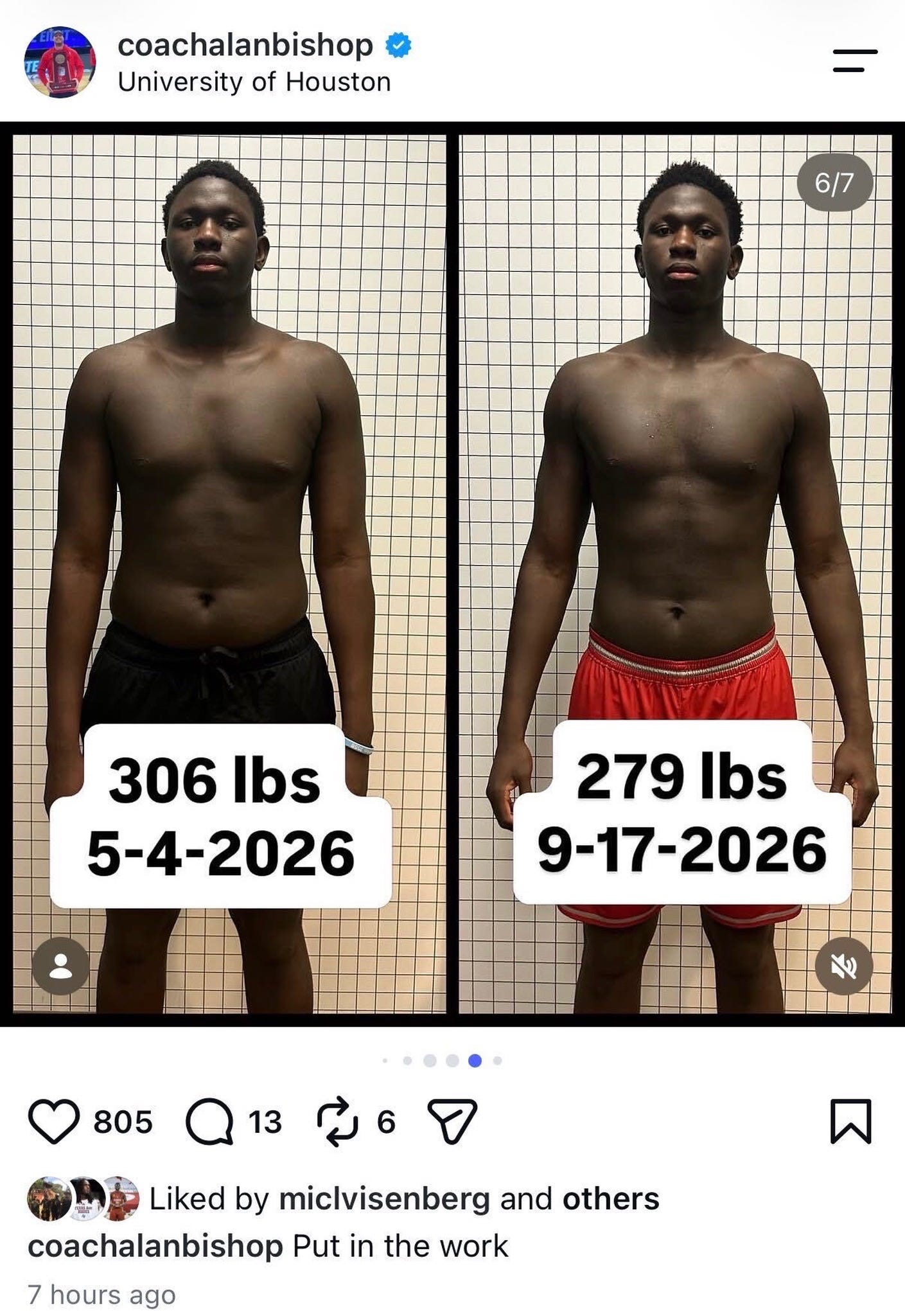
Houston’s strength and conditioning program has been lauded for years now. The physical (as well as the mental) shift players go through in order to be where they need to be has become—not only something that broadcasters and media members love to use as a fun anecdote, but also a signal for big men who want to improve their game and their draft stock. Take, for instance, Chris Cenac Jr. last season.
Cenac’s style of play coming out of Link was almost a polar opposite of how Houston preferred to deploy their big men. Being a little slighter of frame and having a proclivity to be more comfortable on the perimeter, Cenac’s game needed to improve in the paint and in the more traditional “big man things.” In just one season with Coach Sampson, Chris became one of the best rebounders in college basketball.
Conversely, Arafan Diane fits more effortlessly into what Houston looks for in their bigs. At least, on paper. His rebounding has traveled well throughout his relatively young basketball career. He is a large, physical obstacle that has to be accounted for on both ends of the floor. His conditioning has already taken well to the Houston bootcamp-esque offseason program. BUT, he does offer unique and untapped skills that are more in keeping with the modern musts the NBA desires from their bigs.
How Diane Fits Houston
While Diane does have some mobility—which we’ll touch on later—Houston is going to do a lot of work in the halfcourt. According to Synergy, the Cougars operated in the halfcourt on 87.9% of their possessions. They ranked in the 68th percentile in points per possession in terms of efficiency within that setting, and in the 84th percentile in time spent within it. Hoop Explorer grades them 36th in two-point percentage at the rim. In other words, Houston is looking to play physical basketball at the basket.
This is ideal for Arafan Diane.
At-Rim Dominance
With Iowa United last season, Diane spent 70.5% of his time at the rim. On those possessions, he scored just under 80% of the time at the basket. He ranked in the 83rd percentile in frequency of at-rim looks, and in the 90th percentile in efficiency while operating there. This bodes well for both Houston as a team, as well as Arafan showing his value to the league.
When you flip on the tape, it doesn’t take long to see why most blue-blooded programs were chomping at the bit to land Diane. This clip shows both why he was successful in high school and how some pundits could pump out the “Did he just dominate because he was big in high school?” trope.
Arafan (#34 in black) spends most of the play (even beyond what was shown here in this clip) positioning himself on the block. That continues as the ball is worked around the right side of the perimeter, while Diane works to seal his man. Once the ball reaches the top of the key, he seals his man with the left side of his body. He reaches his big ol’ right paw out as a target for the entry pass. Arafan collects the ball, spins right, keeps his man on his hip, and throws down a two-handed jam.
Scouting can oftentimes rob people of enjoying enjoyable things if left unchecked. Is this play representative of the type of player Diane will be matched up against on a night-to-night basis? Probably not. But Arafan is tossing these dudes around. He is showing sound technique, soft hands, and power.
There’s some obviously enticing stuff here.
Here is an example of some of that mobility that’s been touched on already. Arafan starts this clip on the left block, but works his way up to the top of the key as the ball is working from left to right. He receives the ball and actually puts the ball on the deck—he can actually move some while dribbling. Diane keeps his eyes up to see his teammate coming off the right wing on the shallow cut above him, but decides against moving the ball to him.
Instead, Diane backs his defender down with his left shoulder, moving his way closer to the rim. Help comes, as another defender looks to make a dig at the ball as he dribbles. Arafan feels the pressure, gathers the ball, and gets into his shot. He has plenty of space to get the ball up due to the way he moves his defender off of his spot.
To touch on the handling, this could come across as a simple, niche thing to fawn over for a basketball player—especially a McDonald’s All-American. When applying some truth serum, it’s true that not every big man can navigate their way to the basket on a live dribble. And of those who can, not all can keep their eyes up, feel pressure, and properly adjust the way Diane demonstrated on this play.
Here’s another example of understanding how to manipulate—yes, manipulate—defenders to create advantages as a big man. This clip isn’t long, but there is a ton of goodness here. As the ball is brought up on the right side, it quickly finds Diane on the mid-post. He immediately goes into a face-up to his left. Arafan notices that the defender is playing off of him. It’ll be touched on later, but he is completely fine getting into a shot if given the space and opportunity.
Arafan pumps and, to his delight, his man bites. He drives right—going baseline—with nothing but runway in front of him. After a power dribble, Diane takes flight. He isn’t fazed by the aggressive help looking to deter him, but he’s too powerful and too decisive for any sort of help to matter.
Again: power and mobility on display.
“Alright, Stephen. Arafan Diane is a seven-footer and weighs 300 pounds. He should be pushing people around and putting his armpits in the rim.”
I hear you.
But, again, it’s good that he can and that he is. On top of that, Diane possesses the ability to finish with touch, with soft hands. On this play, Arafan posts on the right block and gets the ball on the entry pass. His defender is playing underneath him at an arm’s reach. Diane makes a quick assessment of how he plans to attack here. Diane drives his left shoulder into the defender’s chest and takes up the space that is given to him. After one more bump, Diane picks up the ball, gets into a post hook, and finishes over the top of his man and the impending help.
What stands out here is the power that creates space, but also the wherewithal to avoid a tacky charge while finishing with touch.
Rim Protection
In order to see the floor and stay on the floor for Coach Sampson, Arafan Diane is going to have to be credible on the defensive end. Even a player like Chris Cenac Jr.—who had his concerns physically—was able to be versatile as a defender. The same will have to be true for Diane if he is going to shine playing for Houston.
This clip shows how Arafan will be of service. It’s a quick clip that shows the offense getting into a quick DHO action on the right wing. In these situations, the defense has to account for a lot of moving parts. If executed correctly, this action can leave the big man guarding the ball-handler—which, in open space, should result in an offensive advantage. The ball-handler does a good job of getting the ball and expeditiously gunning to the center of the lane. At every step, Arafan slides to the appropriate area of the court—sliding more and more to be in position to contest the impending shot.
As the play quickly progresses, the ball handler finds his way to the left block. Arafan cuts off the would-be layup angle as the shot comes. Diane sends the shot in reverse with his right hand, protecting the rim off of the quick action.
It’s one thing to block the shot of a perimeter player while in a help state, but it’s another thing entirely to outright switch onto a guard and stifle them. This clip shows Arafan’s ability to do just that.
The beginning of this clip shows the ball being passed from the right side of the court into the paint to the big man. Diane closes into his assignment, then the ball is popped back out to the right side of the court. The offense gets into its two-man action, initiating the pick-and-roll. Arafan switches hard onto the ball handler—taking away a driving angle. His prior assignment—the opposing team’s big man—does a smart thing and backs down the defensive perimeter player. The ball is brought back out to the perimeter to maximize driving space, leaving Arafan on an island defensively.
With the ball reset, the ball handler attacks to their right—looking to use their burst to create space for a layup attempt. Diane does a phenomenal job of sticking with the ball handler. He uses his off hand to feel the cadence of his new assignment, and mirrors him beautifully. As the ball comes off the hands of his man, Diane spikes the ball back onto the court.
He has mobility with his serious size.
Speaking from experience, it’s easy to get wrapped up in the positives that come with Arafan Diane’s defensive film. But—as is the case with every player—there are concerns that exist. And, yes, even in film that results in a positive outcome.
The offensive team kicks off this clip by getting into a shallow cut on the left side of the court. The defense does a good job of taking away any would-be advantage after this first action, which results in the offense getting back into another pick-and-roll play. As Arafan steps up to cut off the ball-handler, the ball handler jumps and dumps the ball off to Arafan’s man. His man then gets very low to the ground, power dribbles, and tries to lay the ball up and over two defenders. From behind the shot, Diane gets a piece and erases the attempt.
So, yes, the result is positive, but this play illuminates some concerns. The quick pass by the offense catches Diane out of position. Luckily, Diane’s man doesn’t go about attempting the shot in the most advantageous way here, allowing him to get back into the play. While there have been plenty of clips posted thus far exemplifying solid mobility, this clip was hand-picked to show how much room Arafan has to improve from his high school film in terms of conditioning and athleticism.
How Diane COULD Grow In The NBA
While Houston is a great place for a player to grow defensively, physically, and mentally, the Cougars are not at the forefront in terms of offensive innovation. That’s not to disparage any sort of credit or enjoyment in their style of play, but to point out that premier talent will likely have untapped offensive potential after playing for Coach Sampson and the team.
That’s great news for Arafan Diane believers.
Floor Spacing
Houston was not a three-point factory last season, and there is no reason to necessarily expect that to change to a significant degree this year. That’s too bad, given the natural touch Arafan Diane appears to have. This clip shows some of that natural touch.
To kick this clip off, Diane’s team is running a baseline screen for the offense to get an open three-point attempt on the right side of the court. Arafan sets a gorgeous screen that creates a good opening. The ball handler dribbles baseline, using the paved opening created by Diane. The on-ball defender works to fight around the enormity of Arafan, and hustles to get back into position. Because it takes a beat, Arafan’s man has to stay home—looking to close off a potential driving lane.
The ball-handler does a good job of maintaining position to where he has to be fronted, while simultaneously knowing his man is working to recover. This leaves Diane wide open on the right wing. The ball is kicked over to Diane, who instantly gets into his shooting motion after squaring up. There is too much room given up here by the defense. Arafan gets his feet up underneath him as he gets into his shot.
His feet are placed beautifully. The mechanics are fluid—lacking a hitch or any sort of rigidity. The ball is released high above his head. And the follow-through is there, providing some evidence that the touch is 100% natural.
Here’s another example of Diane’s floor spacing ability, but this time Diane gets into the shot a bit more quickly.
As the ball crosses halfcourt, the offense gets into its two-man game. The defense quickly shifts past any would-be screen to keep the ball handler in front of the multiple levels of the defense. While the ball goes from the left side of the court to the right, the defense shifts with the ball. This leaves Arafan open on the left side of the court.
Notice the shot prep from the big man here. Diane slides his feet along the three-point line further and further to the left, understanding that he is creating a ton of ground to recover as the ball is driven to the right. That consistent movement is keeping energy in his base, which, in turn, allows him to get into his shot expeditiously—and he gets the shot off quickly. And, again, it’s a fluid motion. This is the sort of prep, motion, and result that is just rare at this size.
Remember those plays we looked at earlier? You know, the ones where Arafan faced up, pump-faked, and drove baseline to dunk the ball?
When you piece those clips together with this clip, it becomes impossible not to think about how dangerous Diane could be if all of his natural gifts and unearthed potential come to a crescendo.
This clip shows a familiar set: Diane setting a screen that a teammate sprints off of with a full head of steam before getting the ball. As his teammate gets the ball, he guns toward the center of the court. Take a look at how the defense is defending here. The ball handler’s man is scrambling to recover off of Arafan’s screen. Arafan’s man has to stay home to deter the driving lane. Even the deny man to the left of the ball handler stunts off of his assignment to irritate the drive.
Diane sees this. He understands that he has the open shot on the right side of the court, and he understands that there is going to be a lot of ground to cover in order to contest his jumper. The ball handler engages all three defenders and then kicks the ball out to the open Arafan Diane.
What Diane does after the catch is tantalizing. First, he pumps. Then he jabs. His jab is respected, and his man backs off a smidge because he knows that Diane can drive (we saw that in some earlier clips). Seeing the space created from the jab step, Arafan gets into his shot. His size is a problem—not only in the paint—but also on the jumper. Look at where the ball goes as the shot comes up: behind his head and then to the top of his form.
This could legitimately be terrifying if this shot becomes a frequently used weapon.
Ball Movement
It’s been said for a while now, but big men are asked to do more than ever. A huge part of what the league is looking for at this position is decision-making. To say that Arafan Diane will be the best passer in his class would be a reach. However, he has the chops to be a very good decision-maker when he hits his higher-end outcome.
Because of his size and skill, Diane is going to attract a lot of attention. When he draws in help, he will be trusted to find his open teammates. Just like in this clip.
This clip begins with Arafan getting the ball on the left block. After gathering the entry pass, he keeps his head up to survey how he should attack the defense. Three defenders front him, so he knows there has to be an open man. One of his teammates cuts from the top of the key down the middle of the lane. Diane sees him and gets him the ball over the top of the defense, leading to a layup.
Arafan has a good knack for not just seeing who to pass the ball to, but also when and how to get them the ball. This clip shows another example of Arafan posting up and drawing extra attention from the defense. Again, we see Diane posted up on the left block—what appears to be his favorite spot. As he backs down his man, he finds another cutter. This time, the cutter comes from the baseline.
While backing down his man, Diane looks over his left shoulder and spots the cutter. As he spots his teammate, Arafan picks up his dribble and dishes out a pretty bounce pass to him on the move. The pass turns into a fairly easy layup.
The reads that Arafan can make at this point of his development can be quite advanced for his age; he can make reads that leave you wondering, “How much more of this is in there?” This clip is an example of that.
Arafan gets the ball back on the left block. Most of the defense is operating in the vicinity of Diane, looking to pressure him into making a bad decision. Because Diane has been in a system that has taught him to catch and survey on the block, he looks over his left shoulder. In a lot of games, his team normally has someone cutting, but not on this play. Arafan sees he has a teammate wide open in the opposite corner. He then makes a pretty athletic move for a big, facing up and whipping the pass to his teammate for a side-step three.
Curtains
With the 2027 NBA Draft class, there are a slew of prospects who can make cases for being the top prospect within it. Most boards don’t have Arafan Diane as a top prospect within this class. And history isn’t kind to big men in general. When breaking down guards, wings, forwards, and bigs, the big men are taken less frequently within the lottery—interior finishers and interior hubs are among the most uncommonly taken player types in the lottery era. So the numbers don’t exactly work out in Diane’s favor.
But, with his talent and with Houston being the place where Arafan can enhance, learn, and grow, there is a real shot that Arafan Diane can be a real player. Size, power, mobility, touch, and feel are all traits that can be good enough for a player to be drafted on their own...but Arafan Diane exhibits all of those traits. This could lead to him being not only a special player within this class, but a special player in the NBA.
Follow me on Twitter: StephenGHoops
Catch me on BlueSky: StephenGHoops
Catch the Draft Sickos show LIVE on the No Ceilings NBA channel: