


It has long been discussed: the NBA feels like a completely different sport once the postseason begins. Rotations shrink while the emphasis on capitalizing on an opponent’s weaknesses intensifies. Variation in the ways teams can play allows them to match up against whoever they draw as they continue to advance. Can’t evolve? You don’t advance.
The secret to this scalability is not much of a secret at all: identify the players who allow you to scale. There are several ways this can be accomplished, but one of the most difficult player archetypes to find—especially for winning teams typically drafting later than the rest—is the bigger wing or forward capable of defending multiple positions while extending offensive possessions.
Finding athletes who can play tough on both sides of the floor matters during the regular season as well, but those players seem to carry an extra layer of importance once the stakes rise in the playoffs. They keep offensive flow alive without requiring the ball—setting screens, crashing the offensive glass, cutting hard to the basket, and keeping the ball moving. While they may not lead their teams in scoring, they make smart plays and provide lineup versatility that make life easier for higher-usage stars.
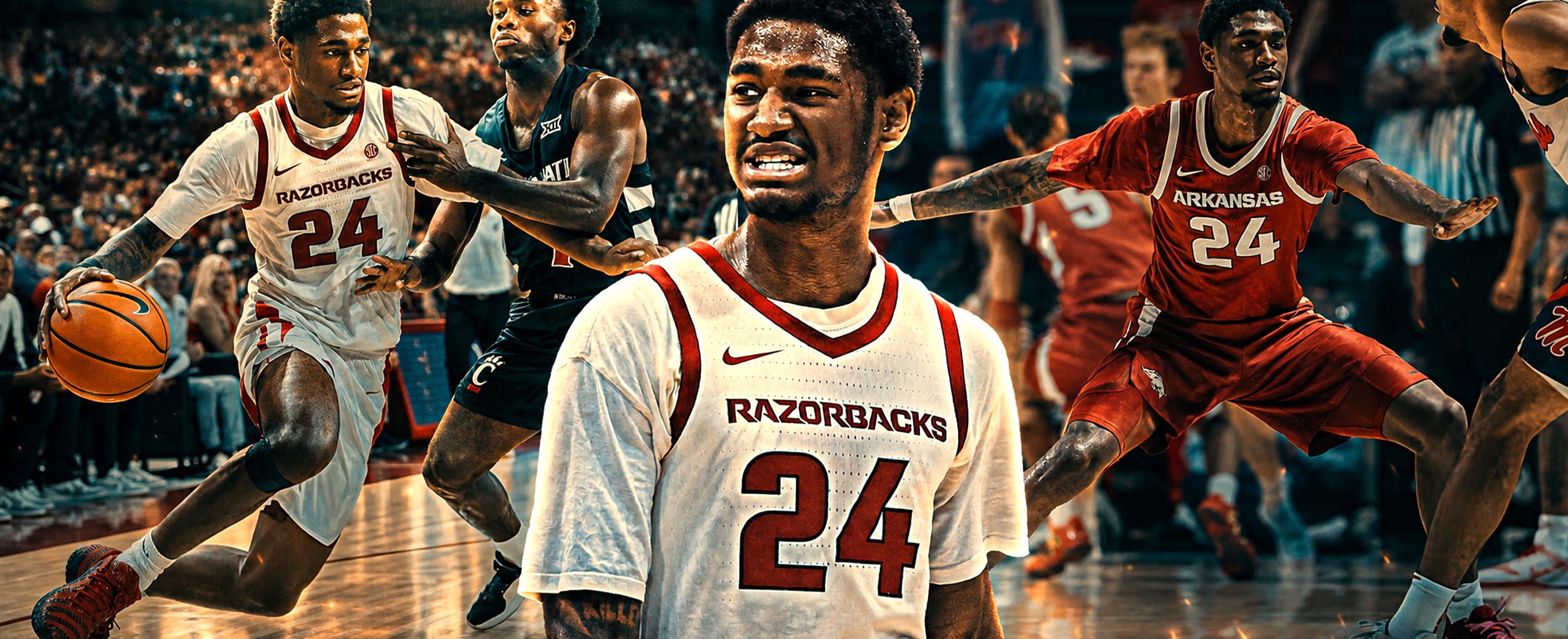
This role exemplifies the makeup of Arkansas Razorback sophomore Billy Richmond III, and it is what makes him one of the more intriguing prospects within the 2026 NBA Draft class.
Richmond’s appeal does not stem from traditional shot creation or offensive hierarchy. Instead, his value lies in the multitude of ways he can influence the game across various areas. His remarkable athleticism places pressure on the rim in transition and within the halfcourt. Richmond’s connective ability allows him to operate within the natural flow of an offense without stalling it. He is relentless—possessing a white-hot motor that consistently shows up through his rebounding, defensive activity, and momentum-shifting hustle plays.
As NBA teams continue to show us through lineup management just how influential these players can be, Richmond’s archetype has become increasingly relevant.
The Background
Billy Richmond III, also known as “Billy GOAT”, grew up playing basketball in both Tennessee and New Jersey. He is the son of Billy Richmond Jr., who played collegiately at Vanderbilt before later suiting up for coach John Calipari at Memphis. Basketball—and particularly high-level basketball environments—have long been a part of Richmond’s life.
At Camden High School, Richmond emerged as one of the better two-way wings in the country. He averaged 17.6 PPG, 7.4 RPG, and 2.6 APG while also recording 90 stocks (steals + blocks). Richmond played a major role in leading Camden to a 30-2 record and a New Jersey Group 2 Championship. Alongside the team’s success, he also earned invitations to both the Jordan Brand National Team and the Iverson Classic.
Richmond left high school as a consensus Four-Star prospect and Top-40 recruit nationally. He held offers from programs such as UConn, Michigan, Alabama, Kansas, Miami, and Texas before originally committing to Kentucky. Once Calipari departed Lexington for Arkansas, Richmond followed him to Fayetteville.
As a Freshman, Richmond saw playing time in every Razorbacks game. The production was modest—5.7 PPG and 3.0 RPG—but the trust Arkansas placed in him was notable. Richmond was one of only three Razorbacks to appear in every game during the season. When Boogie Fland sustained an injury, Richmond even saw time operating as the team’s backup point guard, a developmental wrinkle that would later prove valuable heading into his sophomore season.
This past year, Richmond took a sizable leap.
Billy averaged 11.2 PPG, 4.3 RPG, 2.0 APG, 1.1 SPG, and 0.8 BPG while shooting 56 percent from the field. His most impressive stretch came during the month of February, when he scored 20+ points in five consecutive games against Auburn, Alabama, Missouri, Texas A&M, and Florida. Across that stretch, Richmond averaged 22.2 PPG, 3.6 RPG, 3.2 APG, 2.0 SPG, and 1.2 BPG with scoring splits of 62/38/92.
Perhaps most impressively, Arkansas increasingly trusted Richmond offensively during that stretch while he still maintained his defensive impact and activity on the other end of the floor.
Richmond followed that run with a strong close to the season, averaging 14.0 PPG, 6.8 RPG, 2.3 APG, 1.3 SPG, and 0.5 BPG over his final four games while shooting 63 percent from the field and 44 percent from three.
Though Richmond was not initially viewed as one of the SEC’s premier NBA prospects entering the season, his defensive impact and late-season offensive growth helped shift the conversation. He ultimately earned SEC All-Defense honors and generated enough momentum to test the waters of the 2026 NBA Draft process.
The Crunch
When evaluating essentially any prospect, it’s important to look for historical precedent that can help outline a path toward success. Numbers are never everything, but they can help provide context for what a player consistently brings to the floor. For players like Billy Richmond III—wings and forwards who thrive through effort, athleticism, and versatility—certain statistical categories can help reinforce what shows up on film.
Rebounding percentages can help illustrate physicality and pursuit. Steal and block percentages can point toward activity level and defensive playmaking. Dunks made can help identify explosive athletes capable of applying pressure at the rim. Even assist-to-turnover ratio can help show whether a player is capable of keeping the offense moving rather than stopping possessions once the ball finds him.
Of course, this is all meant to supplement the film—not replace it. Hustle, effort, and connective impact are often best understood through watching possessions unfold in real time. Still, when enough of these indicators begin stacking together, they can help paint a clearer picture of a player archetype.
The table below reflects every player since 2008 to meet the following criteria:
Minutes Percentage: At least 50
Offensive Rebound Percentage: At least 5
Defensive Rebound Percentage: At least 10
ATO: 1.3
Block Percentage: At least 3
Steal Percentage: At least 2
Dunks Made: At least 30
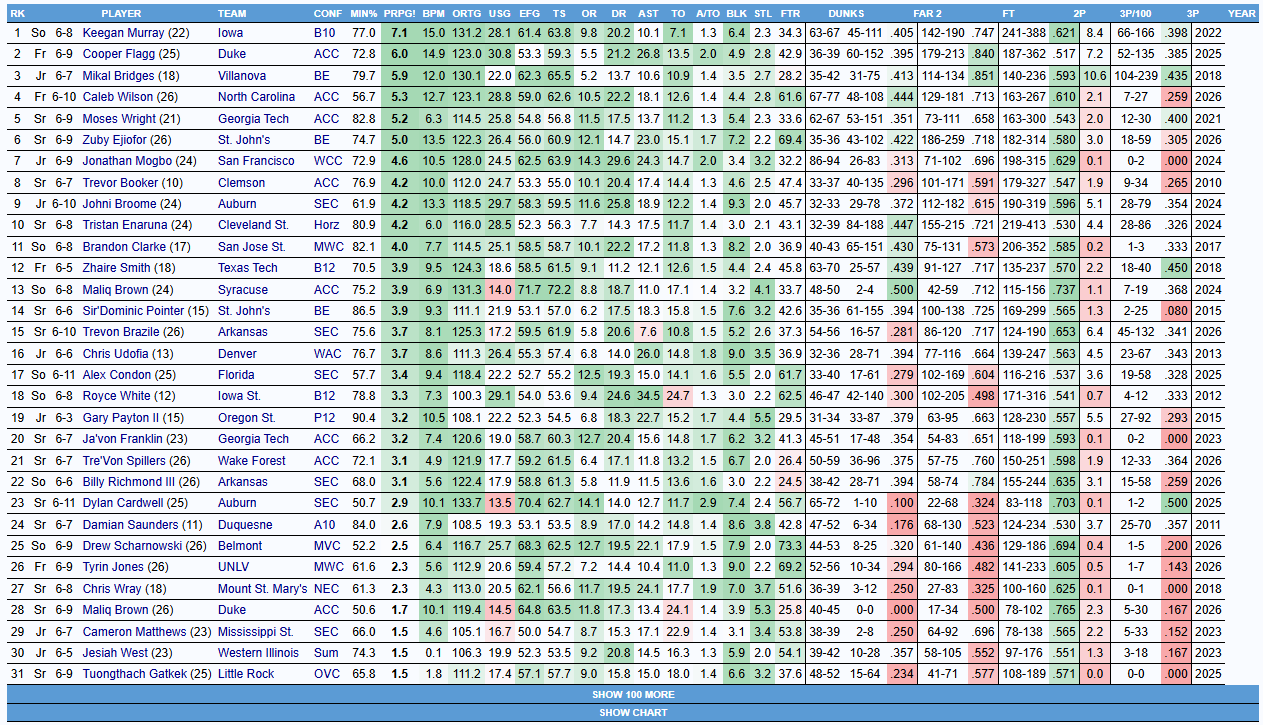
The names that emerge from this group paint a pretty clear picture. These are players who consistently impact games through activity, athleticism, defensive playmaking, and effort. Even if some of these players never developed into stars—or even long-term NBA contributors—the archetype itself continues to matter.
Players such as Gary Payton II and Keegan Murray stand out as particularly interesting examples for Richmond stylistically. Both players built value by defending hard, extending possessions, thriving in transition, and making life easier for higher-usage teammates. They impact winning without needing offensive control, which is part of what makes this archetype so valuable in meaningful basketball settings.
The Dive
The film helps clarify why Richmond’s archetype continues to matter in modern basketball.
Billy consistently finds ways to influence possessions without requiring offensive control. His activity as a cutter, rebounder, screener, and defender allows him to impact the game while still operating within the natural flow of the offense. Rather than stalling possessions, Richmond often keeps them alive—either through effort plays, quick decisions, or physicality around the basket.
That connective style of play repeatedly surfaces throughout the film and helps explain why players built similarly to Richmond continue to hold value in meaningful basketball settings.
— Off-Ball Movement
For players in the mold of Billy Richmond, their ability to move without the ball—feel the openings in the defense—provides immense value to essentially all offensive schemes. Effort is a skill, and it’s a way to be able to create easy points through hard work.
The way that I look at offense is simple: it comes down to pressure and gravity. Both are needed to consistently create openings within a defense. If there is enough pushing and pulling on a possession, even the most sophisticated defensive schemes can eventually begin to crack.
Billy Richmond III brings pressure to an offense.
He is very adept at reading what his ball handlers are doing, while simultaneously recognizing how the defense is reacting to their movement. That pressure often shows up away from the primary action.
This clip encapsulates that well.
As the ball handler attacks the right side of the floor, Richmond immediately recognizes where the help defense is rotating from in an attempt to cut off the drive. Billy patiently waits for the defense to commit before diving baseline toward the rim. Because Richmond is such a dynamic athlete, ball handlers are able to disguise push shots and floaters as potential lob passes to him attacking the basket.
That creates a layer of rim pressure that is not always available from players at his position.
What’s beautiful about Billy’s game is how naturally he can operate within the flow of an offense and still create plays without needing the ball in his hands. He flashes that ability clearly in this clip.
Starting with the ball at the top of the key, Richmond quickly surveys the floor before swinging the ball to the right side. Once the ball handler gains a step downhill, the defense immediately begins loading toward the drive—including Billy’s defender digging inward to help contain the action.
Richmond instantly recognizes the opening.
As soon as his man commits toward the ball, Billy shoots through the middle of the floor and attacks the vacated space in the heart of the paint. His suddenness and explosiveness are simply too much for the defense to recover against in time, leading to an easy finish at the rim.
This is part of what makes Richmond’s archetype so valuable offensively. He consistently finds ways to create pressure on the defense without requiring possessions to stop for him.
— Effort on the Glass
Cutting is an important offensive skill, especially for players who thrive without needing the ball. Still, there is only so much scoring volume most players are realistically going to generate solely through off-ball movement in a single game.
So where else do high-energy wings consistently create offense?
The offensive glass.
For players like Billy Richmond III, crashing the boards becomes another way to apply pressure, extend possessions, and manufacture easy points around the basket.
The possession begins with Darius Acuff Jr. attacking the paint against Florida. In many ways, Acuff represents the type of high-level creator Richmond would likely play alongside in the NBA—or potentially even become dependent upon offensively if everything fully breaks right in his development. As Acuff pressures the rim, Florida sends three defenders toward the drive in an attempt to cut off the action. Acuff is still able to get an inside-hand finish attempt up, but the shot rolls off the rim.
That is where Richmond’s value immediately surfaces.
With the defense fully occupied by the initial drive, nobody accounts for Billy crashing down the lane from the weakside. Richmond explodes toward the rim, elevates above the defense, and punishes the broken possession with a powerful putback dunk.
These are the kinds of effort plays that continue to matter in meaningful basketball environments. Richmond consistently finds ways to create offense without needing possessions designed specifically for him.
As impressive as putback dunks can be, plays like that alone do not fully encapsulate how hard Richmond competes on the glass. This clip against Alabama may be an even better representation of his motor.
The possession again begins with the dynamic Darius Acuff Jr. attacking the paint and placing pressure on the rim, but the finish does not fall. Similar to the previous clip, Richmond is there to clean up the play and extend the possession. The difference here is just how relentlessly Billy fights for the basketball.
He tips the ball once. Twice. Thrice.
Despite battling against four Alabama defenders, Richmond continues pursuing the rebound—tipping the ball to himself four separate times before finally corralling it and kicking the ball back out to Acuff to reset the possession.
These are the kinds of effort sequences that consistently show up throughout Richmond’s film. Possessions that appear dead suddenly stay alive because Billy simply refuses to stop competing.
— Controlling the Chaos
It’s easy to get wrapped around the axle when discussing players like Billy Richmond III and hyper-fixate on the physicality or flashes of athleticism. When that happens, it becomes equally easy to overlook just how intelligent Billy is as a decision maker.
For as explosive and energetic as Richmond can be, there is a surprising level of control to the way he processes the game. He consistently recognizes openings quickly, understands where pressure is developing, and makes connective plays that help keep offensive possessions alive rather than stalling them.
Billy is going to need to continue making quick decisions within the flow of the offense—not just as a cutter, but as a connective passer as well. While this has not traditionally been viewed as one of his biggest strengths, Richmond has made real strides toward becoming a more trustworthy decision maker with the ball in his hands.
This play is quick, but there is a lot to like within it.
Darius Acuff Jr. delivers a quick feed to Richmond as the two shallow cut across halfcourt. Billy works toward the right side of the floor, where Meleek Thomas suddenly accelerates baseline and presents a cutting window behind the defense.
Richmond recognizes it immediately.
Without overhandling or slowing the possession down, Billy threads a slick bounce pass to Thomas in stride, leading directly to a layup at the rim.
These are the kinds of connective decisions Richmond will need to continue making at higher levels. The play is simple, but the timing, processing, and willingness to keep the offense moving are all important indicators of offensive scalability.
When Billy is attacking downhill, he naturally commands a great deal of defensive attention. While some athletes attempt to overpower defenses to a fault—driving directly into traffic and hoping their explosiveness wins out—Richmond has shown increasing comfort leveraging his athleticism to create opportunities for others.
This possession is a strong example of that growth.
The play begins with Richmond swinging the ball to Trevon Brazile in the same-side corner. As Brazile begins working into a handoff action, Billy immediately recognizes the opportunity to turn the corner and pressure the baseline. Once Richmond gets downhill, the help defense quickly collapses toward the rim in an attempt to wall off the drive.
And honestly, that reaction makes sense.
Billy’s athleticism places significant pressure on defenses once he gains momentum toward the basket. Rim protectors have to account for his explosiveness, particularly when he gets a runway driving downhill.
Richmond recognizes the rotation immediately.
As the rim protector commits to contesting the drive, Billy leaves his feet and delivers a beautiful dump-off pass to Nick Pringle for an easy two-handed finish at the rim.
This is where Richmond’s improving decision-making becomes particularly interesting. His athleticism alone creates pressure, but his growing ability to punish defensive reactions is what can help elevate his long-term offensive scalability.
— Defensive Disruption
Richmond consistently finds ways to impact the game offensively, but the defensive end of the floor is where his utility, versatility, and scalability become most evident. His combination of athleticism, physicality, and motor allows him to make timely gambles, create disruption around the basketball, and swing possessions through sheer activity.
Whether it comes through rotating across the floor, pressuring ball handlers, recovering defensively, or generating chaos in passing lanes, Billy repeatedly shows the type of defensive playmaking that tends to translate well within winning environments.
Richmond’s length and quickness allow him to comfortably defend smaller players in space. This possession shows Billy matched up against Jaden Bradley, one of the better veteran guards in college basketball. Richmond’s agility and bend are on full display as he fights through multiple screens while staying attached to Bradley throughout the possession.
Billy’s footwork here is fantastic, and his recovery tools consistently keep him in the fight defensively. What ultimately pushes the possession over the top, though, is his combination of length, anticipation, and reaction time.
As Bradley looks to attack downhill, Richmond’s left hand strikes the ball like a cobra—poking it loose and immediately creating a transition opportunity for Arkansas.
Whenever Billy is in a position to read where the offense wants to go, it tends to end well for the defense more often than not.
This possession against Texas is a strong example of that anticipation.
The Longhorns are working a two-man action between Dailyn Swain and Matas Vokietaitis on the opposite side of the floor from Richmond, placing Billy in a weakside help position. As Swain turns the corner off the screen, Vokietaitis immediately dives hard toward the basket looking for the lob.
Everything appears to be unfolding perfectly for Texas.
Then Billy GOAT steps in.
Richmond rotates flawlessly from the left wing into the paint, quickly recognizing the lob window developing above the rim. Billy elevates and disrupts the pass at its apex before immediately exploding into a second jump to save the loose ball from going out of bounds.
This sequence encapsulates much of Richmond’s defensive appeal. Anticipation. Rotation timing. Explosiveness. Multiple-effort activity. Billy consistently finds ways to create defensive events through a combination of athleticism and relentless effort.
Richmond’s physical tools are some of the most impressive in the entire 2026 NBA Draft class, which naturally makes him an intriguing developmental swing for NBA teams. Of course, tools are only as valuable as a player’s ability to apply them functionally within the flow of the game.
This possession against Georgia is a great example of that.
Arkansas begins the play by aggressively doubling the ball, forcing the remaining defenders into a scramble situation behind the action. Once the pass is worked into the middle of the floor, Somto Cyril catches the ball near the free-throw line with space opening in front of him.
That is dangerous territory.
Cyril is a tremendous athlete at the center position and rarely turns down an opportunity to attack downhill. Seeing a runway to the basket, he immediately drives toward the rim, looking to finish with force.
Billy GOAT pulls out his best Lee Corso impression: “Not so fast, my friends.”
Richmond quickly identifies the optimal chase-down angle before exploding off the floor to high-point the basketball directly out of Cyril’s hands near the rim. The rejection immediately flips possession the other way, where Darius Acuff Jr. pushes Arkansas out into transition.
This sequence is a strong representation of Richmond’s defensive upside. The anticipation, recovery, athleticism, explosiveness, and willingness to make effort plays all show up within a matter of seconds.
Curtains
Projection is often about identifying which skills can survive different contexts.
Richmond’s archetype naturally lends itself to that conversation. Athleticism, defensive versatility, rebounding activity, connective passing, and transition pressure are all traits that tend to scale alongside higher-end talent. As rotations tighten and teams become increasingly matchup-conscious, players capable of impacting the game without needing offensive control continue to carry value.
That is part of what makes Richmond so intriguing within the 2026 NBA Draft class.
There is still room for growth offensively, particularly as a shooter and half-court creator. Improving as a perimeter threat would make it easier for Richmond to fully maximize his athleticism as a cutter and downhill attacker. Continued development as a ball-handler and self-creator would also give him additional avenues to punish defenses in tighter offensive environments.
Still, players capable of consistently impacting games through effort, physicality, defensive activity, and versatility continue to carve out meaningful NBA roles. Richmond repeatedly shows the willingness to do the connective work that often helps lineups function at a higher level. Whether it comes through rebounding, defending multiple positions, keeping possessions alive, or creating momentum through hustle plays, his presence tends to be felt across several layers of the game.
The deeper the NBA leans into versatility, lineup malleability, and scalable basketball, the more relevant Billy Richmond III’s archetype becomes.
Follow me on Twitter: StephenGHoops
Catch me on BlueSky: StephenGHoops
Catch the Draft Sickos show LIVE on the No Ceilings NBA channel: