


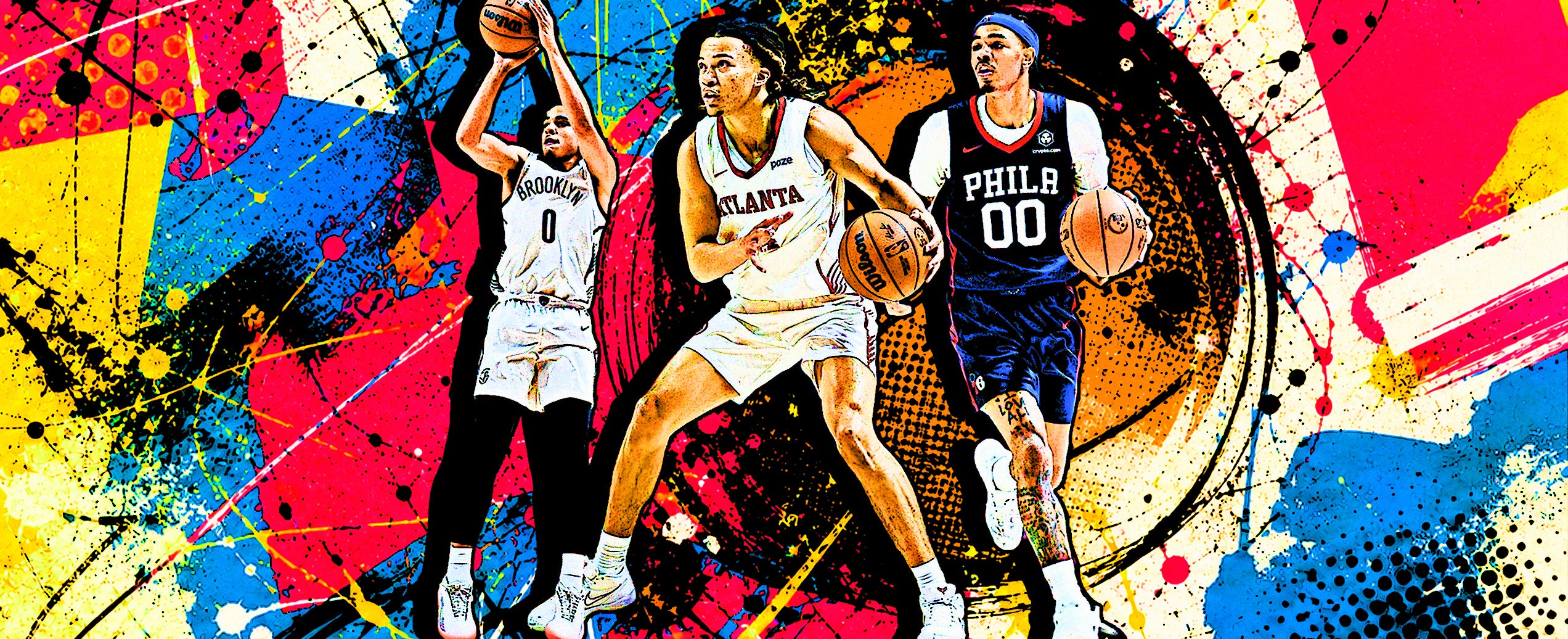
I’ve wanted to return to my “How to Evaluate by Position” series because, honestly, the way I look at guards keeps evolving. The 2026 NBA Draft class gave me a lot to wrestle with. Kingston Flemings, Darius Acuff Jr., Mikel Brown Jr., Labaron Philon Jr., Christian Anderson, Darryn Peterson, and Sergio De Larrea all played very different games, shouldered different loads, and solved problems in their own ways. It’s the offseason between scouting periods, so now is as good a time as any to hit the refresh button on my own philosophy.
The biggest thing I’ve realized while studying the guard position over this last cycle is that you have to understand a player’s role on the floor—and prioritize that context—to unpack who he is fully.
More than anything else, guards can offer clarity: clarity about how an offense is supposed to function, how the players around them fit together, and what everyone is being asked to do.
I’ve been guilty in the past of rushing to judgment and not considering all the layers a guard is responsible for before diving into what he looks like on paper. Two guards might put up similar stats while carrying totally different creation loads for their respective teams. One could be attacking after someone else has already displaced the defense; another might be responsible for creating that initial advantage at the top. Another guard might be working in a system that gives him much more freedom to operate in carefully designed ball-screen situations. Then there are guards, especially in college basketball, who are stuck trying to organize a crowded floor and bail out late-clock possessions.
If I evaluate them based only on their box-score stats, I completely miss the reality behind the numbers and potentially misunderstand the role they’re headed for in the NBA.
So moving forward, I want to start with their role. What was the player really asked to do, and what did he have to work with? What did the offense make easier, and what did he have to figure out for himself? Context doesn’t excuse poor decisions or bad play, but it definitely changes what success and failure mean.
What does this actually look like on the floor? A common place to start is breaking through the initial layer of the defense and creating an advantage by driving downhill. But something I’ve had to wrestle with personally, especially after the 2026 cycle, is that not all paint touches are created equal. I used to give guards a ton of credit for simply getting into the lane. Now I’ve come to understand—or at least prioritize—that touching the paint and actually putting pressure on the rim are two different things because defenses don’t react to them in the same way.
What did the defense have to give up? Did the rim protector step up? Did the low man leave the corner? Did the drive produce an open pass, or did the guard have to settle for a tough shot because no help was drawn? Sometimes a guard crosses the free-throw line and… nothing really changes for the defense.
Philon and Flemings are great examples for different reasons. Philon got downhill with force, played through contact, and made defenders react. It wasn’t just about getting into the paint—it was about keeping the rest of the floor available after the first defender recovered or the rim wasn’t there. Don’t just track where the drive ends; watch what the defense actually does.
With Flemings, it looked a bit different in practice but came from a similar idea. Flemings played all year at Houston with pace, but “playing fast” isn’t the same as rushing. He sped up the action for everyone but often stayed under control himself. His burst created openings, but his balance, ball security, and willingness to keep reading the floor prevented the possession from turning into chaos. Raw speed looks impressive at face value, but if you’re arriving at the next problem faster without SOLVING it, then you aren’t helping as a guard.
On the flip side, Acuff’s tough shot-making was eye-opening at Arkansas. There’s real value in a guard who can bail out a broken play. NBA teams need that because sets break down all the time against the quality of defense and personnel on the court. Sometimes, though, a tough shot masks what went wrong earlier. Did he miss an easier read? Did he hold the ball too long? Sometimes the highlight make is actually covering up a process that can still be improved.
This line of thinking has led me to separate the ability to survive a broken possession from the skill it takes to keep the play from breaking down in the first place. Both matter, but I’ve most certainly underrated the second one.
Following that same creation logic, ball-handling has only reinforced for me that it’s a functional skill rather than a “flashy” one. Look, I love a creative handle like anyone else. After watching this class, though, I care even less about the number of moves and more about whether the handle actually accomplishes something. Does it shift the defender, open a new angle, or buy that extra split second to read the floor? If it doesn’t, what do the fancy combination dribbles actually mean if the possession is still dead and the guard is operating from a standstill?
Downhill pressure, pace, and ball-handling can all help create an advantage. Shooting can change whether that advantage is available in the first place.
Watching two of my favorite guards in this past class, Anderson and Brown, enhanced how I view the importance of shooting gravity and how it forces defenses to react before a play like pick-and-roll even takes shape.
Shooting percentages only tell part of the story; what matters is how the defense reacts before the shot even goes up.
Brown’s pull-up made bigs step out and forced defenders over screens, opening the lane before he even turned the corner. His shooting and playmaking worked together, each amplifying the other. Anderson’s range and volume forced defenders to stay glued to him and shifted where help could come from, even when he didn’t touch the ball. That made me pay more attention to their “gravity”—all the little ways a shooter changes the coverage.
Perhaps the most fascinating player to bring into this conversation after focusing mostly on lead guards is Peterson. He made me rethink the relationship between scoring and control over the offense. Those two things aren’t the same, but they aren’t completely separate, either. A guy can score a ton without really creating for others, but sometimes a scorer bends the defense so much that he’s already doing some of the playmaking work before delivering a single pass. Growth as an offensive player comes from recognizing when your own threat has already done enough and when it’s time to make the simple play.
Passing is different from playmaking. We intertwine the two all the time—myself especially—but passing is only one part of the larger process. Passing is the delivery; playmaking is the work that makes the delivery valuable. Now, when I see a great pass, I try to rewind and ask: what forced the help? Did the guard read the floor? Did the pass actually create something, or did it just move the problem elsewhere?
Preserving an advantage is just as important as creating one, and that’s something I’ve needed to recognize more. Not every possession needs more creation—sometimes the defense is already scrambling, and the guard just needs to keep it that way. One extra dribble lets everyone recover. Waiting for the perfect assist can close the window. Sometimes a quick swing or attacking a closeout matters more than trying to finish the play yourself. The right decision can look ordinary and still be the most important part of the possession.
Finishing and defense bring us into some of the more “uncomfortable” aspects of evaluating guards.
Finishing has gotten a bit complicated for me to evaluate personally, but I’ve taken notes on where I want to keep focusing, especially with guards. Beating the first defender is just the start of the play. The NBA has real length all over the floor, whether it’s the big staying vertical, the low man coming over to tag the roller, or help arriving from the side. The corners may already be covered. Now the guard needs options—everyone’s favorite buzzword lately. Can he change angles, use either hand, stop on two feet, get to a floater, finish before the rim protector is set, draw contact, or keep the pass alive while taking a hit?
For smaller guards, there’s less margin for error. That doesn’t mean you give up on them or write them off because of how tall they are or how much they weigh. Their shooting ability, as I went through above, might just be that much more important in warping the floor. Their handle needs to create cleaner separation. Their reads might need to come faster.
Off-ball play is another part of fitting in regardless of size or stature, and it’s something I’ve certainly paid more attention to over the last few draft cycles. Most young guards aren’t walking into the league and running every possession themselves. Some barely touch the ball in meaningful ways early in their careers. So what do they offer when the ball isn’t in their hands? Can the guard relocate, cut, attack a closeout, screen, make quick decisions, and stay involved?
That’s why, when we evaluate guards, the best long-term outcome isn’t always “full-time point guard.” Sometimes it’s being able to create enough, shoot enough, and make quick decisions well enough to play next to someone better. That might sound like lowering the ceiling, but think about where we are with current NBA lineup construction and offensive responsibilities.
Look around the league at all these teams with wing- or forward-sized initiators. We’re in an era where a team’s best advantage creator isn’t always a guard. With that in mind, how can those guards play off bigger creators and better capitalize on the advantages being created for them? I’m not saying you should take a guard who is mostly a play finisher incredibly high in the draft. However, a player who is excellent at those supporting skills could be the best contextual fit for a team that already has its primary creator and needs help elsewhere.
Then we get into defense, where the tradeoffs are often the toughest. I don’t expect every guard to be a stopper, but he has to be able to stay on the floor. Effort matters, but it’s not everything. Balance, angles, absorbing contact, and screen navigation all matter. With smaller guards especially, how much does the team have to adjust around them to provide protection? Can he hide on a lower-usage player? Does he need a bigger guard next to him? Will teams keep running the same action over and over again to hunt him? There’s no one answer, but the offense has to be good enough to make that tradeoff worth it.
One last thing I’ve learned: don’t fall in love with the best-case version of a prospect and forget about what actually gets him on the floor. Every guard needs to improve, but how many things need to get better at once? A guy who mainly needs to become a steadier catch-and-shoot threat is in a different spot from someone who needs to overhaul his shooting, finishing, processing, and defense all at once. If the shot isn’t respected, the driving lanes shrink. If the finishing doesn’t translate, help defenders stay home. If the defense can’t keep him on the floor, the offense might never get enough reps to grow.
Focus on the minimum version of the player. What already works? What gets him a job while the rest develops? What still matters if his biggest swing skill never shows up? Can he help a second unit, play alongside another creator, and stay on the floor when teams start hunting for weaknesses?
That’s where the 2026 class left me. I’m not looking for one body type, stat line, or style of guard play. I’m trying to understand how the pieces fit together: the handle needs to create a real angle, the shot needs to change the coverage, the drive needs to force a real reaction, and the guard has to spot that reaction before the opening disappears. The offense should still have something valuable happening when the ball leaves his hands. On defense, he can’t need so much protection that his offensive value gets buried beneath all the adjustments.
Some guards do all this quietly. Others hit tough shots and turn broken plays into points. Some create the first advantage, while others are best at keeping it alive. The 2026 class reminded me not to assume any one style is automatically worth more than the others.
In the end, my job is to figure out what the guard is really doing, why the defense is reacting, and what still works when the game gets tougher. I’m still learning, but that’s the lesson I’ll bring into the next class—and I hope it helps someone else working through the same questions.
Great article. You're learning should one day convert to teaching. This is a good start.
Good article and perspective - thanks