


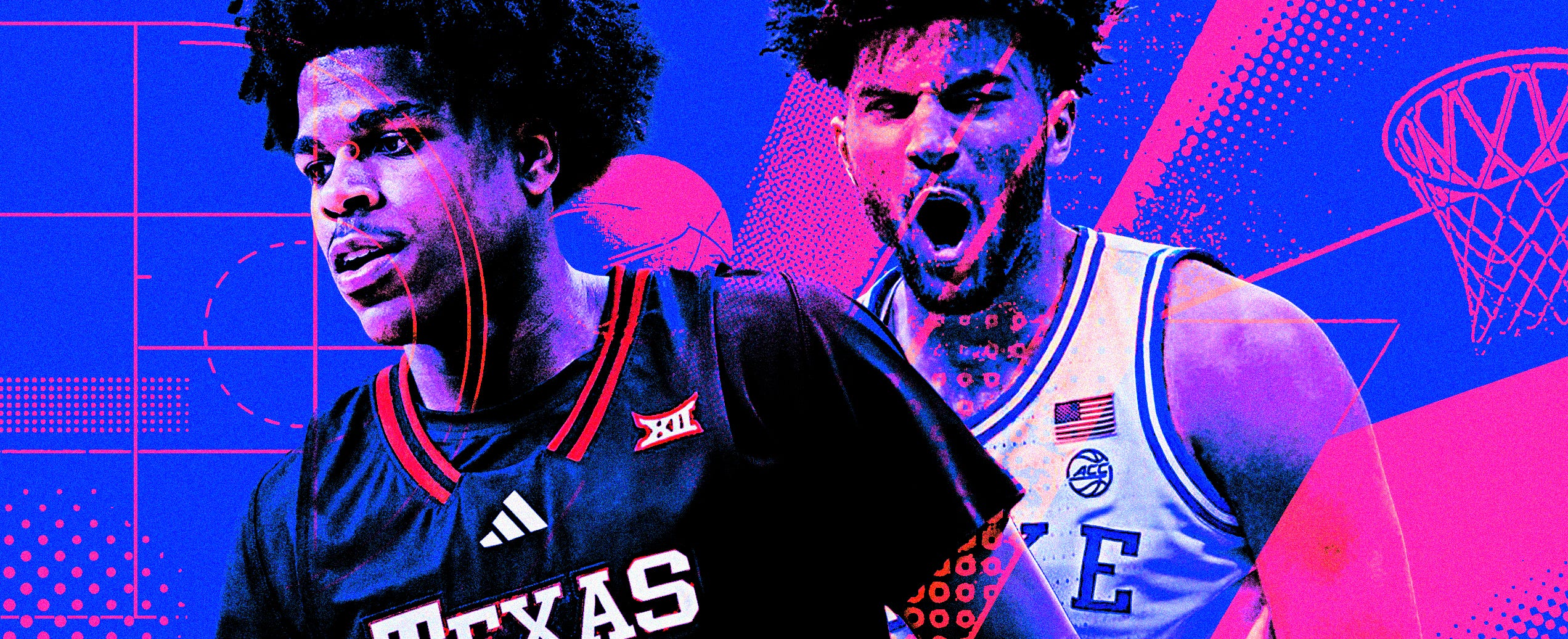
The 2026 NBA Draft is right around the corner, and that means it’s time for the annual “my guys” column from yours truly, Draft Deeper!
Defining what “my guys” means is pretty simple. Everyone who analyzes, scouts, and evaluates prospects makes a big board ranking of their top available players. In that type of exercise, you’re attempting to aggregate talent based on personal philosophies, core principles of the league, said players are going to compete in, as well as any values of said team/organization one is scouting for, both on and off the court.
Even though individual rankings aim to identify the best overall talent available, every person is biased towards players they would want on their team or in their building, whether they care to admit it or not.
That’s where the phrase “my guys” comes from, and why it’s a popular topic around the water cooler and on social media.
So in this piece, as I do each year, I’m laying out the cases for the players who I trust the most to become the best versions of themselves and contribute to winning in the NBA. These are guys I would want in key situations, both in the regular season and the postseason, for a variety of reasons. This group of players is the collection of talent I would want to go to war with.
Without further ado, the 2026 edition of Draft Deeper’s favorite prospects!

Cameron Boozer, Duke
It’s only right to lay claim to the player who sits atop my 2026 draft board as “my guy” out of the consensus top prospects.
Cameron Boozer, AJ Dybantsa, Darryn Peterson, and Caleb Wilson have all taken over the top of nearly everyone’s draft board for good reason. This is a STACKED group of players at the top, but one in particular has never budged from that lead spot in my rankings.
Boozer is the most accomplished prospect we’ve seen domestically this century. The only other player who has as many accolades and trophies as Boozer over the last 20 or so years is international phenom Luka Doncic.
Now, that doesn’t automatically make him the best prospect I’ve scouted in 15 years of doing this work. That would belong to Victor Wembanyama. After that, it’s a close group between Boozer, Doncic, Cooper Flagg, Anthony Davis, and Zion Williamson (Duke Zion was a different beast; let’s not forget).
What Boozer has done throughout his entire career up to this point is drive winning through any means possible on offense. He’s the most complete offensive talent in this draft, in my opinion, when factoring in his combination of dribble, pass, and shoot utility as a 6’9” 250-pound forward with a 7’1” wingspan.
Players who can operate with both hands comfortably off the bounce, shoot at high efficiency, and pass in nearly any context don’t come around often at Boozer’s size. He can run actions on the ball, whether it’s calling for a screen or working in isolation against a mismatch. He can post and draw two. Boozer can operate as a screener, and slip to the basket, short roll into a separate action, or pop out and knock down threes. He can even spot up from distance and space out to the corners!
Look at the efficiency metrics, the play type profiles on Synergy, and the shot charts. Everywhere you look, Boozer is at or near the top of his class, and among the best prospects statistically in college basketball’s history.
Go through every competition, be it in college, high school, AAU, or FIBA. Boozer has trophies/accolades from them all, and he’s done it while not being the most gifted vertical athlete amongst his peers.
Boozer’s superpower is his mind. He consistently makes excellent decisions in halfcourt settings, while also having the vision and passing chops to hit ahead on the break. He’s so versatile and so smart at dissecting mismatches and open reads that he just makes everyone else around him better.
Drafting Boozer doesn’t have to be about taking a guy who looks to score 25+ PPG while running a billion pick-and-rolls or posting up constantly on the block. Boozer is a nightly triple-double threat, and that comes from his strength, coordination, and mental processing.
What an NBA team is getting in Boozer is one of the best rebounders in his class, a multi-faceted offensive talent, and someone who will find a way to make an impact on defense. There are real concerns about whether Boozer can chase matchups around or guard straight up against 7-footers in the post. But he’s got great hands, excellent reflexes, and knows how to box out and end possessions on the glass.
If I were running an NBA franchise and I was picking at the top of the 2026 draft, I just wouldn’t be able to say no to Boozer. He’s produced and won everywhere he’s been, and embodies what I want in a modern basketball player through and through. He may not be the second-best prospect I’ve scouted after Wembanyama, but he’s absolutely my favorite in all my years of scouting. I’m betting on Boozer to be the best player in this class when it’s all said and done.
Christian Anderson, Texas Tech
Anyone who has followed my work in the draft space over the last few years knew this was coming. I’ve been talking about Christian Anderson as a draft prospect since he was in high school.
Naturally, there’s been quite a bit of pushback on just how good of a prospect Anderson is. He doesn’t possess elite size, doesn’t pressure the rim by the metrics as often as some of the other best lead guards in this class, and will certainly be prone to defensive mismatches in the NBA that will test him even in ways he wasn’t in college basketball. He’s even struggled with turning the basketball over at times because of the intense pressure he’s faced as a primary ball handler.
All of those concerns are valid. However, they aren’t stopping me from considering Anderson my favorite point guard prospect in the 2026 draft. Anderson is a potential star in plain sight as someone who sits at the very intersection of everything I’m looking for in an NBA guard.
Anderson is the best shooter in this class, pound for pound. There is no other player who can knock down shots from any spot on the floor like Christian. He’s been pulling up from the parking lot since he came out of the womb! I remember watching just how deep Anderson was pulling up in high school, and I’ve been reminded on several occasions by sharp basketball minds that he’s been known as a lethal shooter long before that.
Where Christian has shown immense promise is as a pick-and-roll ball handler and passer. There is no more polished floor general in this class than Anderson when he’s able to go to work in ball-screen offense. He has all of the passes in the book and can make them with either hand. His vision and creativity off the bounce is uncanny, and can make defenses look foolish at times. He’s not the type of player to dribble the air out of the ball and run the clock down. Anderson’s handle and pace are functional. He knows how to time accepting or rejecting the screen, can keep a defender off his hip, and deliver crisp passes from a variety of angles—not to mention he’s an automatic bucket if defenses don’t chase him over the screen, or put a body on him in transition.
Even considering the perceived “weaknesses” in his game, Anderson has finished well at the rim during his collegiate and high school careers, and even threw down some nasty dunks on the break and in the halfcourt this year. He tested well athletically at the combine and measured with a 6’6.5” wingspan that matters greatly when projecting to the next level.
On defense, I never found Anderson out of position or unaware of what’s going on. He competes and knows how to play against matchups who are bigger than him. Does that mean he’s getting stops like Stephon Castle every time? No, but given what he can provide on offense, I’ll gladly take a player who I’m not questioning their effort or awareness on defense, both on and off the ball.
Sometimes, we rank players based not only on production, tools, and intel, but on faith. That may sound like a foreign concept to analytical scouts who stand firm on letting the algorithm tell the story on a player. It may also sound strange to the film junkies who believe solely in letting what they’ve seen on tape tell the entire story about a player.
I’ve seen Christian play at a high level in several settings, step up clutch in big games, and I have a firm belief he’s going to become the best version of himself and succeed in his career. This kid has been breaking molds since he was in middle school. Why should I believe he’s going to stop now as he transitions to the NBA?
Morez Johnson Jr., Michigan
I didn’t anticipate having Morez Johnson Jr. as one of “my guys” in the 2026 NBA Draft when the season started.
Yet here we are, and I now consider Johnson as the best big man in the class. He can play either the PF or C position, and possesses the best defensive versatility I’ve seen in a big man since Bam Adebayo came into the NBA years ago.
Johnson can legitimately switch 1-5 on defense, and relishes guarding opposing backcourt players as much as he does mixing it up down low with opposing forwards and centers.
It’s one thing for a bigger player to enjoy guarding players smaller than them. It’s an entirely different thing for said big man to actually have the lateral agility and flexibility to keep those players in front of them and make their lives a living hell away from the basket—not to mention that he can cover ground and rotate away from the ball to help protect the rim and seal off drivers.
Johnson’s motor is his particular superpower, but his athleticism and measurables certainly help make his case as this draft’s best defensive player. Johnson plays with an attitude and ferocity that makes it seem like he takes every possession personally, and is a monster at boxing out on the glass and ending possessions with defensive rebounds.
Excellent hands, feet, and mobility for a 6’10” forward in shoes with a 7’3.5” wingspan who weighs in at 251 pounds: that’s a player who is built to play multiple frontcourt positions and thrive on defense in playoff environments.
His game on offense isn’t as refined as his overall defensive impact, but there are real reasons for optimism given shooting touch indicators from the three throw line and on a more limited sample size of jumpers across multiple years in college. He’s always been an excellent finisher at the basket, and there have been some flashes from Johnson of face-up drives and instinctual passing.
High-level play finishers who can actually guard all over the floor, block shots, and impose their will on the glass are incredibly valuable in the postseason. That’s one lesson that’s become even more evident over the last few seasons. Any team that’s looking to solidify its defensive identity would be wise to consider drafting Johnson, as he has the talent to wind up going far higher than he’s currently projected in re-draft exercises down the road.
Zuby Ejiofor, St. John’s
Speaking of multi-positional frontcourt defensive talents, Zuby Ejiofor shares a lot of the same qualities as Morez Johnson, just not quite as gifted in terms of lateral mobility and length.
However, Zuby is about 6’9” in shoes with a 7’2” wingspan, weighing in at about 245 pounds. He is a LOAD to handle down low, someone who isn’t exactly very “movable” unless he’s going up against a true giant like what he could find in the NBA in Nikola Jokic and Joel Embiid.
Against the bigs Ejiofor found in college, he stood his ground phenomenally, and allowed St. John’s to operate in several defensive contexts, especially when it came to switching different ball-screen actions. Zuby isn’t quite as equipped to defend true 7-foot-plus size in the post as Johnson is, but he’s as close as you’re going to find to Morez in a fully switchable forward. He’s a better rebounder than the numbers indicate on the defensive glass, and he made a living grabbing offensive rebounds for easy put-back finishes.
Where Ejiofor carves out his own lane on the court is on offense, and not because of the more “traditional reasons around scoring.
Yes, Ejiofor can finish around the basket and position himself on the block. What he can also do is operate as a screener, work in handoff actions, attack matchups downhill, and pass on the move like a big wing.
Ejiofor is surprisingly nimble with the ball in his hands on the move. He’s gotten to some drives to the rim where there’s just no one able to knock him off his spot and prevent him from converting on his shot attempt. Not to mention he posted passing numbers that I’d be comfortable projecting for a combo guard, let alone a player that primarily operated as a center in college basketball.
Yes, the outside shot is a real question mark, but there’s hope for Zuby given more of a willingness to shoot as his career has gone on. His touch isn’t terrible, and the mechanics look workable on spot-up attempts. If he’s able to knock down threes close to a league-average clip, it only helps his cause as a secondary/tertiary creator by dragging defenders out to cover him, which opens up driving lanes for Ejiofor to barrel through.
For as long as I can in the draft, I’m looking for players with positional size and strength who can handle the ball and make decisions. And if Ejiofor ends up shooting it down the line, he could wind up much higher than projected in future re-draft exercises.
If anyone loved Collin Murray-Boyles last draft, they should value Ejiofor for a lot of the same reasons as that’s the blueprint for his potential NBA success. And that’s a player I want to bet on more often than not.
Tarris Reed Jr., UConn
If I’m looking to draft a center, I want them to play with a level of physicality that actaully earns said positional label.
I want a nasty big man who screens hard, rolls harder, and is an actual presence in the paint on both ends of the floor. That’s exactly who Tarris Reed Jr. has been, especially during his time at UConn.
Reed has excellent rebounding and shot blocking metrics in a 6’10” frame with a 7’4” wingspan, and weighing in at 264 pounds. These are all plus numbers for an NBA center, which bodes well for his ability to actually match up with some of the league’s best bigs.
What Reed accomplished as a winner at UConn was everything I want in a modern center. He routinely created shot/passing attempts as a screener, punished matchups on the block as an elite-level finisher, and controlled the glass on both ends of the floor. His excellent hands, instincts, and timing as a shot blocker played right into UConn’s defensive schemes that funneled drivers into Reed in the paint. And boy, did he take advantage of those opportunities to challenge and contest shots.
Where his offense could really take another leap is from distance. There haven’t been a ton of indicators at the college level that Reed is going to shoot in the short term once he gets to the league, but it’s been noted as something he’s working on down the line. And he has shown solid touch on runners and hook shots at the collegiate level.
When projecting who will be great role players in the NBA, it’s important to take inventory of who actually understands their personal strengths and overall identity. Reed knows who he is, how he can impact a game tomorrow, and what he needs to continue building on to be the best version of himself throughout his pro career. That’s the type of self-awareness I would want to draft into my organization, and the foundation of why I value Reed as a first-round caliber big man. Do not be shocked if he ends up going much higher than projected on draft night.
Alex Karaban, UConn
If there’s one role player I’m betting on in the second round of this 2026 draft to outperform his projection, it’s Alex Karaban.
Karaban has been a mainstay for the winningest program in college basketball since he got to UConn. Now, Dan Hurley is the most important part of the success of the Huskies; that’s not up for debate. However, it also helps that Hurley has had one of the most versatile forwards out there to play off NBA-level talent like Stephon Castle, Donovan Clingan, and the aforementioned Tarris Reed.
Karaban shoots the ball at a high level, makes all of the connective passing reads one could want a combo forward to make, can handle the ball and take mismatches off the dribble, and he can work in several defensive schemes such as zones or switch-heavy coverages.
In terms of on-and-off ball instincts on both ends of the floor, Karaban is one of the sharpest players college basketball has seen over the last few years. He’s not going to blow anyone away athletically, but he has the size, strength, and length to play both forward spots in the league. He’s another player who understands that it’s his job to make everyone else’s lives easier, and complement the best players on the team.
Karaban has done that job very well during his time in college, and even though he’s not a young, upside-down talent like higher first-round picks, there’s no question that Karaban has a real shot at returning that type of value when we look back on the 2026 draft class years from now.