


No matter how much we dislike them, injuries are a part of the game of basketball. A twisted ankle there or a ligament torn here can swing a game, a championship, or a player’s draft stock. While a player’s talent is always the biggest factor in whether they get drafted, availability is a key trait of any evaluation.
There have been a handful of players who have still been drafted highly despite a predraft season marked by a lingering ailment. Kyrie Irving and Darius Garland were each top-five picks despite missing a ton of games in their lone college seasons, while Nerlens Noel suffered a painful ACL tear but still was selected 6th overall by the Philadelphia 76ers due to his pre-injury tape.
With any injuries predraft, it’s maddening to try to see through the smokescreens and figure out the truth of the tape. Would a player be better if they were healthy? How slowed down are they by their injury? No matter how hard one tries, unless one knows the exact medical details of a player and a specific injury, it’s hard to get a proper read on a player’s performance while injured.
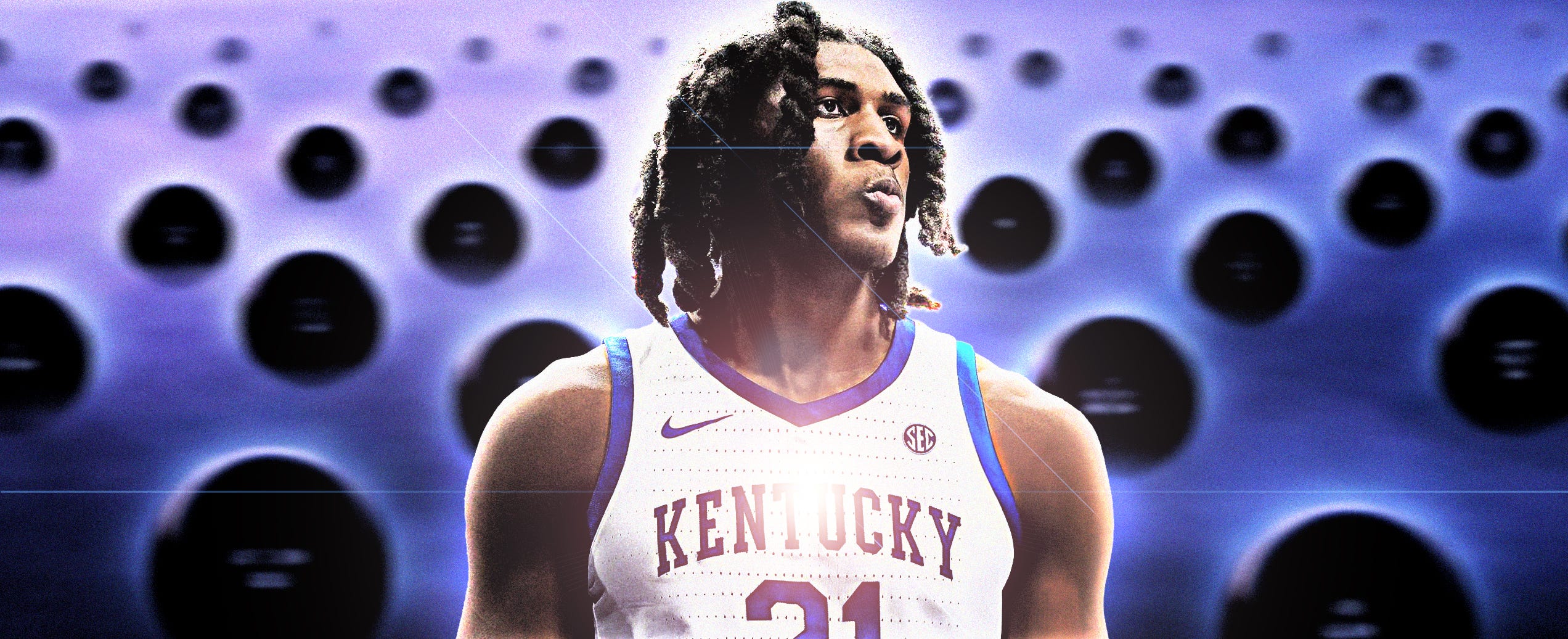
We’re circling back to the dreaded ACL with Jayden Quaintance, as the Magic 8 Ball’s gaze has shifted towards one of the best young big men in this year’s draft class. Quaintance was one of the best freshmen in the country last year, but due to his reclassification, he couldn’t declare for the 2025 draft and elected to rehab his late, partially torn ACL in the college ranks.
Now in his second season, Quaintance has only played a few minutes as a draft-eligible player. What has he shown in his 66 minutes of gametime as a Kentucky Wildcat to keep up the buzz he had last year as a freshman big? And is it enough to warrant heading to the NBA despite a strong top of the 2026 NBA Draft Class?
Quick Shakes of the 8 Ball
To get a full view of Jayden Quaintance, who is in his second college season but will be draft eligible this summer, you need to go back into his early teenage years. Although his recent injury and decision to choose Arizona State over some of the more established college basketball powers have obscured it, there was a time not too long ago when Quaintance was considered in the stratosphere as Cooper Flagg, AJ Dybantsa, and Cameron Boozer.
That may seem hard to believe, but per 247sports, Quaintance was ranked as the 9th-best player in his class, the second-best big man in the 2024 high school class, and the top player in his state. Had Khaman Maluach not come over to Duke, Quaintance would’ve been the top-ranked center in the class.
I’ve already noted it, but as a 2007-born player, it’s worth considering that Jayden Quaintance has essentially been playing a year or two older than his competition for most of his basketball career in the spotlight. Quaintance averaged 17.3 points, 11.6 rebounds, 2.4 blocks, and 1.4 steals playing for the Word of God Holy Rams in Overtime Elite, all while earning a McDonald’s All-American nod before he reclassified up from the 2025 high school class and chose to be a Sun Devil over offers from Louisville, Kentucky, and Memphis.
What made Quaintance such a coveted prospect as a 17-year-old is what still makes him one today. At 6’10” with a stretchy wingspan, Quaintance has good measurables to be a center in today’s NBA. He doesn’t just rest on those laurels, however, as Quaintance is one of the most active and rangy defenders I’ve seen at the high-school level. He never gives up on a play, has the lateral foot speed to stay attached to guards on the perimeter, and uses great timing and verticality principles to be a fearsome defender at the rim.
If basketball were played on just the defensive end, Quaintance might have some calls to be the best prospect in the country. Instead, some of his offensive questions are too pressing to leave out in his evaluation. While he has massive hands and a strong ability to finish with force at the basket, there are still lingering questions about his touch and passing ability. Also, at this stage in his development, Quanitance is not a threat from the perimeter to score.
Given his age and despite his shortcomings, colleges lined up before Quaintance chose to head to the desert for his freshman year. In 24 games for Bobby Hurley, Quaintance averaged 9.4 points per game, shot 60.0% from two-point range, and snagged 7.7 rebounds a contest, with nearly three coming on the offensive end. That’s not to mention his defensive dominance, as Quaintance averaged 1.1 steals per game and a gargantuan 2.6 blocks per contest, too.
His stern first year in the college ranks earned him both Big 12 All-Freshman and All-Defense awards, but the late partial-ACL tear diagnosis led to a muddled chase for Quaintance when he entered the portal. Even with his injury, there were multiple suitors for Quaintance’s talent, ultimately ending up at Kentucky, like many recruiting pundits thought he would.
It took a while for Quaintance to make it onto the court, as he’s been rehabbing his injury since last spring, but he was able to make it back… for a short stint. He was only able to play four games against St. John’s, Bellarmine, Alabama, and Missouri before dealing with knee swelling. Thus, in what could be his last season in college, Quaintance has only given a smidgen of tape for scouts and NBA teams alike to dissect.
Occult Offense
I’ll start with the less glamorous end of the floor for Jayden Quaintance, although it may be the most important for his NBA evaluation. As a center who isn’t likely to demand a ton of touches as a primary NBA scoring threat, it’s imperative that Quaintance does the little things well and the big things at a high level to provide enough value on offense.
I say that Quaintance isn’t projected to be a scoring threat at the NBA level because right now, due to his limitations, Quaintance projects to be a rim-running center on offense who can set screens, roll to the rim, and finish with authority. That’s nothing to sneeze at, but it does limit his ceiling from an overall perspective in the grand scheme of draft things.
A final note for this article is that, while I’ll mention the importance of how Quaintance has looked at Kentucky, a solid portion of this article will compare it to his freshman year at Arizona State. There’s too small a sample size with the Wildcats to make any distinct conclusion on Quaintance’s changes to his game. This is partly an issue with scouting, but it’s worth noting what made Quaintance such a desired prospect despite his offensive drawbacks.
Before we get into the drawbacks, let’s talk about what Quaintance can do, which is finish at the rim. Quaintance has taken 12 shots at the rim this year for Kentucky, canning them at a healthy 58.3% clip, per Synergy. That’s an extension of last year’s finishing for Arizona State, as Quaintance put down a scalding 69.2% of his 107 shots at the rim last season. That was buoyed by him slamming down 34 dunks last season, but I’m not going to fault Quaintance too much for finishing with the ferocity and force that he brings on the defensive end.
On tape, Quaintance does a great job of clearing out space with his movement before using a strong base to finish over and through defenders. He’s a great athlete, often getting out on the run or blinking to the rim with a head of steam, which is something he could do easily at the NBA level.
I’m more concerned with Quaintance’s ball-handling strength, as he did lose a few too many possessions when players crashed down on his paint touches or high-post looks. His strength on either end makes this a curious issue, but it cropped up enough on tape that I’ve flagged it as a place I’d love to see Quaintance improve once he gets healthy.
Similarly, the most significant area Quaintance can improve his offense is his touch. Touch is one of the more nebulous skills in a player’s toolkit, but that doesn’t make it any less crucial for a player. Quaintance can finish with force, but struggles to place lay-ups as easily off the glass or to put enough lift under his rim attempts, or really any attempt at the basket.
I’m not as bullish on Quaintance developing that, unfortunately, due to his shooting woes and free-throw issues. It’s not the only metric for evaluating a player’s touch, but free-throw shooting does help illuminate a player’s inherent level of that skill. Thus, the fact that Quaintance shot 47.9% on 71 free throws at Arizona State and just 4/13 at Kentucky shows the touch concerns are sadly alive and well.
The issues Quaintance has with touch extend to his jump shot, as he hit only 6/26 threes last year, for 18.8% in that area, per Synergy. As mentioned above, we’re dealing with a small sample size for Quaintance, but the tape shows troubling issues to work through. Mostly, Quaintance rarely sets his feet the same, has an awkward flinging shooting motion, and doesn’t release the ball off his fingertips enough to get good spin on the ball.
All of these things can be developed if Quaintance digs in and works on his jumper for multiple offseasons, but they leave him right now in non-shooter territory. That’s not the biggest issue for a player who already was projected as spending a lot of time at the rim, but it does blunt his ceiling more than more versatile players and does put some cold water on the early shouts for him to be ranked as highly as some of the stars in the 2026 draft class.
Quaintance also isn’t a passer quite yet, as he has had a negative assist-to-turnover ratio in both seasons of college basketball. For every savvy skip pass or backdoor feed, there are a few clips of Quaintance not putting the right touch on his passes to a teammate, resulting in a turnover.
It may seem odd to mention Quaintance’s issues on offense in ways that may not even affect his role at the next level, but it’s necessary to do so for a top prospect like Quaintance. If a team is going to commit a high pick to a pure center, it’s worth thinking about what Quaintance can do and what he may one day be able to do on the offensive side of the ball. NBA teams aren’t getting any worse at offense, which makes contributions on that side increasingly important.
At the same time, it’s hard to see any fundamental changes between freshman and sophomore year, Jayden Quaintance. That’s fair, given any leaps shown in 66 minutes would’ve necessitated caution, but outside of his explosion against the Red Storm, Quaintance has looked like virtually the same player.
That player, who can slam down dunks, score on putbacks, set bruising screens, and snatch offensive boards, has value to an NBA team today. The real determinant of Quaintance’s stock will be what he can do to grow his game, as his ceiling is currently limited on the offensive end.
Inside Scoring Package: You May Rely On It
Outside Scoring Package: Very Doubtful
Passing/Ball-Handling Package: Concentrate and Ask Again
Defensive Divination
Defense is the less glamorous side of the ball compared to the thrill of scoring buckets, but I’ll be darned if I didn’t have a blast watching Jayden Quaintance’s defensive tape. There’s something to admire about players who seem to relish digging into tough boards, muscling around screens, and getting their hands dirty on defense.
That’s precisely what Quaintance has done multiple seasons in a row. I’ll start with Quaintance’s rebounding. It’s never a guarantee that a player can hold their own with the dirty work on either end. Still, Quaintance is always the first player to box out an opponent, doesn’t shy away from contact, and uses his athleticism and length to go after rebounds instead of them coming to him. It’s not going to make many highlight reels outside of this article, but that doesn’t make it any less important.
It’s easiest to start on the inside with Jayden Quaintance’s defense, as that’s where he spends most of his time lording over his territory. His tantalizing athleticism, along with his timing and spacing, are rare for a player of his height. It would be a letdown if Quaintanceweren’tt an anchor on the inside. Instead, he’s a dominant force there thanks to his tools and defensive mentality.
With a 9.8% blocks percentage last year and a 5.8% blocks percentage in much more limited minutes, it’s clear that Jayden Quaintance is a force to be reckoned with at the rim. His long reach certainly helps to turn shots away, but few shot blocks in this or any draft class inject as much animus and venom into his swats as Jayden Quaintance does.
Quaintance is also a decorated thief, using his quick hands to dig in on drives, and is usually the first player to the floor for loose balls. That’s something you don’t always see from a player of Quaintance’s caliber, but it’s one of the reasons that I love him as a defender willing to do the dirty work.
Even when he’s not getting a swat, which isn’t very often, Quaintance is still putting a cap on the rim for his opponents. Per Synergy, Quaintance held opponents to just 42.1% shooting at the basket, including a 37.1% mark on lay-up attempts. That comes from his body control and use of his frame, even when he’s staying vertical and not attacking for a swat.
From an NBA standpoint, it’s easy to pencil in Jayden Quaintance as a starting center at the next level. Despite being an inch or two shorter than the prototypical size, Quaintance does everything that a modern NBA team needs on defense. He walls off the paint without fouling, gets involved in other actions with active hands, and can comfortably switch out to a perimeter player and stay in front of them on drives.
That in and of itself might be worth a first-round grade in today’s NBA, as the fact that Quaintance has looked so good in both the Big 12 and the SEC years before he can have a legal beer means he still has an untapped ceiling to reach. If he never grew as a defender, Quaintance would still be a talented prospect.
Given his age and pre-injury athletic profile, however, there’s little reason to believe that this is the best Jayden Quaintance can be on this end. Thus, having already evaluated a ton of defenders in this year’s draft class, I’d still have Quaintance ranked at the top of this year’s crop on that side of the ball.
Perimeter Defense: Signs Point to Yes
Interior Defense: It is Decidedly So
Team Tasseography
This section will focus just as much on Jayden Quaintance’s injury as it will on his past teams, as there’s a bit less to say about what he’s done for the Wildcats this year. It’s never a good thing to tear one’s ACL, although the injury has become more treatable in the past decade or so compared to the issues it would present in the past.
Even with medical advances, the rehabilitation period is still long and arduous, making it difficult to return to pre-tear form. For Quaintance to have come back when he did was admirable, but the fact that he’s now on the mend after only four games shows that he still has a long road ahead of him to get back to where he was physically before the injury.
With only 66 minutes played, it’s hard to speak about what Jayden Quaintance has done on the court more than what Kentucky has looked like without him. Which should hold more weight, if any: the great first game back that he had against St. John’s, or his performance against Alabama that yielded a terrible plus-minus? Do either of them matter in Quaintance’s evaluation as a data point one can rely on?
I’m not so sure. I think it’s more worthwhile to evaluate Quaintance at Arizona State, where he was low on the pecking order of mouths to feed on offense after Alston Mason, B.J. Freeman, Adam Miller, and Joson Sanon. None of those players is a great defender on the outside either, making Quaintance’s offensive performance understandable and his defensive domination even more impressive.
Drawing any conclusion on the court from Quaintance’s time at Kentucky is impossible until he spends more time there. The more fascinating angle, then, is to consider why Kentucky might not be as good this year in the absence of Quaintance. I think it’s fair to say that a solid portion of Kentucky’s struggles this year has come because their roster was specifically tailored around having Jayden Quaintance on the floor.
A backcourt of Otega Oweh, Denzel Aberdeen, Jasper Johnson, Jaland Lowe, and Collin Chandler isn’t much stronger than the one Quaintance played with at ASU. The other bigs in the room are more of a mixed bag too, as Mouhamed Dioubate is a solid defender, while Malachi Moreno could be one one day, and Brandon Garrison doesn’t bring as much oomph to the table.
That leaves Quaintance as the missing piece to put the Kentucky puzzle together. If he were on the court more, as Mark Pope likely hoped, the team wouldn’t have just the 54th-best adjusted defensive efficiency mark in the country per BartTorvik.
In that sense, I’m moved just as much by what Jayden Quaintance did last year as what he hasn’t done this year. This Kentucky squad was built to play to his strengths, yet has struggled without a reliable defensive anchor like Quaintance. That makes his value increase in my eyes, without the few minutes he’s played while working back from injury tainting my view of him as much as it might.
The Final Shake
With a significant injury looming over him, Jayden Quaintance’s case in the NBA draft will undoubtedly be one of the more fascinating ones to consider. There’s no guarantee he comes out of college to test his mettle at the NBA level, as he’s earning a ton in the NCAA, but you could make an argument that Quaintance should still be one of the first bigs drafted in 2026.
There are certainly reasons to be worried, as no one knows how long it will take him to recover to his pre-injury athleticism. One of the biggest draws for Quaintance was his rangy speed and leaping, all of which are hampered by knee injuries. If he can’t regain that stature, his offensive limitations will come into question much more.
If he does regain his form, however, it’s hard to see an already-talented player as anywhere close to finished. Given what he did at seventeen, it’s promising to think about what Jayden Quaintance can do at twenty-five with NBA coaching, a more mature frame, and years more experience roaming the paint on both ends.
That untapped potential, despite his injury, is why I haven’t faltered in my belief in Quaintance’s long-term talent. Several talented players are vying to go after the star-studded top of the 2026 NBA draft class, and while he hasn’t played nearly as much as any of the others, it’s still worth keeping Quaintance’s name in mind when making a draft board.
honestly think Quaintance needs to stay another year
He's played only 4 games this year and his freshman years showed some pretty severe weaknesses on offense
He'll only be 20 at the time of next year's draft, so I'd like him to work on his scoring and shooting in college instead of having to stress out about living up to a high draft pick
people don't realize how difficult it can be to recover from a torn ACL