


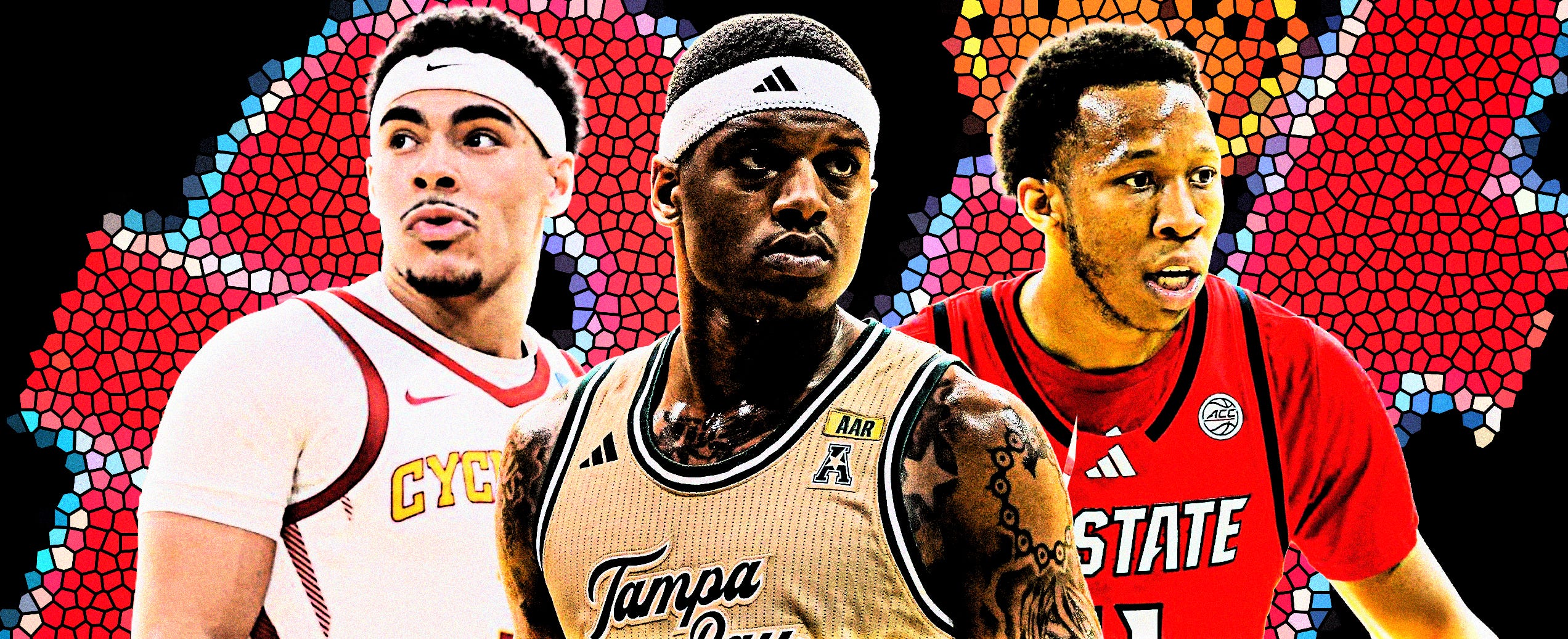
The 2026 Portsmouth Invitational Tournament has come and gone. Every year, NBA hopefuls who have exhausted their college eligibility enter the PIT in hopes of boosting their draft stock. Before we dive into the happenings of this year’s event and their ramifications, it’s important to give context to what the PIT is and what it produces. Last year, the PIT produced 14 players who signed what I refer to as a “substantive NBA contract.” That group includes players who signed either a standard, two-way, or 10-day contract with a team at some point during the NBA calendar year.
2025 PIT Contract Earners:
-Kobe Sanders
-Jahmai Mashack
-Julian Reese
-Moussa Cisse
-Adama-Alpha Bal
-Bez Mbeng
-John Poulakidas
-Sean Pedulla
-Chucky Hepburn
-Chris Youngblood
-Curtis Jones
-CJ Huntley
-Jahmyl Telfort
-Tamar Bates
In keeping with tradition, I will be giving you the 14 players I would be targeting if I were in a front office coming out of this past week’s Portsmouth Invitational Tournament. Read that last part carefully—this is not a power ranking of how players performed in the event. Instead, it’s how I would personally rank them given their prior track record and their performance at the event. Before we dive in, follow me on Twitter/X!
TIER ONE: Draftable Consideration
Quadir Copeland
Quadir Copeland had a rock-solid Portsmouth Invitational Tournament. He was my top-ranked prospect going into the event, and he didn’t do anything to lose his footing. He was a clear-cut quarterback for his team, organizing the offense and generating a ton of assists. Copeland’s shiftiness with the ball, no-look passing ability, and toughness through contact were all on display. Defensively, he outsmarted opponents, showcased impressive timing on his digs, and generated steals before the ball even crossed center court at times. Copeland also hit an NBA range three off the bounce in his first outing, which was encouraging, as that remains the biggest question about his game.
I don’t feel like I learned anything new about Copeland this past week. On one hand, that’s a little boring. Conversely, his businesslike approach is encouraging. Copeland was the top dog coming in, and he played like he was better than the other players on the floor throughout the event. He didn’t look panicked, jittery, or overwhelmed by the moment. He was steady. There aren’t many 6’6” players who can create advantages and force turnovers quite like Copeland. He’s a guy I’d be willing to take the “boy I sure hope he shoots it on enough volume to keep the defense honest” bet on in the second round. If he can become a passable shooter, he’ll be a two-way impact guard/wing, and those come at a premium.
Rafael Castro
Rafael Castro did Rafael Castro things in Portsmouth. He showed ridiculous speed for a big man. He got off the floor for big dunks with the greatest of ease. He did an excellent job of tracking the ball as it came off the rim and hustled to grab out-of-area rebounds. When he switched down the lineup, he looked super comfortable containing smaller opponents. Plus, his measurements came back okay. He stood 6’10” with a 7’2” wingspan and a 9’1” standing reach while weighing 226 pounds. That’s not ideal for a center, but Castro’s 6’10”, 225-pound listing in college gave little room for error if he’d come in shorter or lighter. That’s workable!
Some of his shortcomings, namely his lack of weight, were on display. Castro can be driven backward more easily than others who play his position, though he compensates pretty well through his length, activity, and tenacity. Castro also had some rough moments in ball screen defense. When he gets to the next level, his athletic advantage won’t be as pronounced, so he’ll need to tighten up his technique and awareness while relying on his recovery tools less. Still, I love what Castro’s working with. He brings exceptional speed to the center position in a league that loves to push the pace, he plays hard, and he has some real ball skills at his disposal. The name I keep coming back to here is Paul Reed, a game-wrecking event creator who makes things happen. I remain a believer.
Cade Tyson
This one may surprise people, as Cade Tyson was ice-cold from the floor during his first two outings in Portsmouth, though he did get red-hot in his third. But remember, it’s about the larger sample, too. Sure, Tyson’s shot didn’t go in very much over a three-game sample, but we also have a 124-game, four-year sample of him 42% of his threes, and purely from a shooting standpoint, I know which one I feel is more reliable.
Outside of his shot, I thought Tyson looked like a pro. In a combine setting, basketball can get ugly. People dribble the air out of the ball, stop the flow of the offense, and have a tendency to seek their own opportunity rather than seeking the one that is best for their team. Tyson played a more organized brand of basketball than a lot of other people on the floor. He wasn’t selfish, he reliably made the extra pass, and didn’t force the issue. On defense, he maximized his length while guarding the ball and got into the right spots as a team defender. Tyson’s profile isn’t the sexiest, but he’s a tough dude who can shoot it and move it, which should make him easy to play if nothing else.
Izaiyah Nelson
Izaiyah Nelson was another case where the measurements were going to matter. A non-shooting big man with lackluster playmaking numbers, Nelson measuring out at 6’10” and 218 pounds didn’t give him much wiggle room. He came in at 6’9” with a 7’3” wingspan, a 9’0.5” standing reach, and 219 pounds. Those numbers aren’t ideal, and combined with his on-court shortcomings, it feels like higher-end outcomes may be capped here.
That said, Nelson feels like a stellar bet to eat innings the way that Julian Reese did this past year if nothing else. He moves like a wing when he gets into passing lanes, his head is comfortably above the rim when he goes up to dunk, he soars for rejections, and he fights hard on the glass. There are far worse players you could throw onto an NBA floor than a guy this tall who moves this well and competes this hard. I wouldn’t be surprised if he ends up putting together some rock-solid games on an NBA court next season.
TIER TWO: Not Quite Tier One, But Comfortably Ahead of Tier Three
This tier includes players I view as priority undrafted targets, whether that be on a two-way or Exhibit-10. I could be talked into getting these guys into draftable territory. There’s still plenty of time for other players to withdraw, these players to show out at G League Elite Camp/the NBA Combine, and for my final data/film dives to bump them up my board.
Jaden Henley
Jaden Henley is the biggest “oh wow, I have to go back and re-assess some things” player coming out of the event. I’d sort of written him off, given his inconsistent, up-and-down marks from three over the years. But during each of his first two PIT games, Henley looked like he was comfortably the best player on the floor. The 6’7” wing with guard skills was doing it all. He had a comical six steals in the opening contest, bullying opponents and picking their pockets at will. He flew in on rim rotations to strip it loose before opponents could go up with the ball. Offensively, he hit some impressive shots from beyond the arc, but his downhill stuff really sang. He has the juice and wiggle to make his man dance, and on top of that, he aggressively seeks contact downhill. As a result, he got where he wanted pretty easily, and he drew fouls when he didn’t. Plus, he showed that he knows how to move off the ball, and he made some nice passes.
I’m trying not to get too excited over a small sample here. After all, we’re dealing with a wing who only made 30.7% of his career threes and will have to adapt to a deeper line at the next level. Still, there were moments where I’d squint and see a Jordan Miller variant. Maybe Henley will never be consistent enough as a shooter to really move the needle. But guys who have that rugged toughness, the ability to dice through traffic, heads-up passing vision, and the knack for disrupting plays on defense can be winning players on the nights they get their jumpers going. I need to do a lot more work here, but Henley really impressed me this week, and he has some strong statistical indicators to boot.
Tamin Lipsey
Tamin Lipsey didn’t have a blow-away week by any stretch. His production was run-of-the-mill, he measured with a sub-8’0” standing reach, and his wingspan came back at 6’2.5”. Still, I can’t get over his priors. He’s long been a possession battle monster, taking great care of the ball while generating a ton of steals. He had some nice moments at the PIT, utilizing slipperiness and pace to surgically knife through the defense before converting on touch shots or hitting open teammates. There was nothing awe-inspiring this week, but he wasn’t bad. Throw in his track record as a smart playmaker, elite takeaway artist, and a tough-as-nails offensive rebounder, and I’m still pretty interested.
Peter Suder
6’5” Miami-Ohio wing Peter Suder was a last-second replacement, but he performed well above replacement level. In his first game, he basically ended up taking over the point guard role for his team down the stretch, as he was clearly their best and most poised offensive player. Throughout the week, Suder drilled deep threes, showed excellent craft and placement as a passer, and showed his willingness to get physical as a driver. I thought he was great defensively in the first game, too. He did a good job in ball screen defense; he was visibly communicating and showed great instincts for when to double opponents. He posted solid counting numbers, but he also forced bad passes and generated deflections that won’t show up on a traditional stat sheet. He had some lapses in the second game, but that happens in these types of events.
I’m struggling a bit with Suder. He was a deadeye shooter this year who’d never really drained threes like that before, so I’m uncertain as to how much to buy his shot. Additionally, he is extremely upright with the ball. His first step is far below what you’d expect from an NBA player, and he’s not particularly wiggly, either. If Suder isn’t a solid shooter, the floor could fall out of this thing really fast. Still, I love what I saw this weekend. He was one of the savviest players on the floor. He also displayed a high level of skill, and there’s a toughness that underlies all of it on both ends of the floor. He’s really growing on me, and I could see him cracking my Top 60.
Tobi Lawal
Tobi Lawal has always been a “come on, you have to at least kick the tires here” guy for me. The 6’9” forward with a 40.5” vertical is a ridiculous athlete. He threw down some rim-rocking jams, had awe-inspiring rim rotations that led to rejections, and he even looked comfortable shooting the three-ball this week. Still, he had an airball triple, struggled to put the ball on the floor in traffic, and had some anticipation issues on defense. That’s always been the push-pull. Lawal’s ball control metrics have always been poor. Also, he’s not a consistent shooter, and his defense can be a letdown given his tools. That said, he has a level of athleticism that can’t be taught, and he generally plays hard. When he’s asked to do less, the best elements of his game could really shine. I’m a bit dubious about either his shot or his feel ever getting to the point where he could be an Obi Toppin-type contributor, but I could see a world where he becomes a back-end rotation guy who brings energy, pace, and disruption off the bench.
Felix Okpara
Every once in a while, you’ll see a player on a PIT floor and let out an involuntary “oh no” because they are so clearly operating on a different physical plane than their opponents. This year, Felix Okpara was one of those guys. Now, on the basketball talent spectrum, he’s probably closer to the Trey Jemison side of that equation than the Toumani Camara side, but Jemison continues to get opportunities in the league, and I think Okpara will too. He came in at 6’11” with a 9’4” standing reach. To call him an intimidating force around the basket this week would be a massive understatement. He had some jaw-dropping rejections, showcased great activity, and forced errors around the basket when opponents heard his footsteps. Offensively, he wasn’t as efficient as one would hope, but he did have some great finishes. Okpara’s lackluster passing numbers make it pretty obvious that he’s never going to be a guy you want to have the ball for too long. But I’m confident that he’s a guy you can throw out there to block shots, dunk the ball, and crash the offensive glass, and it’ll be fine.
TIER THREE: My Preferred Swings/Exhibit-10 Targets
To be perfectly clear, I’m not as married to these prospects. I’m married to a very beautiful woman who allows me to watch way too much basketball. If you were to ask me which other Portsmouth prospects I would prioritize from an NBA front office standpoint, though, it would be these guys. The margins between these players and my honorable mentions are razor-thin, so please keep that in mind before yelling at me. Additionally, I tend to be more immediate in my thinking when it comes to these types of players. Back-end roster spots tend to be transient, so I’m looking for guys who could either develop into something really valuable or potentially provide something in the near term.
Kylan Boswell
Kylan Boswell had some masterful performances in the PIT. The downside here is clear—Boswell is a short guard who doesn’t get off the floor well, and he shot 30.7% from three last season. Not ideal! Still, he measured pretty well at 6’2.5” with a 6’8” wingspan and a 228-pound frame that you don’t find too often from a guard. While Illinois’ defensive system is a bit more restrictive, here we got to see Boswell go wild with his aggressiveness. He tallied four steals in both his first game and third game of the weekend. Offensively, he’s a high-level organizer who is totally in control at all times. If the shot can find its level, he’s got a great chance to stick around, even if he’s not a super-high-impact guy. And if anyone deserves the benefit of the doubt in this group, it’s Boswell, who re-classed to enter college early and was the youngest player in the field.
Trey Kaufman-Renn
To be frank, I’ve never been a Trey Kaufman-Renn guy. He’s an undersized big man who can’t jump and doesn’t space the floor. That said…I think he’s ultimately too talented to stay completely out of the league. He’s a killer at reading the game from the middle of the floor before sinking one of his push shots or making a stellar passing read with precise placement on his delivery. He does little things like sealing off the lane for drivers. His motor on the glass is second to none. He also let some triples fly this week! TKR’s week at the PIT reminded me a lot of Tolu Smith’s a few years back, where he was great, but I was sort of unconvinced that his style lent itself to NBA value. It turns out that when you’re really talented, even if you’re not of the most prototypical archetype, you can still make it happen. I think I’m at that point with TKR.
Nate Johnson
I’ve long been intrigued by Nate Johnson. The guard measured in at 6’2.5” with a 6’7.5” wingspan and a 217-pound weight, so he’s got a unique set of measurements for a guard. He uses that strength to bully opponents and generate steals. He’s also capable of catching fire from deep. His steady playmaking and comfort in a secondary role persisted all weekend, too. Even when he went cold like in his third game, he still posted seven assists to only one turnover while nabbing five steals. Johnson is a big, athletic guard who can help his team win the turnover battle, hit shots, and run the floor. It’s a good, low-maintenance archetype, and I think there’s surplus value here if Johnson puts it all together.
Seth Trimble
As much as I love the advanced numbers, and as much as the advanced numbers don’t love Seth Trimble, I can’t sell his stock. He’s a defense-first guard who shot only 28.6% from three last season. He measured in at 6’3” with a 6’8.5” wingspan, so his size for his position is tremendous. Trimble also took home the crowd in the vertical leap portion of the athletic testing. His play throughout the weekend ranged from uninspiring to great. Ultimately, he’s long been a guy I’ve been afraid to bet against because of his athleticism and motor, and that’s still where I’m sitting with him.
Kowacie Reeves
I went back and forth on who to give this last spot to a million times before settling on Kowacie Reeves Jr. The hater’s case against him is clear—how many wings who play 127 college games and have a negative assist-to-turnover ratio end up sticking in the NBA? The answer is not many. That said, Reeves is a deadeye shooter who drilled shots all weekend. He also registered several spectacular highlight reel jams, both in transition and in the halfcourt throughout the course of the event. I also thought he looked under control as a decision-maker. Defensively, he used his length well, and he had some great, hard, on-balance closeouts that caught my eye. Essentially, Reeves has a combination of shooting and athleticism that is tough to find on the margins. Additionally, I’ve heard glowing things about his character and intelligence, which makes me more willing to buy into his development. His 35-point, 10-rebound outing in his third game sealed this spot for me.
HONORABLE MENTIONS, NO PARTICULAR ORDER:
-Ernest Udeh
-Wyatt Fricks
-Chase Ross
-Tre Carroll
-Corey Camper
-Tre White
-Xaivaian Lee
-Melvin Council Jr.
-Nimari Burnett