


Learning from Previous Lessons
Anthony Edwards
Every so often, a prospect comes around whose narrative is just as loud as their game. It’s no secret that there was a lot made of Anthony Edwards’ Freshman season while playing for Georgia. While it may seem silly now, “Ant” was criticized for some of the statements he made in an interview with ESPN. Comments he made in that interview consisted of:
“other than that [being ready when the time comes to be draft], I don’t even care [about being taken #1].”
“I can’t watch basketball.”
“I’m still not really into it [basketball]. I love basketball, yeah. It’s what I do.”
It didn’t stop there. Edwards went on to say he would pursue an NFL career if it were realistic, citing the freedom of expression football allows compared to the NBA. He also mentioned interest in a rap career—not in the mold of Damian Lillard, but more along the lines of Lil’ Baby.
Along with comments from his longtime trainer, Justin Holland, these quotes were heavily dissected in the days leading up to the draft—from November 15th (when the article was published) through November 18th (draft night).
In a matter of days, Edwards’ profile shifted from a physically gifted scoring prospect into a prospect framed as one who lacks passion, focus, and long-term commitment.
Two weeks later, in a follow-up with ESPN reporter Alex Scarborough, Edwards clarified his stance:
“Basketball is my life. I love it, and it’s what I do. Basketball is my heart, but football is where it started, so I’ll never forget about that. But don’t get me wrong, basketball is my No. 1 because I feel like it’s going to get me through a lot of the stuff I need to get through. And it’s what I do. It’s a job. I feel like I’m working now. I love it.”
Michael Porter Jr.
On the 2017 RSCI Top 100, Michael Porter Jr. was ranked as the 2nd overall prospect prior to playing for Missouri. The 6’10”, sweet-shooting forward was heavily considered as the potential #1 pick in the 2018 NBA Draft, but serious questions about his back arose when he was hurt just minutes into his first collegiate game. After sustaining a herniated disc, “MPJ” required back surgery in November of 2017. He was able to return in March for Missouri’s SEC Conference Tournament loss against Georgia, and then in the loss against Round of 64 matchup against Florida State. In those games, Porter Jr. clearly wasn’t himself; he averaged 14 PPG in those games, but shot a combined 9-of-29 from the floor.
If that injury was a one-off, perhaps NBA teams would have felt more confident in committing to drafting Michael, but he also hurt his back in his Sophomore season of high school—which he tried to push past. He mentioned this and more in an interview with ESPN prior to the 2018 NBA Draft.
“I hurt my back sophomore year of high school going up for a dunk; the guy kind of undercut me, fell on my back. I tried to play the next day. I should have just rested. All of that compensation [for the injury] in the gym just [made it] worse and worse. When I had to have the surgery. I kind of viewed it as a blessing, like a new start, like I could really reach my full potential. [Experts] had me as the No. 1 player in high school. but I didn’t even feel like I was 100 percent. But I do now, so I’m just excited to show everybody the player that I am, and I’m still the best player.”
In terms of the injury, he went on to say:
“[Doctors] said the [injury] site has healed fully. I just got to keep up with my stretching, my core exercises. They think I should be fine.”
At the time of the interview, Porter Jr. either met with or was scheduled to meet with 13 of 30 NBA teams. He also mentioned he had no issues with sharing his medicals with teams. He expressed his confidence to temper any doubts teams may have once he got to work out them. Still, MPJ fell to the 14th pick in the 2018 NBA Draft to the Denver Nuggets.
Porter’s case represents a different form of distortion—not one of narrative speculation, but risk amplification, where the worst-case outcomes begin to outweigh the most likely one.
Now it’s Darryn’s…turn?
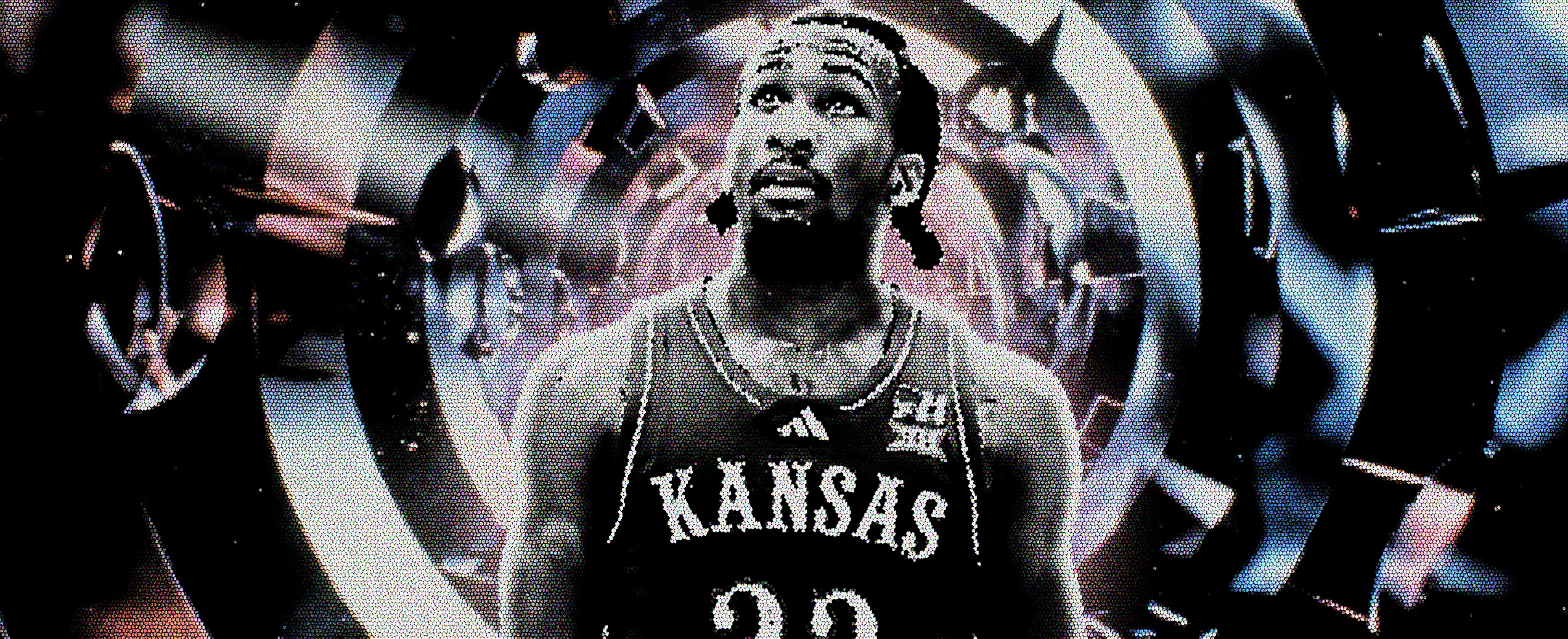
After a few seasons of BYU’s AJ Dybantsa being thought of as the top prospect within his class, Darryn Peterson (along with Cameron Boozer) emerged as a player who could dethrone him about halfway through the cycle last season. Darryn was widely regarded as a talented prospect, which is why it wasn’t really surprising for him to have been named as a McDonald’s All-American. But he was also named the Naismith Trophy Boys High School Player of the Year—signifying his place as the top player within his class.
Peterson started the season off with a bang, going for 21 and 22 points in games against Green Bay and North Carolina, respectively. Reports of a hamstring injury soon followed the UNC game, and Darryn wouldn’t return to action until about a month later against Missouri. In that game, Peterson played 23 minutes—with only six of those minutes coming in the second half. After playing 31 minutes in an overtime win against NC State in mid-December, Darryn would not play again until the beginning of January due to cramping issues. In his return game against UCF, Darryn played 26 minutes, but came out of the game entirely with over 10 minutes left in the game.
Coach Bill Self spoke after the game—explaining that there was a reason for the imbalanced use of Peterson between the two halves. Self explained that medical professionals and the coaching staff wanted to implement a minutes restriction to manage Peterson’s recovery. Self’s words were not targeted toward the star guard’s effort, but toward ensuring he would be able to safely contribute to the team.
Just a few days later, the framing of Darryn’s projection and value began to shift.
With the on-again-off-again nature of Darryn’s season to that point, the commentary of public-facing media personalities began to share some of their opinions. During halftime of the January 6th game against TCU, ESPN’s Jay Williams raised concerns. This was centered on whether his teammates could rely on him. That wasn’t the only moment from that day that gained traction. On a possession in the second half, Darryn looked to be subbed out of the game. This occurred as Elmarko Jackson attempted to pass Darryn the ball, but, because Darryn was looking to the bench, the ball was turned over. The clip of that moment was swirling around the internet almost instantaneously.
Peterson would go on to miss just two additional games heading into March Madness. On January 24th, Darryn missed a game against Kansas State with an ankle injury. Then, on February 9th, Peterson missed a game against Arizona. That absence was reportedly due to an illness, but a text message went viral that alleged that Bill Self confronted the guard with a “play or don’t play” ultimatum. Peterson was alleged to have given an “F— it; I’m out” response. All of this was refuted by Kansas representation, stating that “the person texting in this video is a contracted crew worker who handles official stats during the game for ESPN.” With that, Kansas further went on to say that the individual had “no inside information and was speculating.”
Given the inconsistent availability, the injuries, the visuals of Darryn “checking himself out of games”, and the viral allegations, the gap between Peterson’s on-court reality and public perception widened to the point where they no longer aligned.
On February 19th, Jay Williams of ESPN stated:
“If I was a general manager, I would be extremely concerned about Darryn…I don’t feel like he really wants to be there [Kansas].”
That same day, Stephen A. Smith added;
“There is no team in hell that should grab Darryn Peterson number one…talent-wise, though, I understand why everybody is looking at Darryn Peterson and saying ‘that brother is something special; he could be number one’. This is business. I can’t trust him.”
What began as a discussion of availability had, by mid-February, evolved into something else entirely—a referendum on trust.
Performance vs. Perception
Lost in the discourse is a simpler question: what has actually changed about Darryn Peterson as a player? The cleanest way to separate that answer is by going back to the film and data.
On film, the answer is very little. Peterson still operates as a high-level advantage creator, capable of generating downhill pressure with a strong handle and physical frame.
His ability to get to his spots—whether at the rim or into pull-up jumpers—has remained consistent throughout the season, even as his availability has fluctuated. In the midst of his injury-plagued Freshman season, he ranks in the 57th Percentile in at-rim efficiency.
The inefficiency that has shown up at times is more reflective of disruption than decline. Missed games, limited minutes, and inconsistent rhythm have impacted his shot-making in stretches, but the underlying shot profile and creation ability remain intact. Darryn ranks in the 99th Percentile on Spot Ups—shooting almost 55% from three on those possessions. The process has stayed largely the same—the results have simply been less stable.
Even with those inefficient offensive possessions, Peterson has stepped up on the glass and on the defensive end. In fact, Peterson has a Steals Percentage of 3.0.
He also has a Block Percentage of 1.9.
Even in a postseason setting, Peterson’s performance reflected that same underlying profile. In the NCAA Men’s Tournament, Darryn averaged:
24.5 PPG
2.5 RPG
0.5 APG
1.0 SPG
2.0 BPG
41.0% FG
36.8% 3P
83.3% FT
The flashes—and the limitations—looked consistent with the rest of his season, not indicative of any new trend. In that sense, Peterson’s evaluation hasn’t shifted nearly as much as the conversation around him has.
Finding the “Why?”
Darryn missed action in exhibition games, too. In those games, the reported reason was due to cramping. In an article that was released on October 28th, 2025, SI’s Joshua Shulman discussed how Darryn played only 10 minutes of the second half. Coach Self had shared earlier that week that cramping had been bothering Peterson for “some time”.
In retrospect, the most profound portion of the article is how Shulman touched on how “vague” the use of the term “cramping” was at that time.
“‘Cramping’ is a very vague injury, as it could apply to multiple parts of his body or mean his conditioning isn’t where it should be at this point of the preseason. At the same time, it could be coachspeak from Self, who surely would not want to risk any further injury for his star in a meaningless game.”
Almost five months later, those “vague” cramps have been openly reported as “full-body” cramps. In an interview Peterson had with Shreyas Laddha of The Kansas City Star, Darryn opened up about his “traumatic” experience that led to hospitalization and IV treatment.
“I had like a full-body (cramp), super serious. You could say it was traumatic. I had a traumatic experience.”
In the midst of the media frenzy that speculated on topics ranging from competitiveness, reliability, and desire, Peterson’s circle—including himself—were quiet for the majority of the cycle. This interview with Shreyas Laddha provided Darryn an opportunity to share his thoughts on the public perception and narratives that bubbled up during that silence.
“It was definitely frustrating, just because it was stuff that I can’t control and that wasn’t true. But that’s his [Stephen A. Smith] job to get on there and say stuff. So, I mean, that’s what he thought. He said what he thought. I respect his thoughts. It is what it is.
What I went through this year was serious stuff. The games I missed, I wanted to be out there a lot. I did everything I could to try to be out there.”
That article with Darryn Peterson was released March 17th. Only one day later, The Athletic released their own interview with Peterson, that was conducted with CJ Moore. Moore’s article touched on a number of different ways in which Darryn has answered the prevailing “Does he care?” question that has loomed large for Peterson—citing his effort in Summer practices, performances against top competition in college and high school, interactions with teammates and staff, his training regimen, and handling adversity. CJ Moore’s article would indicate a resounding “YES” to the care question.
Perhaps the most interesting takeaway from that article was one quote from an anonymous scout made.
“Everything that’s going on with Darryn not playing well and not shooting it well during this time, it is definitely leaning people into AJ at one is a real conversation. AJ, what he’s been doing at his size, is different. But all this stuff that now is being made public that we knew, a lot of people in the media had said he doesn’t love the game, he’s not competitive and that other bulls—, we knew was all crap. But who goes No. 1 is a conversation now.”
While the scout acknowledges how close the race for the top pick in the 2026 NBA Draft is, they also quickly dismissed the care question’s relevancy. This underscores that the information on Peterson didn’t change—only its visibility did.
Cutting Through Distortion
Darryn Peterson’s 2025–26 season, filled with injuries, cramping, and public speculation, is a textbook example of how draft narratives can distort perception. Just as Anthony Edwards’ comments in 2019 reframed him from a generational scoring talent into a “questionable” prospect, and Michael Porter Jr.’s back injuries in 2018 amplified worst-case scenarios, Peterson faced a similar skew.
High school dominance and accolades—McDonald’s All-American, Naismith Trophy Boys High School Player of the Year—established him as an elite talent well before his injury-plagued season. Yet the visibility of every missed game, every cramp, and every viral moment threatened to overshadow the underlying signal: his skill, basketball IQ, and competitiveness when on the floor.
Draft distortion occurs when isolated events—comments, injuries, or public perception—begin to outweigh a player’s body of work. In Peterson’s case, the narrative gap widened, not because his ability changed, but because the lens through which evaluators and fans viewed him became warped. The challenge for scouts, executives, and media alike is to weigh those events appropriately, separating what truly matters on-court from what merely dominates headlines.
Ultimately, Darryn Peterson’s story serves as a reminder: top prospects are defined by their talent and performance, not by the distortions that swirl around them. Just as Edwards and Porter Jr. eventually had their abilities recognized despite early doubts, Peterson’s draft stock should be assessed through the same lens—disciplined evaluation of skill, production, and context—rather than the distortions that inevitably follow top prospects.
Follow me on Twitter: StephenGHoops
Catch me on BlueSky: StephenGHoops
Catch the Draft Sickos show LIVE on the No Ceilings NBA channel:
If he can improve on getting lost off the ball at times and his screen navigation he can be an excellent defender. I’m still trying to dive in more to his playmaking. On one hand, he’s averaging barely any assists, but he constantly makes the right read out of traps (even if he dosent manipulate them) and can hit skips and far kickouts when driving. He’s got ambidextrous passing touch too and loves the laydown. But it’s hard to look at the lack of passing production compared to AJ and cam even if he has a better feel for the game than AJ. He gets the ball where it needs to be, is capable of complex reads but it’s hard to evaluate tha part because he’s getting so much attention. He’s converting and getting to the rim less than he did in high school, probably because of injuries. He’s not as explosive off two in traffic and has to settle for some tougher shots because of the offense he’s in. Still silky smooth floater and dexterity to use either hand on either foot around the rim. and elite or above average shooting and versatility. He could be a lot of types of players.