


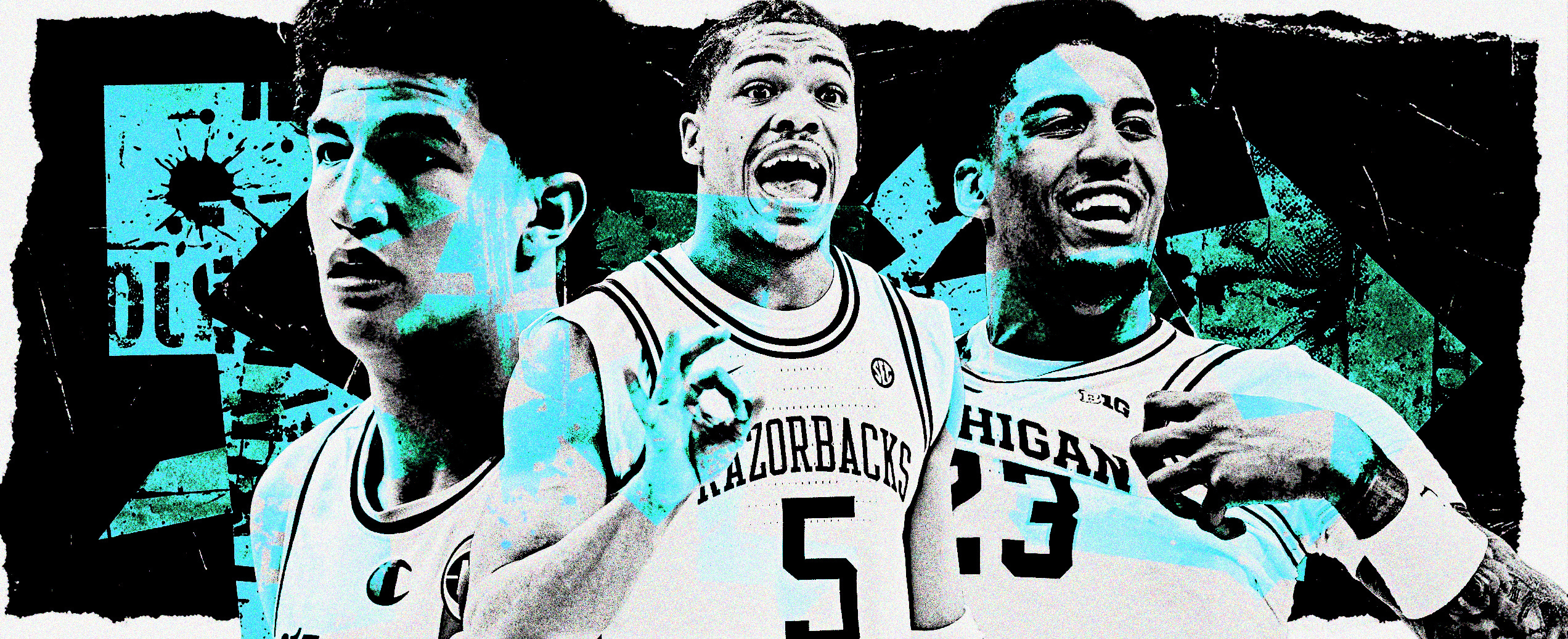
At this point in January, we are about halfway through the 2026 NCAA Men’s Basketball calendar! Prior to the 2026 NBA Draft Class kicking off, I wrote a bit of a primer piece that highlighted five findings that I came across in preparation for this class. What I am aiming to do here is provide an update to each of those findings I wrote about in October to see where we stand with the prospects within.

Let’s not overcomplicate things here with a longer-than-needed lead-in. Instead, let’s just dive in!
Offseason Finding #1. Is This Class Barren on Big Men?
Midseason Update: Yes
This isn’t to say that there aren’t some talented big men within this class. This isn’t to suggest that some of the big men in this class won’t go on to be NBA contributors. When stating that this class is barren on bigs, it’s to say that there aren’t many obvious big men in this class that teams will be lining up for.
Back in October, I said “this will be one of the focal points of this class—potentially throughout the entire cycle” and that certainly feels true. I led off this point discussing the prized freshman big man, Chris Cenac Jr., and whether or not he would answer the questions surrounding his screen setting, rebounding, and his rim deterrence. To this point, Cenac has an Offensive Rebounding Percentage of 8.8 and a Defensive Rebounding Percentage of 26.6, so the rebounding has been promising when he has been on the floor. However, his Block Percentage of 2.8 is quite low for his position. In fact, his Stock (Steals + Blocks) generation has resulted in just 15 stocks to 42 fouls committed. On the offensive end, Chris is shooting over 40% from deep, but that is on fewer than five attempts per 100 possessions. On top of that, he has a very low Free Throw Rate (17.7), and he is only in the 33rd percentile in non-dunk finishing around the basket. To say that there are still questions regarding Cenac’s projection would be a bit of an understatement.
Many Kentucky fans were thankful that Jayden Quaintance returned to play for the Wildcats after an ACL injury, and so was the rest of the basketball community. Jayden quite literally bounced back from injury and showed evaluators that he is still the twitchy athlete he showed to be when he played at Arizona State. “JQ” had a great first game, but did show some of the residual effects of not playing basketball for as long as he did. Though he has only played a handful of games, Quaintance has a ridiculous Offensive Rebounding Percentage of 27.2, and a Defensive Rebounding Percentage of 16.6. His rim gravity has been reestablished, as he has posted a Free Throw Rate of 55.6. On defense, he already has a Block Percentage of 9.2. Quaintance did suffer a bit of an injury—which has mainly been described as “swelling”—which has kept him out of action after just 67 minutes played. It’s hard to say whether or not he has done anything to jeopardize his chances of being the first big man drafted, but there aren’t a ton of others that are the clear-cut favorites to supplant him.
In the offseason piece, I wrote about how the next spot is wide open for other players to rise. Some of the names I offered up included Henri Veesaar, Tarris Reed Jr., and Patrick Ngongba II—all of whom have garnered some solid attention as the season has churned on. Aday Mara was not a name I included back in October, but he has done an amazing job of throwing his name into the hat in terms of being considered a potential first round talent. By playing the center position on this Michigan team, Mara has proven to be a rebounding machine and a trustworthy rim protector. He has also been a very solid playmaker for his position, which is something NBA teams will be attracted to.
There is still time for other players to improve over the second half of the season—names like Malachi Moreno, Tomislav Ivisic, Alex Condon, Eric Reibe, and Daniel Jacobsen. But it will be a tall order for any big man not named Jayden Quaintance or Chris Cenac Jr. to make a case as a lottery-level talent.
Offseason Finding #2. The Guards WILL Heavily Impact the Quality of this Draft Class!
Midseason Update: Even More I Expected
Man, oh man, has this class put up a number of talented guards—and we have only seen Darryn Peterson play in four games to this point! Peterson has been awesome in those four games, showing enough for him to still be considered the #1 pick in the 2026 NBA Draft. Outside of Peterson, the guards have been phenomenal to this point of the season and are forcing evaluators to reckon with their philosophies.
Let’s exclude Darryn Peterson from this discussion, other than to say he’s performed well enough to still be considered with the top pick in the 2026 Draft.
Mikel Brown Jr. was the second guard within this class that some pontificated whether or not he could crash the party as a Top 3 pick. What’s interesting is that Mikel hasn’t been the lights-out shooter that he looked to be prior to arriving at Louisville. To this point, Brown has shot under 27% from deep, after shooting almost 49% from three in FIBA play. The area of his game that drew concerns was his finishing. As it stands, he ranks in the 83rd percentile at the rim—and he has five dunks in the halfcourt. He’s looked extremely athletic, and has the sort of bend/lean/flexibility and creativity that is so aesthetically pleasing. The playmaking and athleticism at his size make him such an intriguing proposition despite suddenly having some shooting concerns. It’s worth noting that Mikel has been out of action for seven games due to a lower back injury.
The one player that I, personally, did not expect to grow on me was Darius Acuff Jr. His high school film showed a ton of dribbling and scoring, while giving reason to wonder how high his ceiling as a playmaker and defender could be. He’s a legit threat to the “PG1” conversations that have bubbled up between Mikel and Kingston Flemings (more on him in a bit). While some guards require screens to get going, Acuff can create his own look. To this point, Acuff ranks in the 68th percentile in scoring at the basket. To put the passing into perspective, Darius ranks in the 78th percentile in all scoring possessions. When you include passes, he ranks in the 94th percentile. Watching him live, you can see that he fights around screens, and he also has the athleticism to shoot passing lanes and even block some shots.
Kingston Flemings has done everything that he can to make the race for “PG1” as close of a race as possible. While a known prospect within his class, it was unknown as to how much of a role he would play for Houston. He has been the best player on the team and has taken the reins of the team from Milos Uzan. Flemings has an Assist Percentage of 33.1 and has shot 40% from deep on 6.3 attempts per 100 possessions. His impact on defense has been notable, as he has a Steal Percentage of 4.0! Kingston’s intelligence on both ends of the floor has been one of the more pleasant surprises of the season.
Labaron Philon Jr. and Christian Anderson have entered the chat. There will be more words on them in the following segment, but these two have proved themselves correct by returning to college. Philon has taken on the lion's share of creation as THE point guard at Alabama. He closed his freshman season as an improved three-point shooter, and he has followed that up by shooting over 36% from deep on almost 10 attempts per 100 possessions. He has continued to show solid playmaking and vision, while also being a pest on the defensive end. Christian Anderson went from being more off the ball last season to being the straw that stirs the drink for Texas Tech. Like Labaron Philon, Anderson shows a ton of passing feel and is an irritant on the defensive side of the ball. Both players show to be a little more slight of frame despite having multiple seasons of Division I strength and conditioning.
Bennett Stirtz hasn’t gotten off to the start that the optimists wished over the offseason, but he has been a steady hand on an Iowa team that doesn’t have the consistent production from his supporting cast. Regardless of his team’s win/loss column, Bennett is shooting nearly 42% from deep on more than nine attempts per 100 possessions. He’s showcasing an Assist-to-Turnover Ratio of 3.4 and a Steals Percentage of 3.0. Even though he is a little smaller, Stirtz is also ranking in the 54th Percentile scoring at the rim. Even though the question for Bennett was “can he do it against better competition?”, it feels like the depth and quality of this class are weighing against his draft stock more than the production against quality opponents is helping it.
Tyler Tanner has become one of the more polarizing prospects within this entire class. At face value, you would find it hard pressed to find a player who has an Assist Percentage of 30.6, a Steal Percentage of 4.8, a Block Percentage of 2.2, and who is shooting almost 39% from deep on 7.6 attempts per 100 possessions. The problem comes with the fact that he is listed at just 6’. At his size, you’d like to see him shoot better from deep out of pick-and-roll sets (30.8%) and in transition (28.6%). Scouts will have to ponder the areas of production, and if that production can be clearly projected for a player of Tanner’s size.
Outside of those names, we’ve seen some movement in public perception from the guards in this class. Some of the guards we were high on in October haven’t had the seasons some projected, but we have seen some very good production from Brayden Burries. What has been a ton of fun to see within this class is the rise of some dark horses. Braden Smith at Purdue and Ebuka Okorie at Stanford have been consistently pushing to be considered in the late first round range. Colorado’s Isaiah Johnson and Dayton’s De’Shayne Montgomery may ultimately return to school, but they are making cases to be second round names to have on your boards in the meantime. Seniors like Milos Uzan, Kylan Boswell, and Bruce Thornton are making “Why couldn’t they be the third guard on an NBA team?” cases.
All of that goes to the point I made to close out this segment in October: Teams will have to reckon with draft philosophy regarding the quality and quantity of prospects at this position. I used Brayden Burries as the preseason example to this thought process, but will X guard be happy with being the 25th pick? 30th? 32nd? 35th? This is going to ultimately impact who stays and who goes (excluding the new eligibility discussion that I DO NOT want to touch on in this piece). Continue to monitor this sub-narrative as the draft cycle marches on.
Offseason Finding #3. Is This Year the Year of the Returners?
Midseason Update: Not in the Way that I Thought
I almost answered this update with a “No” for this category. The biggest reason why is just because of how awesome the freshmen in this class have been. To avoid naming the same guys I’ve already mentioned, UNC’s Caleb Wilson may be making this class into a Top 4 type of class (more on that later). Illinois’s Keaton Wagler has been one of the biggest risers in the entire class and could make a real lottery push. Amari Allen has been a sneaky sleeper prospect who could continue to rise during conference play. Eric Reibe has shown a ton of potential at UConn. Daniel Jacobsen has even been getting real looks from the basketball community at Purdue. Gonzaga’s Mario Saint-Supery looks poised beyond his current level of experience. Even Shelton Henderson at Miami has put up some impressive games.
So, why did I not give this update a resounding and emphatic “No”?
Because the returners who have shown up have done so in a real way.
Yaxel Lendeborg—coming out of UAB—could already be in the NBA right now if he had been happy with being a later pick. Instead, he transferred to Michigan and now is in the running for Player of the Year and a National Championship. It’s not just that he is a part of Michigan’s success, but he is the reason for it. He is averaging two fewer point per game with the Wolverines, but he averaging a career-best in Field Goal, Three Point, and Free Throw Percentages. This is all while putting up a career-best in Steals Percentage, and playing stout defense. Many had Lendeborg penciled in somewhere in the 20s coming into the season—he’s flipped that ranking on its head. It’s not normal for an upperclassman to be drafted within the lottery, but Yax is going to make front offices uncomfortable for passing on him come draft night based on his play at Michigan.
But it’s not just been Yaxel Lendeborg performing at a high level as one of the older prospects in this class. Florida’s Thomas Haugh came into the season slated to play more of the Small Forward position as opposed to his more natural Power Forward spot on the floor. That gave way to some concern as to how his stock would be impacted. Not anymore! Haugh has proved to be very capable as a creator on the perimeter and has still worked his way into paint at a high clip.
The one player that many didn’t see coming back in the way that he has is Baylor’s Cameron Carr. After spending two seasons not getting much of a real shot in Tennessee, Cameron has EXPLODED for about 21 PPG on shooting splits of 55/40/76. His athleticism has been jaw-dropping at times, showing off his lift on his 16 dunks in the halfcourt, as well as his 26 blocks as a 6’5” guard!
We talked about Labaron Philon and Christian Anderson as players who have bolstered the quality of the guards in this class. Both have stepped into the lead guard role on their teams and have both been considered potential lottery-level talents. Henri Veesaar has helped his draft stock a ton based on his rebounding and defense, but also with his passing feel and his shooting ability. Joshua Jefferson is producing his way into being a potential First Round pick, in part due to his new-found shooting touch from deep on top of the passing feel and defensive prowess. Alex Karaban may be considered as a first round talent. This isn’t even touching on some of the players who are on the outside looking in—looking to shake things up—like Malik Reneau or Darrion Williams.
Offseason Finding #4. Who Are the International Men of Mystery?
Midseason Update: I Still Don’t Know
There is a whole conversation that could be had here as to the impact of NIL, and how it’s becoming more attractive for international talent to come play college basketball for a few million. Players like Neoklis Avdalas, Mario Saint-Supery, and Johann Grunloh may be playing for international clubs if this season took place five years ago, but they are being paid, receiving education opportunities, and getting acclimated to the American style of play, while also being more accessible to NBA teams. Their inclusion has also made the scouting process of domestic talent more fruitful, and the depth of talent within conferences have improved.
While the NCAA and scouting communities have benefited tremendously from this new mechanism, the depth of “traditional” international prospects has dwindled—at least, in this class. The top international name coming into the 2026 NBA Draft cycle has been Karim Lopez. The start of his season wasn’t great, but that was mostly due to him working his way back from injury. At this point, Lopez is averaging about 11 PPG, with shooting splits of 49/33/75. His game performances have been a bit all over the place, having stretches of single-digit scoring on low efficiency. But he also has games showing off solid defense and rebounding. His size and strength at his age give him a runway to improve that many other prospects simply do not have.
The other top international name coming into the season was Dash Daniels. His season has also been a bit of a mixed bag, as Daniels has showcased the defensive influence many were excited about during the summer. He’s also incredibly young, which shows itself more on the offensive end. To be fair, Dash is shooting over 40% from deep in an older and more physical league in the NBL. Oddly enough, the more overarching concerns come from his ball-handling and processing on the ball. The projection for Daniels hinges on how much you believe that the on-ball stuff can be improved—if you feel it’s prevalent to his NBA role.
Much like how I wrote about in October, there is still a lot of room for others to either challenge for the top spot, or provide this class of traditional international prospects with some more depth. Sergio de Larrea is a name many like, and he has really done well shooting from deep this season. His handling and playmaking are fun. There are strength and finishing concerns that still surround his game, which is why his placement on boards still has a wide variance. Luigi Suigo is a fun player to keep in mind long term, but there is still a lot of rawness to his game. Adam Atamna is a name that you’ll see on the back half of Big Boards.
Outside of that handful of names, there are some “if you squint, you can see it” prospects, but there aren’t many players to get overly excited about.
Offseason Finding #5. There Are Parallels to the 2023 NBA Draft Class!
Midseason Update: Do We Do Draft Class Comparisons Correctly?
Even when I wrote about this point in the offseason, I felt that this take almost made me feel a bit more pessimistic about the outlook of the 2026 NBA Draft Class. There was a lot of optimism on the 2023 class, but there have been almost as many questions about the top players as there have been answers for top players like Scoot Henderson and Brandon Miller. In a way, maybe I was half-expecting the worst to come from this class—and we still do have to wait for the NBA part of their careers.
There are a ton of great draft classes in the history of the NBA Draft, obviously, but this class does feel like it has to be set apart to some degree. At least, based on what we’re seeing now. Even in recent draft history, there have been narrative-based pushes on class off of a premise of a “Top 3”. 2023 had Paolo Banchero, Chet Holmgren, and Jabari Smith Jr. 2022 had Cade Cunningham, Jalen Green, and Evan Mobley. And 2019 had Zion Williamson, Ja Morant, and RJ Barrett.
What’s crazy about this class is that the “Big 3” in this class have all been good. There hasn’t been a need to reach on a player’s production or projection, which makes this class unique.
It’s much more difficult to compare one class perfectly to another as opposed to simply comparing one player against another. The tricky way that it is done today in the basketball community is largely incorrect, in my humble and respectful opinion. For the most part, draft enthusiasts will compare strong draft classes to the 2023, 1996, and 1984 Draft Classes because of who those classes put out. I don’t think that serves a purpose that is beneficial for the new class, nor is it an honest assessment of how draft classes of years past were discussed.
Michael Jordan was the third pick in 1984. Kobe Bryant was the 13th pick in 1996. LeBron James was the top pick in the 2003 in the NBA Draft, but Dwyane Wade—arguably the second most successful player in the class—was taken with the fifth pick. if you want to argue for Carmelo Anthony, he was taken with the third pick. The point here is that we compare current classes to past classes based on the success of the prospects within those prior classes.
We don’t do a proper job of comparing classes to the narratives that were taking place in draft classes of years past. That’s what I have been trying to wrap my head around with the 2026 NBA Draft Class. I thought the comp to the 2023 class was apt in the moment, but because of the strong play at the top—as well as the impressive play from some prospects I was not expecting—the 2023 NBA Draft Class falls a bit short.
Based on how I laid out my case as to why I feel like we as a basketball community get comparing Draft Classes wrong, I have a new class to suggest—but it isn’t one of the “All-Time Great” classes. I feel like this class compares nicely to the 2008 NBA Draft Class. The belief in players like Derrick Rose, Michael Beasley, and O.J. Mayo was strong prior to that season, and their play all stayed strong as their cycle proceeded. Outside of those names, this class included a raw-but-talented Russell Westbrook and a “surely he’ll only be able to play a certain way” Kevin Love. Danilo Gallinari, Eric Gordon, D.J. Austin, Brook Lopez, Jerryd Bayless, Robin Lopez, Marreese Speights, Roy Hibbert, JaVale McGee, Courtney Lee, Serge Ibaka, Nicolas Batum, George Hill, DeAndre Jordan, Omer Asik, Luc Mbah a Moute, and Goran Dragic were all a part of a class that provided a ton of talent.
Now, the “Big 3” of this class didn’t have the sort of careers many expected, and I know that we would all want to see Peterson, Dybantsa, and Boozer have far more successful careers. This is an inexact science but, to me, comparing a class with the “Big 3” in the 2026 class to the ‘96 class, that’s also kind of disrespectful to compare Darryn Peterson to the 13th pick in a draft. Still, the ‘08 class had a ton of bigs and international players, so how good is that as a comparison? Who knows?
The big thing I want to draw attention to is that the top of this draft is playing very well, and there appears to be a significant amount of depth to be excited about—especially at the guard spot.
Follow me on Twitter: StephenGHoops
Catch me on BlueSky: StephenGHoops
Catch the Draft Sickos show LIVE on the No Ceilings NBA channel:
BANGER ALERT