


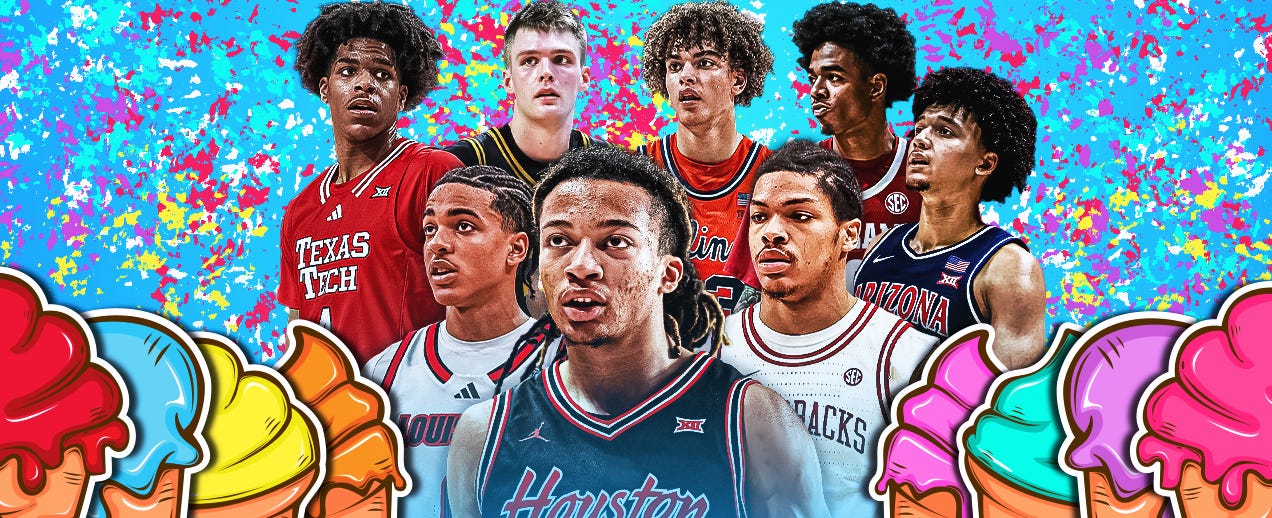
Picture this.
You find yourself out for an adventure on a hot summer day back in the days of your early youth. You got together with some of your closest friends from your childhood, and you’re thinking of any possible games to play to celebrate the realization that you’re not in school at the moment. The vibes are immaculate. You quickly find yourself saying, “man…is there anything that can make this day better?”
Then all of a sudden, a soft tune begins to rise in the distance. At first, you find yourself wondering if it’s simply a figment of your imagination. But then, it seems as if the sound is progressively getting louder. Once it reaches a certain volume, your brain kicks into overdrive as it hits you that the sound approaching is something that is about to make this day take a turn from special to legendary.
It’s the ice cream man.
Before you know it, you and your friends simultaneously let out a war cry. “ICE CREAM!” Before you know it, you and your friends explode out of the gate like the seven seconds or less Phoenix Suns, running the break in transition with the ice cream truck approaching, looking like a breakaway alley-oop opportunity.
As the truck comes to a complete stop, you and the entire neighborhood suddenly find yourselves lining up to get a look at the lengthy menu of choices that are available. Whatever your heart desires, this truck seems to be able to make that happen.
Coming into the year, the 2026 NBA Draft class presented a lot of excitement due to the “Big 3” at the top. Talents such as Darryn Peterson (Kansas), AJ Dybantsa (BYU), and Cameron Boozer (Duke) suggested that this class could become a special one. A Draft that features three prospects who, if not for being in the same class, would hear their name called first in any other year. So far, that preseason narrative has lived up to the hype and more. Peterson, Dybantsa, and Boozer have all shown why this class has the potential to be a special one when we look back down the road.
But as time progressed in the early portions of the 2025-26 NCAA season, another storyline started to inch its way into the public consciousness among scouts and evaluators around the world.
The point guard class.
TEAM PHILOSOPHY OVERHAUL?
We’ve seen some of the best players in this class cement themselves as legit talents in the scouting world. Not only does this class have a serious amount of depth in the backcourt, but there’s also some legit firepower to go with it. It’s not entirely uncommon to see a draft class have a bit of heavy-hitting depth when it comes to a specific position. In so many recent drafts, you’ll see a “run” on a certain position. When one player comes off the board, teams might realize “alright, here comes the run of guards” or “if we want a big, we might have to go up to get him” as a range is targeted for where that run can begin.
The 2026 NBA Draft class feels different when it comes to the point guard position, though. There’s a wide range of floor generals in this class who offer the potential to be franchise pieces. Because of that realization, paired with the overall lack of depth at other positions, it could be difficult to land a guard if you don’t have an early pick.
Too many times, we often focus on the fact that teams should target a “BPA” approach. This can come into the conversation when a team might have some overall depth on their roster, but there’s no glaring “gap” or position that could see the needle move in that favor if there’s a debate over two players. The NBA is a copycat league. If you see a new “set” run by a coaching staff to success, it won’t take long before other teams are installing a similar concept. The same can be said when it comes to roster construction. Teams are always monitoring the waves of change in the NBA. If a team suddenly starts to have great success with a new concept or idea, you can be sure that other organizations are taking notice and wondering if they can install that new philosophy to improve their situation.
Last year’s NBA Finals featured the Oklahoma City Thunder and the Indiana Pacers—two teams who have done a sensational job of building out the overall depth of their roster. But both teams offered sensational versatility when it came to their guard position. Teams are now starting to understand how crucial it is to have depth for lengthy runs in the postseason. It seems as if we are a long way away from the days of simply building out your team with superstars in the starting lineup and cap-friendly options to fill out the rest of the roster.
Now, teams are trying to acquire young talent and present their coaching staff with the flexibility of having a wide range of options to get creative with, depending on matchups. Why is this all important? You guessed it: because of the incoming guard class.
Even with a number of teams potentially picking early that might look to have an “answer” in the backcourt, a fascinating dilemma could present itself. Do you trust your board and evaluation process and simply take the best player available? Because odds are with this class, that’s going to be a point guard.
We could see organizations prioritize building out the foundation of their roster moving forward, instead of simply trying to plug the holes. If teams decide to do so, this is the year to find whatever your heart desires in a young table setter.
DRAFT HISTORY WITH POINT GUARDS
Before we break down some of the special guards of this class, I want to take a quick dip into recent draft history. I wanted to go back in time to showcase some of the recent point guards who were selected in the first round. I tried to focus primarily on clear “point guards” or prospects that were expected to be ball handlers or table setters when it came to their projection at the next level. There’s always a bit of grey area with some (ie, Amen Thompson was listed as a guard, Keyonte George was listed at SG, etc.). With that in mind, I tried to cut it down to clear players who were expected to be point guards out of the gate.
Here’s what I found since 2010…
Only four draft classes have had eight point guards drafted in the first round
(2025, 2024, 2020, 2011)
Of those four draft classes, 2024 was the only class to have MORE THAN four point guards drafted in the lottery
(Reed Sheppard, Stephon Castle, Rob Dillingham, Nikola Topic, Devin Carter, Carlton Carrington)
2017 featured the most point guards drafted in the Top 10 (5)
Markelle Fultz (1st), Lonzo Ball (2nd), De’Aaron Fox (5th), Frank Ntilkina (8th), Dennis Smith Jr (9th)
Six of the Draft Classes since 2010 featured five or fewer point guards selected in the first round
2010 (3), 2012 (4), 2014 (5), 2016 (4), 2018 (5), 2019 (4), 2022 (3)
Draft history has shown that when there’s a class featuring some fascinating talent in the backcourt, NBA teams aren’t going to be shy about adding them to the mix. However, you also see a history that has shown a wide range of guards. If you’re an elite prospect, you don’t find yourself waiting on the board for long. You could point in the direction of the 2024 class when it comes to looking for a similar comparison.
The 2024 class featured a total of eight guards selected in the first round, with seven of those guards going in the Top 16 picks. So how does that tie everything together? Well, as of now, we’re looking at the possibility of eight point guards with the 2026 class who offer a legit resume to be a Top 20 selection. If you want to stretch that out to combo guards (I consider Darryn Peterson a combo guard), then that number can climb as high as nine or ten.
DISCLAIMER
For the sake of this discussion, I wanted to focus primarily on floor generals or players who will be asked to set the table early on in their careers. Now let’s get this out of the way. Some might consider Darryn Peterson (Kansas) a point guard in their minds. I consider Peterson a combo guard who you will find yourself running as many sets as possible to get the ball in his hands as a playmaker or bucket-getter. In so many words, I think of it often as how Devin Booker is utilized or players of that same mold. Keaton Wagler (Illinois) might be considered by many as more of a combo guard, which I’m fine with. But I think he’s going to eventually be a plus-sized floor general that you want running the show, so he’s included here as well.
CHOOSING YOUR FLAVOR
Kingston Flemings | G | Houston
Profile: 6’4”, 190
Year: Freshman (18)
The Sell: Two-way force with bucket-getting ability and awesome vision
The Houston Cougars were expected to be one of the top teams in the country heading into the 2025-26 NCAA season. Much of that reason was because of their impressive returning backcourt featuring the likes of two upperclassmen in Milos Uzan and Emanuel Sharp. That’s just how good freshman guard Kingston Flemings has been, though. He’s made it impossible to take him off the court.
Instead, Houston has adapted and features a lineup that shares a lot of time with the trio. It’s worked like a charm, and there’s been plenty of realization with the team at times that Flemings has been the engine that makes this team go at terrifying speeds.
Flemings has been magnificent for the Cougars this year. He’s a 6’4” guard with springy bounce that somehow continues to surprise you every time you turn on the tape. Flemings isn’t just this microwave type of shot-chucker. He’s a calculated assassin who works his butt off to get to his spots and takes efficient shots on a regular basis. There’s a veteran-like feel to the game when it comes to his ability as a floor general. Flemings knows how to set up defenders, utilizing his change of speed while also keeping another gear or two in his back pocket in case of emergency. Despite his impressive numbers this year, I have come away incredibly impressed with some of his “off nights” in the box scores.
That realization doesn’t whisper…it screams.
He’s got the making of a dangerous franchise-caliber floor general who can not only get to his spots with a bundle of toys, but he also has an outstanding awareness of how to react to defensive alignments and set teammates up for easy buckets. If that wasn’t enough, there’s also the defensive side of the ball. Flemings has violently quick hands and is not afraid to get after it when it comes to on-ball pressure. NBA teams are going to love that Flemings spent a year with Kelvin Sampson and the Cougars coaching staff, and it’s not hard to see why he’s scorching up draft boards.
Keaton Wagler | G | Illinois
Profile: 6’6”, 180
Year: Freshman (18)
The Sell: Plus-sized guard who can play on/off ball and plays with fantastic pace
If you’re an NBA team looking for a diamond in the rough who is quickly becoming a monster of a prospect, that’s Illinois freshman Keaton Wagler. The sell with Wagler is pretty easy. He’s got a beautiful shot from outside that can stretch out to well beyond NBA range if needed. Wagler is also a master of tempo on the offensive side of the ball. He never seems rushed or hurried. He’s completely fine with resetting and playing within the flow if the first look isn’t there. Wagler plays like a NBA-veteran who is playing in his eighth NBA postseason. While some might look rattled or anxious just to be there, Wagler just seems to constantly keep pushing forward and is calculated like a boxer who keeps throwing jabs in the early rounds, waiting for his time to strike.
Wagler was starting to heat up for the last couple of months. Then, an injury to upperclassman point guard Kylan Boswell saw a fascinating opportunity arise for Wagler. Many wondered if Illinois would simply put more “trust” in Wagler to run the show. In his first game with added responsibilities, Wagler put together one of my favorite performances. He struggled to find his shot, ending the game 4-of-12 from the field, but also pitched in seven rebounds and eight assists while finishing with 13 points. Since then, Wagler has been literally on fire.
In his last four games, Wagler is averaging 27.3 points, 4.3 rebounds, and 6.3 assists per game while shooting 54.4% from the field, 48.5% from three-point range, and 77.5% from the free throw line. That includes his jaw-dropping 46-point outing on the road against Purdue in an upset win. Wagler is cooking at the right time and has everything that NBA teams are looking for when it comes to a guard prospect with serious upside. He’s a high-feel guard with great size at 6’6” and can be a dynamic weapon on the offensive side of the ball. At this rate, he’s going to challenge to be in the mix for Top-5 conversations.
Mikel Brown Jr. | G | Louisville
Profile: 6’5”, 190
Year: Freshman (19)
The Sell: High upside swing with terrifying shooting range and lightning quickness
Coming into the year, the expectation was that Louisville freshman Mikel Brown Jr. would be one of the biggest names to present a serious challenge to the Top 5 of the 2026 draft class. That idea is still extremely present, depending on who you talk to in scouting circles. Buying in on Brown is incredibly easy. If you’ve watched him before the 2025-26 NCAA season, you know exactly why.
Brown was an incredibly impressive floor general with sensational vision and lightning-quick decision-making as a ball handler. He’s got fantastic handles and can explode to get to his spots on the floor with eye-opening tight-window quickness. If that wasn’t enough, Brown is the type of movement shooting weapon that you dream of your favorite NBA team getting their hands on. He can quickly navigate around off-ball screens to hit off-balance threes from well-beyond NBA range. In transition, Brown is as dangerous as ever. He has the speed to blow by defenders with relative ease and the range to do his best Steph Curry impersonation.
To sum it all up, he’s got all of the goods to be a Top 5 pick in this draft. But in every NBA Draft class, there always seems to be a prospect who leaves you wanting. The flashes are tremendous, but you keep waiting for that player to stack together some of those impressive performances. With Brown, plenty of evaluators have been waiting for him to put together a consistent stretch of games.
Brown had a couple of eye-opening performances to start the year, including his 29-point performance at the beginning of the season against Kentucky. Eventually, Brown would be sidelined while nursing a back injury after the team’s game against Memphis on December 13th. He finally returned to action against Virginia Tech on January 24th and looked as healthy as ever, finishing with 20 points, three rebounds, and six assists on 7-of-11 shooting. That was followed up by a Duke beatdown that saw Louisville lose by 31 points on the road, where Brown went 1-of-13 from the field. Since then, Brown bounced back nicely, putting up 20 points and four assists on 7-of-14 shooting against SMU. But time will tell if Brown can stack together some solid outings.
There’s a bit of “late bloomer” philosophy here when it comes to Brown. He was one of the most impressive players during the U19 FIBA play for Team USA, and many believed he should have received the tournament MVP nod over fellow freshman phenom AJ Dybantsa. Brown also reportedly went through a massive growth spurt, which is also why scouts have been patient with his development.
Darius Acuff Jr. | G | Arkansas
The Sell: Bully of a guard with great change of pace & vision who takes care of the rock and offers outstanding efficiency
If you’re looking for an absolute bully of a table setter, then Arkansas freshman Darius Acuff Jr. will have you licking your chops. Acuff came into the year with plenty of intrigue. He was a five-star recruit, and any evaluator gets excited when a talented guard is going to play for John Calipari.
But what Acuff has done on the court this year has been ridiculously impressive. Coming into the year, I thought Acuff had the potential to be a big-time climber in the ranks. Personally, all I wanted to see was if the outside shot could show some consistency. Once that question got answered emphatically, I found myself falling in love with the way that Acuff plays the game.
As the year has progressed, Acuff’s game has seemed to advance in different areas. Depending on which splits you look at, you’ll see a climb in one or more categories when it comes to Acuff. In November (seven games), he averaged 17.4 points, 2.4 rebounds, and 4.4 assists. In December, that jumped up to 20.3 points, 3.8 rebounds, and 8.2 assists. In his last nine games, Acuff is averaging 22.6 points, 2.6 rebounds, and 6.3 assists per game.
Acuff has showcased the ability to impact the game on multiple levels. He’s been efficient and has done a fantastic job of taking care of the ball while setting up his teammates for high percentage looks. Acuff has three games this year in which he finished with double-digit assists and zero turnovers. In total, he’s got 137 assists on the year to just 45 turnovers. Pair that with him shooting 40.8% from deep on 5.5 attempts per game, and Acuff has more than answered the question about his tremendous upside as a floor general moving forward.
Labaron Philon | G | Alabama
Profile: 6’4”, 185
Year: Sophomore (20)
The Sell: Shifty guard with outstanding change of gears who has taken a massive step in development with offensive versatility.
Last year, there was plenty of buzz surrounding Alabama guard Labaron Philon as a potential “party crasher” for the 2025 NBA Draft. At the time, Philon was continuing to showcase some fantastic tools that were starting to really come together. As a freshman, Philon averaged 10.6 points, 3.3 rebounds, 3.8 assists, and 1.4 steals per game while playing alongside upperclassman guard Mark Sears.
At the last second, Philon decided to withdraw his name from the 2025 NBA Draft class and return to Alabama for his sophomore season. Personally, I thought it was a great decision by Philon, as I thought he could be a big-time riser with a strong offseason and upcoming year.
So far, Philon has answered the call and more as a sophomore. He’s currently averaging 21.6 points per game for the Crimson Tide and has somehow been a bit “slept on” this cycle. You could simply point in the direction of his competition at the point guard position in this class. I came into the year with plenty of things I wanted to see on my “wishlist” for Philon to really take that next step forward. He’s answered that and more, in my eyes.
The biggest thing for Philon this year was improving the outside shot. Last year, it seemed so streaky, as he ended the year shooting 31.5% from three on 3.4 attempts per game. This year, he’s currently at 38.3% from downtown on 5.8 attempts per game. Some might have questions about the defensive consistency from Philon, and I get it. But my counter would be the role and usage that Philon has had for the Crimson Tide this year. After posting a 20.9% usage last year as a freshman, that number is currently at 31.4%—a massive climb in responsibilities.
What makes Philon so special is his change of gears. He’s dangerous when he’s got a lane, because at any moment he can slam the brakes and beat you with touch and impressive shiftiness. I continue to believe that Philon is a player who deserves a little more love in this class.
Brayden Burries | G | Arizona
Profile: 6’4”, 205
Year: Freshman (20)
The Sell: Plus-sized guard, with great versatility, who is trending upwards quickly and plays with great poise.
One of the biggest lessons I continue to echo in the scouting community is to never get too high or get too low from a stretch of games. Sometimes…”it just takes time.” No prospect has been a better example of that this year than Arizona Wildcats freshman guard Brayden Burries.
At the start of the year, the Arizona Wildcats were drawing plenty of attention in the college basketball world after some big-time wins.
After the first five games of the year, the Wildcats were undefeated with wins over teams such as Florida, UCLA, and UConn. During that five-game stretch, Brayden Burries averaged 7.8 points per game while shooting 33.3% from the field.
Since then? Burries has woken up in a big way.
In his last 17 games, Burries is averaging 17.5 points, 5.4 rebounds, and 3.1 assists while shooting 53.8% from the field, 38.8% from three, and 81.4% from the free throw line.
There’s a reason why the 6’4” guard was a five-star recruit, and Burries has shown that on full display as of late. As the season has progressed, Burries has seen his game continue to take off—to a point where he’s become one of the most impressive players on this Arizona Wildcats team as of now. In his last five games, Burries is averaging 19.6 points per game while shooting an eye-opening 47.8% from three on 4.6 attempts.
There’s a lot to love with Burries’ game. He’s a strong guard who can set the table or play off the ball as well. Something that is going to get plenty of NBA teams excited when it comes to his versatility. He currently ranks in the 91st percentile as a pick-and-roll bal- handler and the 89th percentile when it comes to dribble jumpers. Burries plays the game with great poise and knows how to work to get to his spots or take what the defense is giving him. His stock is red hot, and he’s going to only continue to climb the longer Arizona plays this year.
Christian Anderson | G | Texas Tech
Profile: 6’3”, 188
Year: Sophomore (19)
The Sell: Pick-and-Roll monster with tremendous floor spacing and the ability to navigate the lane
After impressing in the rotation last year as a freshman for Texas Tech, many thought that Christian Anderson could be a potential breakout candidate as a sophomore. That was before Anderson put on an absolute show in FIBA U19 for Germany. That momentum hasn’t skipped a beat for Anderson, who has been absolutely sensational for the Red Raiders this year.
Anderson has been red hot, including a couple of remarkable performances in the spotlight. The numbers back up the tape. Anderson ranks in the 90th percentile as a pick-and-roll ball-handler, the 90th percentile on spot-up plays, the 92nd percentile on jump shots, and the 95th percentile on off-the-dribble jumpers.
The question remains for Anderson: how high can he get in this class? If it were any other class, Anderson would most likely have a legit conversation as a lottery pick at worst. Due to the lack of depth at the position, Anderson is going to be one of the fascinating prospects to keep an eye on moving forward. The sell is easy to NBA teams. Anderson is a legit flamethrower from outside who can stretch the floor and operate the pick-and-roll like a magician.
After averaging 10.6 points, 3.0 rebounds, and 2.2 assists per game last year as a freshman, Anderson is up to 19.6 points, 3.4 rebounds, and 7.5 assists per game as a sophomore. That type of jump as a playmaker is jaw-dropping. What’s even just as impressive is the jump in three-point shooting. After shooting 38.0% from downtown last year on 5.3 attempts, Anderson is currently at 43.6% from deep on 7.9 attempts.
Bennett Stirtz | G | Iowa
Profile: 6’4”, 190
Year: Senior (22)
The Sell: Upperclassmen sharpshooter with dynamic feel, creativity, and limitless range.
Bennett Stirtz became a bit of a draft darling last year while putting up ridiculous numbers at Drake. It made him a bit of a star when it came to preparing for last year’s NCAA Tournament, as Stirtz was a player who could cement himself on the map with his bucket-getting ability and playmaking gifts.
Stirtz decided to hit the portal after his junior year and transfer to Iowa for this season. It was a decision that had plenty of evaluators excited as they wanted to see if Stirtz could produce against tougher competition. Despite a couple of early-season tough matchups, Stirtz has started to heat up in a big way. In conference play, Stirtz is averaging 22.3 points, 2.4 rebounds, and 4.5 assists per game while shooting 49.2% from the field and 35.2% from three.
The question remains about just how high Stirtz can get and if there’s the same type of admiration in NBA circles. Many have viewed Stirtz as a potential plus type of asset in a rotation. But if that verdict holds water leaguewide, then where do you draft a player like that in a historically stacked draft? Time will tell, but Stirtz has quietly continued to answer the call with his ridiculous shotmaking ability and tremendous tools when it comes to running an offense.
The 2026 NBA Draft class is shaping up to be a special one. After being promoted as the “Big 3” class, we’ve quickly started to see some other legit special talent offering the potential of that narrative changing its number to include other prospects. But right next to it in line is the point guard class. There’s depth and legit firepower with a lot of these floor generals, suggesting that we could have the chance to see a record number of players landing in the first round.
The elephant in the room, that has to be pointed out, is the NIL situation. With plenty of these prospects, there’s a chance that the NIL could wipe out some of the depth that is being discussed—not to mention that the 2027 class depth is leaving some wondering if younger players in this class could see an opportunity to skyrocket up boards with another year.
The counter is that there are other guards as of now who are knocking on the door of the first round discussion. Time will tell just how juicy this class can become. We won’t have an answer until after the withdrawal deadline (yes, it’s still an important thing!). But for now, it’s time for fans to start getting educated on how heavy-hitting a point guard class we could have.
To put it simply…
Truly appreciate the depth you’ve put into this. It makes navigating the hype of these future guards much clearer.
Great article and spot on with the breakdowns. I wish you'd have written a bit on Braden Smith and Tyler Tanner. Is it just a height thing?